Installation guide
 Owner’s manual
 Error Codes


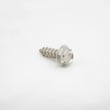
How to remove bottom grill from KitchenAid refrigerator?
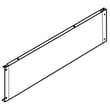
On the KitchenAid KBFC42FTS04 built-in refrigerator, the bottom grille (base grille or toe-kick area) is removed by releasing its fasteners and pulling it straight out from the lower frame. This gives you access for cleaning, leveling, and service checks.
- Unplug the refrigerator or switch power off before working near wiring or fans.
- Open the freezer drawer for better access to the lower front area.
- Look along the bottom grille for screws at the left and right ends.
- Remove the screws, then pull the base grille assembly straight forward to disengage it.
- Set the grille on a soft surface to prevent scratches.
Align the grille with the lower frame, seat it evenly, then reinstall the screws. If your model uses a skirt piece, make sure it is trimmed to the correct groove and sits flush before tightening.
- Dust buildup on the condenser area (clean gently with a soft brush and vacuum)
- Signs of water leaks near the front floor line
- Leveling legs contact with the floor (all four legs should support the unit)
- Clearance and fit of the skirt and grille so airflow is not blocked
| What you see at the bottom front | What it usually means | What to do |
|---|---|---|
| Two screws holding the grille | Standard base grille attachment | Remove screws, pull grille forward |
| Skirt panel under the grille | Decorative/airflow trim | Score the correct “V” groove, snap to length, reinstall |
| Grille feels stuck | Tabs seated tightly or slight misalignment | Pull straight out evenly; avoid twisting |
The base grille area is where airflow and service access start. Keeping it properly installed helps cooling performance, prevents vibration noise, and makes routine cleaning and leveling adjustments easier.
For model-specific diagrams and the exact grille and skirt details, use the KBFC42FTS04 installation guide.
What is the most common problem with a KitchenAid refrigerator?
The most common issues we see on KitchenAid refrigerators like model KBFC42FTS04 are ice maker problems and cooling complaints. In many homes, the root cause is restricted airflow (dirty condenser area, blocked vents), a defrost drain issue that leads to leaks or ice buildup, or a failing fan that prevents steady temperatures.
- Ice maker is slow, stops making ice, or makes small cubes: water supply restriction, filter restriction, or ice maker component wear
- Refrigerator not cold enough but freezer seems OK: airflow problem, evaporator fan issue, or temperature sensing problem
- Water under the refrigerator or inside the fresh food section: defrost drain blockage or water line connection issue
- Frost buildup on the back wall or in the freezer: defrost system or airflow restriction
- Unusual humming, rattling, or fan noise: condenser fan area or evaporator fan blade interference
Use these simple checks before replacing parts; they solve a large share of “not cooling” and “no ice” calls.
- Confirm controls are set correctly and doors close tightly (no gaps in the gasket)
- Make sure interior air vents are not blocked by food packages
- Clean dust from the condenser area to restore heat removal
- If you have a water dispenser or ice maker, replace the filter on schedule
- Look for ice or debris in the drain area if you see leaking or ice sheets
| Problem area | What it affects | Example part for this model |
|---|---|---|
| Water filtration | Ice and water flow rate | Refrigerator water filter EDR3RXD1 |
| Ice production | Harvesting and cycling | Refrigerator ice maker WPW10277450 |
| Air movement | Even cooling, noise | Refrigerator condenser fan W11578915 |
| Temperature feedback | Cycling accuracy | Refrigerator temperature sensor WP2188820 |
Ice maker and cooling problems often start small, then lead to food spoilage, heavy frost, or compressor overwork. Catching airflow and water-flow issues early helps the refrigerator hold stable temperatures and reduces strain on major sealed-system components.
For model-specific operating tips, safety guidance (the unit is top-heavy during service and installation), and adjustment details, follow the KBFC42FTS04 installation guide and the KBFC42FTS04 owner’s manual.
Last updated: January 2026
How to put shelves in a KitchenAid refrigerator?
To put shelves back in your KitchenAid KBFC42FTS04 bottom-mount refrigerator, align the rear shelf hooks with the matching slots on the back wall, insert them fully, then lift the front slightly and lower it onto the side supports so the shelf sits level and stable.
- Remove food items so you can see the rear slot pairs clearly.
- Hold the shelf level and guide the rear hooks into the same-height slot pair on both sides.
- Push the shelf straight back until the rear hooks are fully seated.
- Lift the front edge slightly, then lower it onto the side supports.
- Gently tug the shelf forward to confirm it is locked in and not riding on the slot edges.
| What you notice | Most likely cause | What to do |
|---|---|---|
| Shelf rocks or tilts | Rear hooks not in matching slot heights | Re-seat using the same slot pair left and right |
| Shelf will not slide in | Shelf is angled or hitting trim | Pull out, level it, then insert rear hooks first |
| Shelf pops out when loaded | Hooks not fully seated | Push shelf farther back, then lower the front again |
A shelf that is not fully seated can shift when you close the door or load heavier items, which can lead to spills and cracked glass or plastic. Correct seating also helps keep airflow consistent for even cooling.
The installation instructions for KBFC42FTS04 call out installing shelves and bins after setup; for diagrams and any model-specific shelf positions, use the KBFC42FTS04 installation guide.
Last updated: January 2026
Why is my KitchenAid refrigerator leaking at the bottom?
A bottom leak on your KitchenAid built-in refrigerator model KBFC42FTS04 is most often caused by defrost water missing the drain system and ending up under the unit, or by a drain pan that is cracked, out of position, or overflowing. We use the checks below to pinpoint the source quickly.
- Clogged defrost drain: Water backs up during defrost and spills into the fresh food section or down into the base.
- Drain pan problem: The pan underneath can crack, shift, or overflow if it is not catching water correctly.
- Water supply or filter area leak: Drips can come from the filter housing, cap, or tubing connections.
- Ice maker fill leak: A loose connection or a small crack in the fill line can drip and run to the bottom.
- Door not sealing: Warm air intrusion increases frost, which creates excess defrost water.
- Confirm what the liquid is
- Clear water: usually defrost drain or water line
- Sticky or colored: spilled food or drink
- Inspect the drain pan area (behind the toe grille at the bottom)
- Look for cracks, warping, or a pan that is not centered under the drain outlet.
- Check for a defrost drain clog
- Look for ice buildup on the freezer floor or water pooling inside.
- Carefully melt ice with a hair dryer on low and flush the drain with warm water.
- Check the filter and connections
- Reseat the filter and cap; inspect for drips after dispensing water.
- If the housing is cracked or leaking, replacement is typical.
| Leak area | What fails | Example part for KBFC42FTS04 |
|---|---|---|
| Filter compartment | Cracked housing or poor seal | Refrigerator water filter housing WPW10121140 |
| Filter install point | Cap not sealing or damaged | Refrigerator water filter cap (black) WP2260518B |
| Water filtration | Filter not seated or overdue | Refrigerator water filter EDR3RXD1 |
Water under a built-in refrigerator can damage flooring and cabinetry, and a recurring defrost drain issue can lead to ice buildup that affects cooling performance. Fixing the source early prevents repeat leaks.
For model-specific access points and panel removal guidance, follow the KBFC42FTS04 installation guide.
Last updated: January 2026