Owner’s manual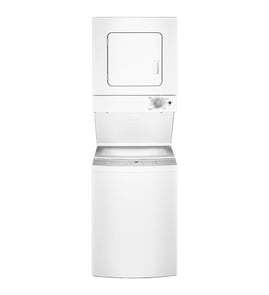


How can I tell how old my Kenmore washer is?
To tell how old your Kenmore stacked laundry center model 2661532312 is, find the model and serial number tag on the unit and decode the manufacture date from the serial number format. Use the identification details and tag locations shown in the 2661532312 owner's manual.
Find the model and serial number tag
On most Kenmore laundry centers, the tag is in one of these places:
- Inside the washer lid opening (around the rim)
- On the underside of the washer lid
- Inside the dryer door opening on the front frame
- On the back of the cabinet
- Behind a lower access panel (if equipped)
Decode the manufacture date from the serial number
Kenmore units were built by different manufacturers; the serial number date code pattern depends on the builder. Once you have the serial number, use this process:
- Write down the full serial number exactly (including letters)
- Identify any leading letters; they often indicate the manufacturer or plant
- Look for a month indicator (often 01 to 12 or a letter month code)
- Use the remaining digits/letters as the year code reference
| What you see in the serial number | What it usually indicates | What to do next |
|---|---|---|
| Letters at the beginning | Manufacturer/plant identifier | Keep them; they affect decoding |
| 2 digits like 01–12 | Month code | Convert to the month |
| A single digit or letter near the front | Year code | Match it to the year chart |
Why the age matters for repairs
The manufacture date helps us narrow down parts and common wear items for your 2661532312.
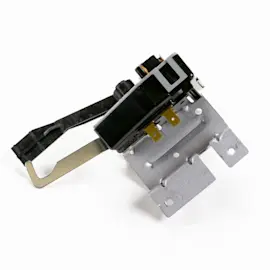
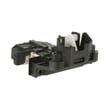
- No start or no spin: check the lid lock
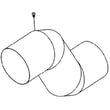
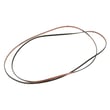
- Weak agitation or slipping: inspect the drive belt
- Dryer will not tumble: inspect the drum belt and glides
If you are ordering parts, use the parts list for model 2661532312, or search by model number on Sears PartsDirect.
Last updated: February 2026
How to remove front panel from Kenmore stackable washer?
On Kenmore stacked laundry center model 2661532312, we remove the washer front panel by disconnecting power, taking off the top or console fasteners, removing any lower screws, then lifting the panel up to unhook it from the bottom tabs. Use the 2661532312 owner's manual for exact screw locations.
Safety and prep
- Unplug the laundry center.
- Shut off both water supply valves.
- Protect the floor if you need to slide the unit.
- Keep screws organized by step.
- Take a quick photo of wire routing before unplugging connectors.
Typical removal steps
- Remove top or console access: Take out rear or console screws, then tilt the console/top up (design varies).
- Remove the dispenser drawer (if equipped): Pull out, press the release tab, and slide it free.
- Remove lower front fasteners: Look along the bottom edge or behind a small lower access/kick area.
- Release the panel: Pull the panel slightly forward, then lift straight up to unhook it from the lower tabs.
- Disconnect wiring if needed: Unplug any harness attached to the panel before fully removing it.
What this lets you service
Front panel removal is commonly needed to reach these items:
| Symptom | What to check | Example part for 2661532312 |
|---|---|---|
| Won’t drain | Blockage, pump wiring, pump impeller | Washer drain pump WH23X10040 |
| Won’t start or stops | Lid lock engagement, connector fit | Washer lid lock WH44X10288 |
| No spin or weak agitation | Belt wear, pulley condition | Washer drive belt WH01X20436 |
Why it matters
Removing the panel correctly prevents broken mounting tabs, bent sheet metal, and pinched wiring; it also speeds up troubleshooting for no-drain, no-start, and no-spin problems.
If you find a failed pump, belt, or lid lock, order the correct replacement from the parts list for model 2661532312, or search by model on Sears PartsDirect.
Last updated: February 2026
What is the cubic feet capacity of a Kenmore washer model 2661532312?
The washer in Kenmore stacked laundry center model 2661532312 has a 3.9 cu. ft. wash basket capacity. Use this capacity to size loads correctly and avoid overfilling; you can also confirm the spec in the 2661532312 owner's manual.
What 3.9 cu. ft. means for everyday loads
A 3.9 cu. ft. top-load washer basket is designed for regular family-size loads and many bulky items when loaded loosely.
- Load items no higher than the top row of holes in the basket (if visible)
- Keep a hand’s width of space at the top so clothes can circulate
- Wash bulky items (blankets, jackets) one at a time when they absorb lots of water
- If the unit vibrates, reduce load size and redistribute items evenly
Quick capacity comparison
| Washer capacity | Typical fit | Notes |
|---|---|---|
| 3.2 to 3.5 cu. ft. | Medium loads | Common in compact top-load designs |
| 3.9 cu. ft. | Medium to large loads | Good balance of size and cycle time |
| 4.5+ cu. ft. | Large loads | Often larger footprint and higher water use per fill |
Why it matters
Using the correct capacity helps prevent poor cleaning and spin issues caused by overloading. Overfilled loads can also stress spin and safety components such as the washer lid lock WH44X10288 and the washer drive belt WH01X20436.
Ordering parts for model 2661532312
You can order replacement parts for Kenmore 2661532312 from the parts list for this model, or search by model number on Sears PartsDirect.
Last updated: February 2026