View engine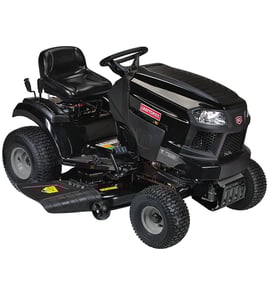





What year is my Craftsman mower serial number lookup?
On a Craftsman riding mower like model 917254631, the model number does not tell the year; you typically date the unit by decoding the serial number on the product ID tag. Many Craftsman tags use a 6-digit date code format (MMDDYY) that gives you the exact build date.
Where to find the serial number
Look for a product ID tag or sticker on common locations such as:
- Under the seat pan (lift the seat)
- On the rear fender pan near the seat
- On the frame rail near the engine
- Near the transaxle area on the frame
- Under the hood on the chassis
If the tag is dirty or faded, wipe it with a damp rag and take a clear photo before writing anything down.
How to decode the year from the serial number
A common Craftsman date-style serial format is 6 digits:
- First 2 digits = month
- Next 2 digits = day
- Last 2 digits = year
Example
| Serial/date code | Month | Day | Year | Build date |
|---|---|---|---|---|
| 072811 | 07 | 28 | 11 | July 28, 2011 |
If your serial number does not match MMDDYY
Some Craftsman tractors use a different serial format (letters, longer strings, or a separate “date” line). Use these quick checks:
- Look for a label line that explicitly says DATE or DOM (date of manufacture)
- Check whether the tag has two numbers: a model number and a serial number (use the serial)
- If the last two digits are not a realistic year, the code is likely not MMDDYY
- Compare the tag format to the parts list for your exact model to avoid mixing up similar tractors
Why it matters
Knowing the build year helps you match the correct deck, drive, and electrical parts for your tractor, especially when there were mid-series changes. For example, belt routing and sizes can vary, so confirming the exact model and date reduces wrong-part returns.
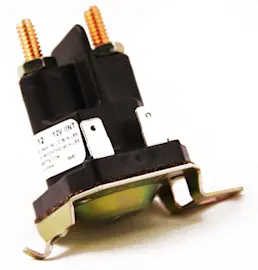
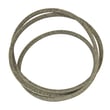
If you are troubleshooting starting or drive issues while you are identifying the tractor, common wear items to check include the solenoid 532146154 and the v-belt 532125907.
Last updated: February 2026
What engine does Craftsman riding mower use?
The Craftsman riding mower model 917254631 is a 38-inch, 12-hp mower tractor; it uses a small single-cylinder gasoline lawn tractor engine in the 12 HP class. For engine-specific service parts on this model (starting and safety circuits), match parts by model and symptom, such as the solenoid 532146154 or lawn tractor ignition switch 532365402.
What you can use to identify the exact engine on 917254631
Because engine families vary within a model series, we identify the exact engine by the engine’s own ID tag (not the tractor model number).
- Look for the engine model/type/code stamped on the blower housing or valve cover area.
- Check for a metal tag near the starter, muffler, or flywheel shroud.
- Record the full string (letters and numbers) before ordering engine gaskets, carburetor parts, or ignition parts.
- If the mower cranks but will not start, focus first on interlocks and starting components.
Common engine brands used on Craftsman tractors like this
Most Craftsman front-engine lawn tractors of this era commonly used engines from these makers:
| Engine maker | Typical configuration | What it affects when ordering parts |
|---|---|---|
| Briggs & Stratton | Single-cylinder | Gaskets, carburetor parts, ignition parts |
| Tecumseh (some builds) | Single-cylinder | Carburetor and ignition part matching |
Quick troubleshooting if you are chasing an “engine problem”
Many “engine” complaints are actually starting or safety-interlock issues.
- No crank: check battery connections, then the solenoid 532146154.
- Cranks but no start: verify fuel is fresh and the fuel cap vents properly (see fuel cap 581075501).
- Starts then dies when you get off the seat: test the lawn tractor seat switch 532421062.
- Runs but will not move: inspect the ground drive belt routing and wear (see v-belt 532125907).
Why it matters
The tractor model number 917254631 identifies the chassis and deck; the engine model/type/code identifies the engine. Using both prevents ordering the wrong carburetor kit, exhaust gasket, or ignition components.
Last updated: February 2026
What are the parts of a lawn mower engine?
A lawn mower engine (including the engine used on many Craftsman riding tractors like model 917254631) is built from fuel, air, ignition, and mechanical components that work together to create power and spin the crankshaft. When diagnosing a no-start, rough running, or power-loss issue, we focus on these core systems first.
Main engine systems and common parts
Most small gasoline mower engines include:
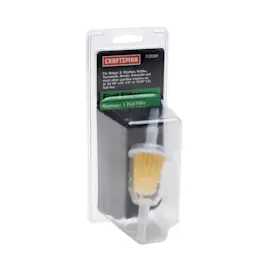
- Fuel system: fuel tank, fuel cap, fuel line, fuel filter (if equipped), carburetor
- Air intake: air filter, intake tube, choke plate
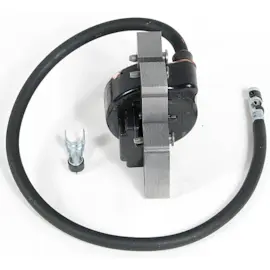
- Ignition: flywheel magnets, ignition coil/module, spark plug, kill wire
- Starting system: recoil starter (pull start) or electric starter motor, starter solenoid, battery (electric start)
- Lubrication and crankcase: crankcase, oil fill/dipstick, seals, breather
- Mechanical rotating parts: piston, rings, connecting rod, crankshaft, camshaft, valves
- Exhaust: muffler, exhaust gasket
Parts you might replace during common repairs
On the Craftsman 917254631 38-inch 12-hp mower tractor, these page-listed parts often relate to engine starting or engine-adjacent symptoms:
- Solenoid 532146154 (electric start clicks or no crank)
- Lawn tractor ignition switch 532365402 (no crank, intermittent start)
- Lawn tractor seat switch 532421062 (engine dies when you shift or blades engage)
- Fuel cap 581075501 (fuel starvation from poor venting)
- Gasket 692236 (exhaust leak, popping, louder exhaust)
Quick symptom-to-system guide
| Symptom | Most likely system to check first | Typical first checks |
|---|---|---|
| Won’t crank | Starting, safety interlocks | Battery, solenoid, ignition switch, seat switch |
| Cranks but won’t start | Fuel or ignition | Fresh fuel, spark at plug, carburetor flow |
| Starts then dies | Fuel venting, safety interlocks | Fuel cap venting, seat switch, choke setting |
| Runs rough, lacks power | Air, fuel, exhaust | Air filter, carburetor, exhaust gasket |
Why it matters
Knowing the engine’s main parts helps you troubleshoot faster and avoid replacing the wrong component. For example, a “no-start” can be fuel-related, but a “no-crank” is usually electrical (switches, solenoid, wiring).
Last updated: February 2026