 Installation guide
 Owner’s manual


What is the most common problem with a washing machine top loader?
The most common issue we see with top-load washers like the Estate TAWS850PQ2 is an unbalanced or overloaded load, which causes banging, excessive vibration, a crooked basket, or a spin that stops early. In many cases, correcting the load and leveling the washer fixes it.
Quick checks that solve most “shaking/noisy” complaints
- Pause the cycle and redistribute items evenly (mix large and small items).
- Reduce the load size; clothes should move freely during washing.
- Confirm the washer is level; tighten the front leveling feet nuts.
- If the basket was pulled forward during loading, push it back to center before starting.
- Expect some basket movement during washing; that is normal.
If it is not just an unbalanced load
These are other common top-load problems and what they usually point to:
| Symptom | Most likely cause | What to check first |
|---|---|---|
| Won’t spin or agitate | Lid not closed or lid switch issue | Lid fully closed; inspect washer lid switch assembly WP8318084 |
| Won’t drain or spins poorly | Drain restriction or pump issue | Drain hose height and clogs; inspect washer drain pump WP3363394 |
| Won’t fill or fills slowly | Water supply or inlet screens clogged | Hot/cold faucets on; hoses not kinked; clean inlet screens |
| Cycle seems stuck filling or draining | Drain hose siphoning | Drain hose needs an air gap; standpipe fit should not be sealed |
Why it matters
Running the TAWS850PQ2 with repeated out-of-balance loads can increase wear on suspension components and drive parts, and it can also lead to nuisance “won’t spin” complaints that are really load or leveling related.
Where to find model-specific setup details
For leveling, drain hose height (including the 96 in. maximum), and operating notes like lid-closed requirements, follow the installation guide.
Last updated: February 2026
What is the most expensive part to replace on a washing machine?
On an Estate TAWS850PQ2 washer, the most expensive repair is usually a major drive-system component such as the drive motor or gearcase-related parts, because the parts cost is high and the labor can be significant. Electronic control boards can also be costly on many washers.
Most expensive repairs (what we see most often)
These repairs tend to cost the most because they involve high-priced assemblies and more teardown time:
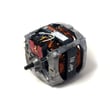
- Drive motor replacement (common high-cost part)
- Gearcase or drive system repairs (often labor-intensive)
- Basket or tub-related repairs (can require major disassembly)
- Timer or control replacement (varies by design)
For this model, examples of higher-priced parts on the parts list include the washer drive motor WP661600 and the washer timer WP8541270.
Quick cost comparison (parts only)
Actual totals vary by symptom and labor, but this shows why some repairs add up fast.
| Repair area | Example part on TAWS850PQ2 | Why it gets expensive |
|---|---|---|
| Drive system | Drive motor | Higher part cost; access and testing time |
| Controls | Timer | Higher part cost; diagnosis time |
| Basket/tub | Basket or drive basket | Major disassembly; multiple related parts |
How to decide if it is worth repairing
Use this checklist before ordering parts:
- Confirm the symptom (no spin, no drain, noisy, leaking, burning smell)
- Check for simple causes first (overload, unbalanced load, kinked drain hose)
- If it will not spin or drain, inspect common wear items before major parts
- Compare the part cost to the washer’s age and overall condition
- Follow the safety and service guidance in the owner's manual
Why it matters
The “most expensive part” is not always the right part to replace. Accurate diagnosis prevents buying a motor, clutch, or basket when the real issue is a simpler failure such as a coupling, lid switch, or drain pump.
Last updated: February 2026
What is code TAWS850PQ2?
TAWS850PQ2 is the model number for an Estate top-load washer, not an error code. We use this model number to match the correct parts list, diagrams, and operating information for your specific washer; you can also find it on the model and serial label under the lid (see the owner's manual).
Where to find and use the model number
- Look under the washer lid for the model and serial number label.
- Match the label exactly to TAWS850PQ2 when ordering parts.
- Use the model number to confirm fit for common repairs like no spin, no drain, or no fill.
- Keep the model number handy when checking installation requirements and hookups.
Common “code” mix-ups (model number vs. symptoms)
If you are troubleshooting a problem, the model number helps us narrow down the most likely failed part.
| What you have | What it means | What to do next |
|---|---|---|
| TAWS850PQ2 | Washer model number | Use it to look up parts and instructions |
| Flashing lights, unusual sounds, won’t spin/drain/fill | Operating symptom | Troubleshoot the symptom and test likely parts |
| Installation questions (hoses, drain setup, leveling) | Setup requirement | Follow the installation guide |
Parts that are commonly tied to “washer won’t…” symptoms
These are frequent fixes for this Estate TAWS850PQ2 platform:
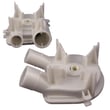
- Won’t drain: check the washer drain pump WP3363394
- Won’t spin or stops when lid opens: check the washer lid switch assembly WP8318084
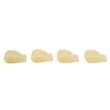
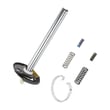
- Agitates poorly: inspect the agitator dog 80040
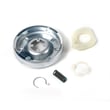
- Won’t agitate or spin (direct-drive issues): inspect the washer motor coupling 285753A
Why it matters
Using the correct model number prevents wrong-part orders and speeds up diagnosis. TAWS850PQ2 tells us the exact configuration of your Estate washer so parts like the drain pump, lid switch, and motor coupling match correctly.
Last updated: February 2026
Are estate washing machines any good?
Estate washers like the Estate TAWS850PQ2 are generally solid, no-frills top-load machines with an agitator. In day-to-day use, they tend to clean well when loads are sized correctly, the lid stays closed during operation, and the washer is installed properly per the owner's manual.
What “good” usually means for an Estate top-load washer
These washers are built around straightforward mechanics (agitator wash action, simple controls). That typically translates to dependable cleaning and easier troubleshooting compared with more complex designs.
Common strengths:
- Strong agitation for everyday mixed loads
- Simple cycle selection and operation
- Parts availability for common wear items (lid switch, drain pump, coupling)
Common tradeoffs:
- Less gentle on delicate fabrics than some front-loaders
- More sensitive to overloading and unbalanced loads
- Performance drops quickly if installation is off (drain hose height, air gap)
How to get the best performance from TAWS850PQ2
The manual guidance for this model focuses on a few key habits that directly affect wash quality and reliability.
- Keep loads balanced and avoid overloading; clothes should move freely during washing
- Close the lid during operation; the washer will not agitate or spin with the lid open
- Measure detergent to prevent excessive sudsing
- Confirm the drain hose setup is correct (not clogged, not sealed/taped, and not routed too high)
Quick check: symptoms that look like “a bad washer” but are fixable
| What you notice | Most common cause | What to do first |
|---|---|---|
| Won’t spin or agitate | Lid not closed or lid switch issue | Verify lid closes firmly; inspect washer lid switch assembly WP8318084 |
| Won’t drain | Drain hose issue or pump problem | Check hose routing; inspect washer drain pump WP3363394 |
| Cycle seems stuck (fills and drains) | Drain hose too low or sealed | Ensure hose has an air gap and sits higher than water level |
Why it matters
Most “performance” complaints on agitator top-load washers come from load size, suds level, or drain hose installation. When those basics are right, an Estate washer like the TAWS850PQ2 typically delivers consistent cleaning and dependable operation.
Last updated: February 2026
How to tell if a washing machine drain pump is bad?
On an Estate TAWS850PQ2 washer, a bad drain pump shows up as no draining or very slow draining, a spin that leaves clothes wet, or loud humming/grinding during the drain portion of the cycle. Rule out drain-hose setup and clogs first.
Quick signs the pump is failing
- Washer will not drain or drains very slowly
- Loud hum but little or no water movement
- Grinding or rattling during drain (debris or damaged impeller)
- Leaks during drain (pump housing or hose connection)
- Cycle stalls at drain or rinse because water is not leaving the tub
Checks to do before replacing parts
These TAWS850PQ2 issues commonly mimic a bad pump:
- Lid closed: the lid must be closed for the washer to drain and spin.
- Drain hose clog: check the hose and standpipe for blockage.
- Drain hose height: the hose end must be no more than 96 in. (244 cm) above the floor.
- Air gap: do not tape or seal the drain hose to the standpipe; it needs an air gap.
- Excess suds: too much detergent can slow draining and reduce spin performance.
For the correct drain-hose setup, follow the installation guide.
Drain problem vs. pump problem
| What you notice | Most likely cause | Next step |
|---|---|---|
| Hums during drain, no flow | Pump jammed or failed | Check pump inlet for debris; replace if binding/noisy |
| No pump sound | Lid switch, timer, wiring, or pump | Verify lid switch, then check power to pump |
| Drains but leaks | Pump or hose connection | Inspect pump body and clamps |
When replacement makes sense
If the hose and standpipe are clear and the drain hose is installed correctly, replacing the pump is the reliable fix. The correct part for this model is the washer drain pump WP3363394.
Why it matters
TAWS850PQ2 must drain before it can spin properly; a weak or jammed pump leaves water in the tub and clothes.
Last updated: February 2026





