Owner’s manual
 Error Codes


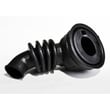
How to force a Kenmore 11047852702 washer to drain?
To force-drain a Kenmore Elite washer model 11047852702, we use a manual drain through the pump filter area and then correct the cause (clog, kinked hose, or a failing drain pump). This safely removes standing water so you can restore normal draining.
Fast way to drain the tub (manual drain)
- Unplug the washer (or switch off the breaker).
- Turn off both water supply valves.
- Place towels and a shallow pan at the front lower access area.
- Open the lower access panel (if equipped).
- Slowly loosen the pump filter cap to let water trickle into the pan; tighten, empty the pan, and repeat until drained.
- Remove the filter fully and clear lint, coins, socks, and debris.
What to check after it drains
- Drain hose behind the washer: kinks, pinches, or freezing
- Standpipe or laundry sink: slow household drain causing backup
- Pump filter cavity: debris around the impeller
- Tub-to-pump hose: internal blockage (common with small items)
- Door lock: if the door will not lock, some cycles will not drain/spin
If you find the pump area damaged or the washer still will not drain, the drain pump assembly may need replacement (browse the parts list for your model).
Parts that commonly relate to no-drain symptoms
| Symptom | Common cause | Example part on this model page |
|---|---|---|
| Hums but won’t drain | Pump jammed or failing | (Pump listed in parts) |
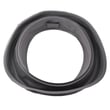
| Leaks at door during/after drain | Torn door boot | Washer door boot WP8182119 |
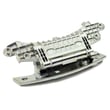
| Door won’t unlock or cycle stops | Door lock issue | Washer door lock WP8183270 |
Why it matters
Standing water can lead to odor, poor rinsing, and repeated drain errors. Draining through the pump filter also prevents a sudden spill when you remove hoses or service the pump.
For model-specific panel access and filter location details, follow the steps in the owner's manual.
Last updated: February 2026
Is Kenmore 11047852702 high end?
Yes. Kenmore Elite model 11047852702 is part of Kenmore’s higher-end washer lineup; it’s built and equipped to deliver stronger cleaning performance, higher spin speeds, and more cycle options than basic Kenmore washers. For model-specific features and cycle details, use the owner's manual.
What “high end” means for this Kenmore Elite washer
In our experience, “high end” for a front-load style Kenmore Elite washer typically shows up in:
- More specialized cycles (bedding, sanitize-style, heavy duty, quick wash)
- Higher spin performance for better water extraction (shorter dry times)
- Better vibration control and cabinet stability
- More robust door sealing and locking systems
- More serviceable, replaceable components when wear items fail
Parts that commonly support “premium” performance
Higher-end washers still rely on a few key wear parts to stay quiet, leak-free, and stable. If performance drops, these are common fixes for 11047852702:
- Leaks at the door opening: washer door boot WP8182119
- Door won’t latch or unlocks mid-cycle: washer door lock WP8183270
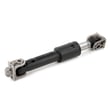
- Excessive shaking or banging: washer shock absorber W10822553 and suspension components
- Water not draining well (often paired with noise): tub-to-pump hose and clamps
Quick comparison: Elite vs basic washer (typical)
| Feature area | Kenmore Elite (typical) | Basic washer (typical) |
|---|---|---|
| Cycle selection | More specialized cycles | Fewer, more general cycles |
| Spin performance | Higher extraction | Lower extraction |
| Noise/vibration control | More damping and suspension | Less damping |
| Repairability | More replaceable assemblies | Varies by design |
Why it matters
If you’re deciding whether it’s “worth fixing,” a Kenmore Elite washer is usually a good candidate for repair when the issue is a wear part (door boot, door lock, shocks) rather than major tub or control damage. Keeping the door seal and suspension in good shape also prevents leaks and reduces vibration-related failures.
Last updated: February 2026
How to reset Kenmore washer model 11047852702 top loader?
Kenmore Elite washer model 11047852702 is a front-load washer; the most reliable “reset” is a simple power reset: unplug (or switch off the breaker) for 2 minutes, then restore power and start a new cycle. This clears many control glitches without changing any settings.
Quick reset steps (safe first)
- Press Pause/Cancel once to stop the cycle.
- Unplug the washer (or turn the breaker off).
- Wait 2 minutes.
- Restore power.
- Select Drain/Spin (or a normal cycle) and press Start.
If it still will not start or finish a cycle
These checks solve the most common “needs a reset” complaints on front-load washers.
- Make sure the door closes firmly and the latch clicks.
- Check for standing water; run Drain/Spin to clear it.
- Reduce the load size and rebalance bulky items.
- Use HE detergent and reduce soap if you see excess suds.
- If the door will not lock, inspect the washer door lock WP8183270.
When a “reset” points to a part problem
A reset helps with temporary control issues. If the symptom returns quickly, a component is usually causing the control to stop the cycle.
| Symptom | Most common cause | What to check next |
|---|---|---|
| Door will not lock or unlock | Door lock issue | Washer door lock WP8183270 and door alignment |
| Leaks at the door | Torn or loose boot | Washer door boot WP8182119 and clamp seating |
| Loud banging or walking | Suspension wear | Washer shock absorber W10822553 |
| Will not drain well | Drain path restriction | Hoses and pump area |
Why it matters
Resetting clears a stalled control state, but it does not fix a mechanical failure. If the washer repeatedly stops, leaks, or will not lock, addressing the door boot, door lock, or suspension parts prevents repeat shutdowns and protects the motor control.
For model-specific operating steps and cycle behavior, follow the owner's manual.
Last updated: February 2026
Is it worth repairing a Kenmore washing machine?
Yes, repairing a Kenmore washer is worth it when the problem is a common wear item (leaks, door sealing, draining, vibration) and the fix restores reliable operation for a reasonable cost. For Kenmore Elite washer model 11047852702, we typically repair when the machine is otherwise in good condition and the repair is not a major tub or control overhaul.
Quick way to decide
Use these checkpoints before you buy parts or schedule service:
- Repair is usually worth it if the washer has a single clear symptom (leak at the door, won’t drain, excessive shaking) and the fix is a known wear part.
- Replacement is usually the better value if you have multiple major failures at once (control issues plus tub/bearing noise plus repeated leaks).
- Age and condition matter: if the cabinet is solid, no rust-through, and it has been maintained, repairs tend to pay off.
- Cost rule: if the total repair cost is around half the price of a comparable new washer or less, repairing is typically the smarter move.
Common repairs on model 11047852702 that often make sense
These are frequent, targeted fixes that can stop leaks or restore normal operation:
- Door seal leak: replace the washer door boot WP8182119
- Boot clamp issues (seal won’t stay seated): replace the washer door boot spring clamp WP8182210 or washer door boot spring clamp W10902779
- Door won’t latch or unlocks mid-cycle: replace the washer door lock WP8183270
- Excessive vibration or banging: inspect/replace the washer shock absorber W10822553 and check the washer suspension spring set W10135004
- Drain or water-in-tub complaints: inspect the tub-to-pump path, including the washer tub-to-pump hose WPW10467168
Repair vs replace: simple comparison
| Situation | Usually do this | Why |
|---|---|---|
| One symptom, one worn part (seal, latch, hose) | Repair | High success rate, controlled cost |
| Repeated failures across different systems | Replace | Costs stack up quickly |
| Loud mechanical grinding plus leaks | Replace (often) | Indicates deeper tub/drivetrain wear |
| Minor leak caught early | Repair now | Prevents damage to bearings, motor, and flooring |
Why it matters
A small leak or out-of-balance condition can turn into expensive damage (corrosion, bearing wear, motor/control exposure). Fixing the root cause early often extends the washer’s usable life and improves cleaning performance.
What we recommend before ordering parts
- Confirm the symptom and where it starts (door area, underneath, during spin).
- Check for simple causes first (overloading, uneven floor, detergent oversudsing).
- Use the troubleshooting and maintenance steps in the owner's manual.
Last updated: February 2026