Owner’s manual


Where is the model number on a Kenmore Elite dryer?
On Kenmore Elite dryer model 11087088601, the model number is typically printed on a rating label inside the dryer door opening. Open the door and check the cabinet frame around the opening first; that is the most common location.
Most common label locations to check
- Inside the door opening on the front cabinet frame (top, left, or right side)
- On the inner edge of the door itself
- Just behind the lint screen housing area (visible with the door open)
- On the rear panel of the dryer cabinet (less common)
How to find it quickly
- Open the dryer door and use a flashlight.
- Look for a white or silver sticker/plate with MODEL and SER. fields.
- Wipe dust off the label so the full number is readable.
- Write down the full model number exactly as shown (for this dryer: 11087088601).
What the label usually looks like
| Label field | What it’s used for | Example for this dryer |
|---|---|---|
| Model | Identifies the exact design and parts list | 11087088601 |
| Serial | Helps date the unit and match revisions | Varies by unit |
Why it matters
We use the model number to match the correct Kenmore parts and diagrams for your exact dryer build. That prevents ordering the wrong items when you are replacing common wear parts like a drum support roller, idler pulley, or heating component.
For additional identification details and general use information, check the 11087088601 owner’s manual.
Last updated: February 2026
What size is a Kenmore Model 11087088601 dryer?
Most Kenmore Elite dryer model 11087088601 units are full-size dryers; they typically measure about 27 inches wide, 27 to 30 inches deep, and 38 to 43 inches tall depending on console style and door design. For the exact dimensions for your unit, use the specs section in the 11087088601 owner's manual.
Typical dimensions you can expect
These are the most common exterior size ranges for 27-inch-class Kenmore (Whirlpool-built) dryers like model 11087088601:
- Width: ~27 inches
- Depth: ~27 to 30 inches (deeper if the door handle protrudes)
- Height: ~38 to 43 inches (varies by control panel height)
- Door swing clearance: plan extra space in front for loading
- Vent clearance: allow room behind for the exhaust duct
How to measure your dryer accurately
Use a tape measure and record the largest point (including protrusions).
- Measure width at the widest point (usually the cabinet sides)
- Measure height from floor to the top of the console
- Measure depth from the back panel to the front-most point (often the door/handle)
- Add at least 1 inch behind the dryer for airflow and vent connection
- If installing in a closet, confirm required side and top clearances in the manual
Quick planning table (what to write down)
| Measurement | Where to measure | What to include |
|---|---|---|
| Width | Left side to right side | Cabinet edges |
| Height | Floor to top | Top of console |
| Depth | Back to front | Door/handle protrusion |
| Rear clearance | Wall to dryer back | Vent duct space |
Why it matters
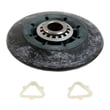
Correct dimensions help prevent crushed venting (long dry times), door clearance issues, and tight installs that make service harder. If you are also troubleshooting noise or rubbing after a move, worn drum support parts can show up; the support WPW10314173 is a common wear item on this platform.
Last updated: February 2026
What size belt does a Kenmore dryer take?
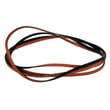
For Kenmore Elite dryer model 11087088601, the correct belt size depends on the exact drum and motor drive design used in this model. The most reliable way to match the belt is to look up the belt specification and routing diagram in the 11087088601 owner's manual before ordering.
How to identify the right belt for your Kenmore 11087088601
We match dryer belts by length, rib/groove count, and width. Many Kenmore 110-series dryers commonly use a multi-rib belt (often 4 ribs/3 grooves) in the low-90 inch range, but the exact fit must match your model’s drive system.
Use these checks:
- Confirm the full model number is 11087088601 (from the door opening or cabinet label).
- Note whether the belt is ribbed (most common) or smooth.
- Inspect the old belt for printed numbers (often the easiest match).
- Compare belt routing around the motor pulley and idler pulley.
- If the belt broke, also inspect rollers and idler for drag that can shorten belt life.
Parts that commonly affect belt fit and performance
If the drum is hard to turn by hand, a new belt can fail early. These model-compatible parts are common wear items:
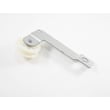
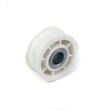
- Dryer idler pulley 279640 (keeps proper belt tension)
- Support WPW10314173 (drum support roller that reduces friction)
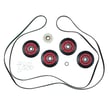
- Dryer repair kit 4392067 (often includes multiple wear components)
Quick symptom-to-part guide
| Symptom | What it often points to | Example model-compatible part |
|---|---|---|
| Squealing or chirping | Worn roller or idler | Support WPW10314173, Dryer Idler Pulley 279640 |
| Thumping | Flat-spotted roller | Support WPW10314173 |
| Belt keeps breaking | Excess friction or misalignment | Dryer Idler Pulley 279640, Dryer Repair Kit 4392067 |
Why it matters
A belt that is even slightly off in length or rib profile can slip, squeal, or wear quickly. Matching the belt correctly for 11087088601 also helps protect the drive motor and keeps drying performance consistent.
Last updated: February 2026
What are the codes for Kenmore Elite dryer?
Kenmore Elite dryer model 11087088601 uses “F” fault codes and a few letter codes to point you to the failing system (power, control, keypad, heater relay, or temperature sensing). Use the code to guide quick checks, then confirm the exact test steps in the 11087088601 owner's manual.
Common Kenmore Elite dryer codes (what they usually mean)
- PF: Power failure or power interruption during a cycle.
- F:01: Main electronic control board problem.
- F:02: Keypad or user interface problem.
- F:20: Heater relay failure (heating circuit control issue).
- F:22 / F:23: Outlet thermistor (temperature sensor) problem.
- F:24 / F:25: Inlet thermistor (temperature sensor) problem.
What to do first (fast, safe checks)
- Unplug the dryer (or switch off the breaker) for 2 minutes, then restore power and retry.
- If you see PF, check the outlet, breaker, and cord connection for a loose fit.
- Make sure airflow is strong; clean the lint screen and confirm the vent is not crushed or clogged.
- If the code points to temperature sensing, check for lint buildup around the blower housing and ducting.
- If the code points to heating, stop using high heat until the issue is corrected.
Parts that commonly relate to heat and sensor codes
| Code family | System involved | Example part for this model |
|---|---|---|
| F:20 | Heating circuit control | Dryer heating element WP8544771 |
| F:22-F:25 | Temperature sensing | Dryer thermistor WP8577274 |
| PF | Power supply | House power, breaker, outlet (not a dryer part) |
Why it matters
Running a dryer with a heater or thermistor fault can cause long dry times, overheating, or repeated shutdowns. Correcting airflow issues and replacing failed heating or sensor parts helps protect the heater housing, drum, and clothing.
Last updated: February 2026
Where is the filter on a Kenmore Elite dryer?
On Kenmore Elite dryer model 11087088601, the “filter” is the lint screen; it’s typically located in the top panel opening (near the dryer door area) or just inside the door opening. Pull it out before or after each load, remove lint, and reinstall it fully; see the 11087088601 owner's manual for your exact placement.
How to find it fast
- Check the top of the dryer, near the right or left front corner (common on many Kenmore Elite 110-series dryers).
- If you don’t see it on top, open the door and look along the front opening for a pull-out screen.
- The lint screen handle is usually the only part designed to be removed without tools.
- If the screen looks damaged, warped, or won’t seat tightly, replace it to prevent lint bypass.
Cleaning steps (what we recommend)
- Remove the lint screen and peel lint off with your fingers.
- If you see residue (fabric softener sheets can cause it), wash the screen with warm water and a soft brush; let it dry completely.
- Vacuum the lint screen housing carefully (use a crevice tool).
- Keep the exhaust vent path clear; restricted airflow causes long dry times and overheating.
Lint screen vs. vent lint: what’s the difference?
| Item | Where it is | How often to clean | What happens if it’s clogged |
|---|---|---|---|
| Lint screen (filter) | On top panel or inside door opening | Every load | Longer dry times, poor airflow |
| Lint duct / blower area | Inside cabinet | Every 6 to 12 months | Overheating, noise, shutdowns |
| House vent to outside | Behind dryer to exterior hood | Every 6 to 12 months | Very long dry times, heat buildup |
Why it matters
A clean lint screen and clear airflow help your 11087088601 dry faster, run cooler, and reduce wear on key parts like the drive motor and heating system.
Last updated: February 2026
Is Kenmore Elite high end?
Yes. Kenmore Elite is Kenmore’s premium line, and the Kenmore Elite dryer model 11087088601 is built to offer more convenience features and cycle options than basic Kenmore dryers, with performance that competes in the mid-to-high-end range.
What “high end” means for Kenmore Elite dryers
Kenmore Elite typically focuses on upgraded drying performance, more cycle choices, and convenience features.
Common “premium” traits you’ll see:
- More specialized cycles (for bulky items, jeans, delicates, and quick loads)
- More temperature control options (high through extra low, plus air-only drying)
- Better fabric care features (automatic cycles and settings designed around load type)
- Higher overall fit and finish compared with entry-level models
For the exact cycle list and how each one is intended to be used on this model, use the 11087088601 owner’s manual.
Quick comparison: Elite vs standard Kenmore dryers
| Feature area | Kenmore Elite (typical) | Standard Kenmore (typical) |
|---|---|---|
| Cycle selection | More specialized cycles | Fewer, more basic cycles |
| Fabric care | More low-heat and air options | Often fewer gentle options |
| Convenience | More settings and modifiers | Simpler controls |
| Repair approach | More parts options, more features to diagnose | More straightforward |
Why it matters
“High end” usually means better fabric care and more control, not just a higher price. If your loads vary (towels, bedding, delicates), the extra cycles and temperature choices can reduce overdrying, shrinkage, and long dry times.
When “high end” does not fix a problem
Even premium dryers can struggle if airflow is restricted or a heating component is failing. If you’re troubleshooting heat or temperature issues on this model, common related parts include the dryer thermistor WP8577274 and the dryer heating element WP8544771.
Last updated: February 2026
How much does it cost to replace a heating element in a Kenmore dryer?
For Kenmore Elite dryer model 11087088601, replacing the heating element typically costs about $100 to $350 total when you include the part plus labor. If you do it yourself, the part cost is usually about $50 to $150, depending on whether you replace only the element or related wiring and thermostats.
Typical cost breakdown
- DIY part only: $50 to $150 (most common range for an electric dryer element)
- DIY with related parts: $75 to $250 (element plus thermostats, thermal cut-off, or wiring)
- Professional repair (parts + labor): $100 to $350
- Service call/diagnostic (if charged separately): commonly $75 to $125
| Scenario | What you pay for | Typical total |
|---|---|---|
| DIY, element only | Heating element + your time | $50 to $150 |
| DIY, “no-heat” refresh | Element + safety thermostats/wire kit | $75 to $250 |
| Pro repair | Labor + element (and any needed extras) | $100 to $350 |
Parts that commonly affect the final price
If your dryer overheated or had a loose connection, we often see additional parts needed along with the element:
- Heating element: dryer heating element WP8544771
- Burned/loose heater wiring: dryer heating element wire kit 279457
- Overheat protection trip: dryer high-limit thermostat WP8557403
- Temperature sensing issue: dryer thermistor WP8577274
Why it matters
A dryer can stop heating because of airflow problems (lint buildup, crushed vent) or a failed thermostat, not just a bad element. Replacing only the element when the root cause is overheating can lead to repeat failures and higher total cost.
Before you buy parts
We recommend these quick checks first:
- Clean the lint screen and confirm strong airflow at the outside vent hood
- Inspect the vent run for kinks, long runs, or heavy lint restriction
- Verify the cycle and temperature settings are appropriate for the load
- Review safety and operating guidance in the 11087088601 owner’s manual
Last updated: February 2026
How do I know if my Kenmore dryer thermal fuse is blown?
On Kenmore Elite dryer model 11087088601, a blown thermal fuse typically shows up as a dryer that will not start or runs but won’t heat. The sure way to confirm is a continuity test with a multimeter after unplugging the dryer; an open reading means the fuse is blown.
Quick checks before testing
- Make sure the dryer has power (reset the breaker; electric dryers often use a 2-pole breaker).
- Confirm the door is closing and latching; a bad latch can mimic a “dead” dryer.
- Clean the lint screen and check airflow; restricted venting is a common reason a thermal fuse opens.
- If the drum turns but there’s no heat, also consider the heating circuit (element, thermostats, wiring).
How to test the thermal fuse (continuity)
- Unplug the dryer (or shut off power at the breaker).
- Access the fuse (commonly on the blower housing or exhaust duct area).
- Remove at least one wire from the fuse terminal.
- Set your multimeter to continuity or lowest ohms.
- Touch probes to the fuse terminals.
Typical results
| Meter result | What it means | What to do next |
|---|---|---|
| Beep or ~0 to 1 Ω | Fuse is good | Keep troubleshooting heat or start circuit |
| No beep or OL/open | Fuse is blown | Replace the fuse and correct the airflow problem |
For model-specific access steps and safety notes, follow the 11087088601 owner’s manual.
If the dryer runs but won’t heat
On this Kenmore Elite dryer, “no heat” can also be caused by failed heating components. These model-listed parts are common suspects:
- Dryer heating element WP8544771 (open element, broken coil)
- Dryer high-limit thermostat WP8557403 (opens if overheating occurs)
- Dryer thermistor WP8577274 (temperature sensing issues)
- Dryer heating element wire kit 279457 (burned or loose connections)
Why it matters
A thermal fuse is a one-time safety device; it opens when the dryer overheats, often from a clogged lint screen, crushed vent hose, or blocked exterior vent. Replacing the fuse without fixing airflow can cause repeat failures and longer dry times.
Last updated: February 2026
What are common problems with Kenmore dryers?
Common problems we see on the Kenmore Elite dryer model 11087088601 include no heat, long dry times, the drum not turning, and loud squealing or thumping. Most of these issues trace back to airflow restrictions (lint buildup) or normal wear on drive and heating components; check the 11087088601 owner's manual for cycle and safety guidance.
Most common symptoms and likely causes
- Dryer won’t heat: failed heating circuit parts, restricted venting, or incorrect cycle/temperature selection
- Takes too long to dry: clogged lint screen, blocked exhaust duct, crushed vent hose, or weak airflow
- Drum won’t turn: worn belt system parts, seized rollers, or a failing motor
- Loud noise (squeal, rumble, thump): worn drum support rollers, idler pulley wear, or blower wheel damage
- Door won’t stay closed: worn latch/catch components
Parts that commonly fix these problems (for model 11087088601)
If your symptom matches, these model-compatible parts are frequent fixes:
| Symptom | Common part to check | What it does |
|---|---|---|
| Squealing/rumbling | Support WPW10314173 | Supports the drum as it turns |
| Squealing or belt slack | Dryer idler pulley 279640 | Keeps proper belt tension |
| No heat or overheating | Dryer heating element WP8544771 | Produces heat for drying |
| No heat or temp issues | Dryer thermistor WP8577274 | Helps regulate temperature |
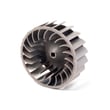
| Loud roaring/vibration | Dryer blower wheel WP697772 | Moves air through the drum and vent |
Quick checks we recommend before replacing parts
- Clean the lint screen every load; confirm it is seated correctly.
- Inspect venting from the dryer to the outside; remove lint, kinks, and crushed sections.
- Confirm cycle choice; the manual notes using Air Only/Air Fluff for heat-sensitive items (rubber, plastic, foam).
- Listen and observe: noise plus slow tumbling often points to rollers or the idler pulley.
- Unplug power before opening panels; follow the safety warnings in the manual.
Why it matters
Airflow problems can mimic heating failures and also cause overheating, shutdowns, and repeated part failures. Fixing vent restrictions first often restores normal drying performance and protects the heating system.
Last updated: February 2026
How to use steam refresh on Kenmore Elite dryer?
On Kenmore Elite dryer model 11087088601, use the Steam Refresh style cycle to relax light wrinkles and refresh dry, lightly worn items without running a full drying load. Select the refresh cycle, adjust time with the More Time or Less Time buttons, then press Start/Pause.
How to run the refresh cycle
- Load a small, similar-fabric load (do not pack the drum).
- Close the door firmly.
- Turn the cycle selector to Touch Up (the refresh cycle shown in the quick-start cycle list).
- Use More Time or Less Time to adjust the cycle length.
- Choose temperature options only if your control panel provides them for that cycle.
- Press Start/Pause to begin.
- Remove items promptly; hang or fold right away.
What to load (and what to avoid)
Steam refresh works best on dry fabrics that are lightly wrinkled.
- Best: cotton blends, dress shirts, casual pants, light jackets
- Avoid: heavily soiled items, dripping-wet items, foam/rubber/plastic items
- Use an air cycle for heat-sensitive items as noted in the 11087088601 manual
- Follow all safety warnings for items exposed to flammable substances
Quick guide: load size vs. results
| Load in drum | Recommended approach | Expected result |
|---|---|---|
| 1 to 3 items | Run Touch Up; adjust time as needed | Best wrinkle release |
| Mixed heavy and light items | Split by fabric weight | More even results |
| Overfilled drum | Reduce load | Better tumbling and fewer new creases |
Why it matters
Refresh cycles depend on tumbling space, airflow, and controlled heat to relax fibers. Overloading prevents items from moving freely, so wrinkles set instead of releasing.
Last updated: February 2026