
What size blade is a Craftsman 113295751 table saw?
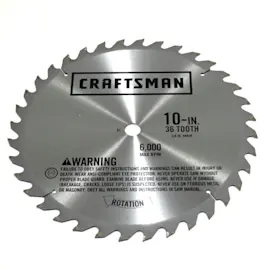
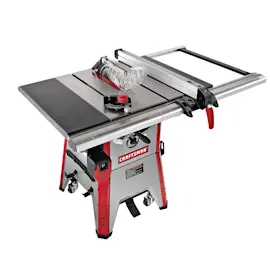
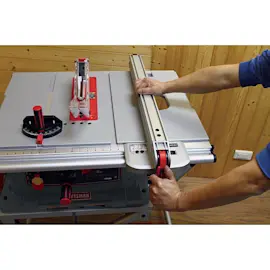
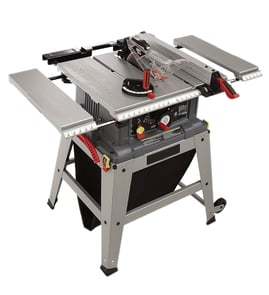
The Craftsman 113295751 is a 10-inch motorized table saw, so it uses a 10-inch (10 in.) saw blade. For safe operation and proper cutting performance, match the blade’s diameter and arbor hole size to the saw’s specifications before installing a replacement blade.
What to check before you buy a replacement blade
Even with the correct 10-inch diameter, a blade can still be wrong for your saw if the arbor hole or blade type does not match.
- Arbor hole size (must match the saw’s arbor shaft)
- Kerf thickness (thin-kerf vs. full-kerf; affects load on the motor)
- Tooth count (rip, crosscut, combination, fine-finish)
- Blade style (standard, dado set if your saw supports it)
- Maximum RPM rating (blade rating should meet or exceed the saw’s speed)
Common 10-inch blade choices (quick guide)
| Cut type | Typical tooth count | What it’s best for |
|---|---|---|
| Ripping | 24T to 30T | Fast cuts along the grain |
| Combination | 40T to 50T | Everyday mixed cutting |
| Crosscut and plywood | 60T to 80T | Smoother cuts, less tear-out |
Why it matters
Using the correct blade size on your Craftsman 113295751 helps keep the blade guard alignment correct, reduces vibration, and prevents binding. The right tooth count also improves cut quality and helps avoid overloading the motor.
Helpful DIY reference
If you’re also troubleshooting power, switches, or wiring while servicing the saw, use how to use a multimeter to test electrical parts video for safe, step-by-step testing basics.
Last updated: February 2026
What not to do with a table saw?
Do not use a Craftsman 113295751 10-inch motorized table saw with your hands near the blade, without proper work support, or with safety devices removed. Most serious table saw injuries come from kickback or accidental contact, so your “don’ts” should focus on control, guarding, and feed technique.
Top things not to do
- Do not freehand cut; always use the rip fence, miter gauge, or a proper jig.
- Do not stand directly in line with the blade; kickback sends the workpiece straight back.
- Do not reach over or behind the blade to grab offcuts; wait for the blade to stop.
- Do not rip narrow stock without a push stick or push block.
- Do not cut warped, twisted, or loose-knotted lumber that cannot sit flat and stable.
- Do not start the saw with the workpiece already touching the blade.
- Do not remove or defeat the blade guard, splitter/riving knife, or anti-kickback pawls when they are intended for the cut.
Safe setup basics (quick checklist)
| Item | Set it this way | Why it matters |
|---|---|---|
| Blade height | Raise just enough so the gullets clear the board thickness | Reduces exposed blade and improves control |
| Fence/miter gauge | Use one at a time for most cuts (not both trapping the work) | Prevents binding and kickback |
| Work support | Use outfeed/side support for long or wide stock | Prevents lifting, twisting, and pinch |
| PPE | Eye protection and hearing protection | Reduces injury risk from chips and noise |
Kickback “don’ts” that matter most
Kickback is the most common table saw hazard. Avoid these habits:
- Do not trap the board between the fence and the blade while crosscutting.
- Do not let the cut close on the back of the blade; keep the work flat to the table and tight to the fence.
- Do not feed too fast or stop mid-cut; keep a steady, controlled feed rate.
Why it matters
With a 10-inch motorized table saw like the Craftsman 113295751, the blade has enough torque to pull material in and throw it back instantly. Good technique, correct blade height, and proper guiding tools reduce both kickback and accidental contact.
For more general DIY safety guidance before you start repairs or adjustments, review are diy appliance repairs safe.
Last updated: February 2026
Are all table saw arbor nuts the same size?
No. Arbor nuts are not universal; the nut’s thread size and direction must match the arbor on your specific saw. For the Craftsman 113295751 10-inch motorized table saw, you need an arbor nut that matches the saw’s arbor threads, not just the blade’s 5/8-inch bore.
What is (and is not) “standard” on table saw arbors
Many 10-inch blades are made with a 5/8-inch arbor hole, but that does not mean every saw uses the same arbor nut.
- The blade bore (hole size) is about blade fit, not nut fit
- The arbor diameter is commonly 5/8 inch on many 10-inch saws
- The arbor nut threads (diameter, pitch, and direction) vary by saw design
- Some saws use left-hand threads so the nut self-tightens during operation
- Flanges, washers, and nut style (hex, flange nut) also vary
Quick fit check before you buy an arbor nut
Use these checks to avoid ordering the wrong hardware for your Craftsman 113295751.
- Unplug the saw and remove the blade guard and throat plate
- Remove the blade and keep the outer flange/washer with the nut (if present)
- Confirm whether the nut loosens clockwise or counterclockwise (thread direction)
- Measure arbor diameter with calipers (common is 5/8 inch on 10-inch saws)
- Match the nut by thread pitch (take the old nut to compare if possible)
Common arbor sizes you will see (typical)
These are typical ranges across table saws; your exact nut still must match the arbor threads.
| Saw/blade class | Common arbor diameter | What usually changes most |
|---|---|---|
| 10-inch table saw | 5/8 inch | Thread direction and thread pitch |
| 12-inch table saw | 1 inch | Nut size, flange stack, thread pitch |
| Jobsite/compact saws | 5/8 inch (often) | Flange style and nut design |
Why it matters
Using the wrong arbor nut can prevent the blade from clamping correctly, which leads to blade wobble, poor cut quality, and unsafe operation. Matching the nut to the Craftsman 113295751 arbor threads keeps the blade and flange stack tight and aligned.
For help confirming your exact model number before ordering parts, use how to find your appliance model number (and what it means for parts).
Last updated: February 2026
What are the common table saw mistakes?
Common table saw mistakes on a Craftsman 113295751 10" motorized table saw include skipping PPE, removing safety devices, using poor cutting technique, and forcing stock through a dull blade. These errors increase kickback risk, reduce cut accuracy, and can damage the saw.
Most common mistakes to avoid
- Cutting without a splitter or riving knife (higher kickback risk)
- Standing directly behind the workpiece during a rip cut
- Using the rip fence and miter gauge together for the same cut (can pinch the blade)
- Cutting freehand instead of using the fence, miter gauge, or a sled
- Setting the blade too high above the workpiece
- Using a dull, dirty, or wrong-tooth-count blade for the material
- Reaching over or near the blade instead of using push sticks or push blocks
Safer setup and cutting habits (quick checklist)
- Set blade height so the gullets are just above the top surface of the wood.
- Keep the fence parallel to the blade; do not “toe in” the fence.
- Use outfeed support for long boards so the cut stays controlled.
- Feed at a steady rate; do not force the stock.
- Keep the workpiece tight to the fence (ripping) or tight to the miter gauge (crosscutting).
What to use for common cuts
| Cut type | Best guide | What to avoid |
|---|---|---|
| Rip cut (with the grain) | Rip fence + push stick | Freehand cutting |
| Crosscut (across the grain) | Miter gauge or crosscut sled | Rip fence as a length stop without a safe method |
| Narrow rip | Push block, featherboard (if used correctly) | Fingers near the blade |
Why it matters
Most table saw injuries and “mystery” bad cuts trace back to kickback, binding, or loss of control. Good stance, correct guides, and sharp blades keep the cut predictable and reduce strain on the motor and arbor.
For general DIY safety guidance before starting a repair or adjustment, review are diy appliance repairs safe.
Last updated: February 2026
Can you use an 8 inch blade on a 10 inch table saw?
Yes. On the Craftsman 113295751 10-inch motorized table saw, you can use an 8-inch blade as long as the blade bore matches the arbor and the blade clamps flat and tight. The main change is reduced cut depth; switching from 10-inch to 8-inch typically reduces maximum depth of cut by about 1 inch.
What changes with an 8-inch blade
- Shallower cuts: expect roughly 1 inch less maximum depth at 90 degrees compared with a 10-inch blade.
- Guard and splitter/riving knife alignment: the blade sits lower, so some guarding or anti-kickback components may not line up correctly.
- More exposed blade below the table is not the issue: the key safety concern is whether above-table guarding and kickback prevention can still be used.
- Cut quality depends on the blade design: tooth count and grind (rip, crosscut, combination) matter more than diameter.
Compatibility checklist
| Check | What to confirm | Why it matters |
|---|---|---|
| Arbor (center hole) | Blade bore matches the saw arbor | Prevents wobble and unsafe mounting |
| Blade RPM rating | Blade rated at or above saw RPM | Prevents blade damage or failure |
| Flange contact | Blade seats flat; no debris on flanges | Reduces runout and vibration |
| Guard/splitter setup | Safety parts install and align correctly | Helps reduce kickback risk |
Dado note (a common reason to use 8-inch)
Many stacked dado sets are 8-inch diameter and are commonly used on 10-inch table saws because dadoes are non-through cuts. Confirm your setup supports the width you plan to cut (throat plate clearance, arbor length, and safe guarding).
Why it matters
Blade diameter directly affects maximum cut depth and whether critical safety components can be used correctly. If you cannot run the guard and splitter/riving knife properly, kickback risk increases.
For safe DIY practices that apply to power tools, review are diy appliance repairs safe.
Last updated: February 2026