Owner’s manual
 Error Codes


What is the most common problem with KitchenAid refrigerators?
The most common KitchenAid refrigerator issues are ice maker problems and cooling or temperature swings. On your KitchenAid KFIV29PCMS00 bottom-mount refrigerator, these symptoms are often tied to airflow (fan or damper), water supply to the ice maker, or temperature sensing; use the owner's manual to match symptoms to the right checks.
Most common symptoms we see
- Ice maker not making ice, slow ice production, or small cubes
- Fresh food section warm while freezer seems OK
- Frost buildup on the back wall or in the freezer
- Water leaks or puddles (often from a restricted drain)
- Unusual noises (fan-related buzzing, rubbing, or rattling)
Quick checks that solve many “common problems”
- Confirm temperatures: set the refrigerator to about 37°F and the freezer to about 0°F.
- Check airflow: make sure vents are not blocked by food packages.
- Clean condenser coils: dirty coils commonly cause weak cooling and long run times.
- Verify water supply (ice maker and dispenser): confirm the shutoff valve is fully open and the supply line is not kinked.
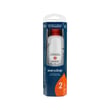
- Replace overdue filters: a restricted water filter can reduce water flow to the ice maker.
Parts that commonly relate to these problems (for KFIV29PCMS00)
If troubleshooting points to a failed component, these model-matched parts are often involved:
| Symptom | Common cause | Example part for this model |
|---|---|---|
| Ice maker not filling | Weak or failed inlet valve | Refrigerator water inlet valve assembly WPW10341329 |
| Warm fridge, freezer OK | Airflow control issue | Refrigerator air damper control assembly WPW10248595 |
| Temperature swings | Sensor reading off | Refrigerator thermistor W11724692 |
| Ice maker not producing | Ice maker assembly failure | Refrigerator ice maker assembly W11577195 |
Why it matters
Ice maker and temperature complaints usually share the same root causes: restricted airflow, poor heat removal (dirty coils), or low water flow. Fixing the underlying cause prevents repeat failures and helps protect food quality.
Last updated: February 2026
How to remove bottom grill from KitchenAid refrigerator?
On the KitchenAid KFIV29PCMS00 bottom-mount refrigerator, the bottom grill (toe kick) typically snaps onto the lower frame. We remove it by gripping the grill at the ends and pulling straight forward to release the retaining clips; then lift it away from the frame.
Steps to remove the bottom grill (toe kick)
- Unplug the refrigerator or switch off power at the breaker (recommended).
- Open both fresh food doors for better access.
- Grip the toe kick near the left and right ends (not the center).
- Pull straight toward you to pop the clips loose.
- If it resists, work side-to-side: release one end, then the other.
- Set the grill aside so it does not get stepped on or warped.
Reinstalling the grill
To reinstall, align the toe kick with the lower frame and press firmly until the clips snap into place.
| Task | What you should feel/hear | What it means |
|---|---|---|
| Pulling forward | A quick “pop” as clips release | Grill is unclipping normally |
| Pressing back on | A solid “snap” | Grill is fully seated |
If it will not come off
- Check for hidden screws (some toe kicks use screws at the ends).
- Look for ice buildup or debris along the bottom edge and clear it.
- Avoid prying hard with a screwdriver; it can crack the grill or mar the finish.
- If the grill is bowed, pull from the ends to reduce stress.
Why it matters
We remove the bottom grill to access and clean the condenser area, check for leaks, and inspect wiring and tubing near the base. A properly seated toe kick also helps airflow and keeps the area looking finished.
For model-specific diagrams and access notes, use the KFIV29PCMS00 owner's manual.
Last updated: February 2026
Is a top mount freezer better than a bottom mount freezer?
A top-mount freezer is not “better” than a bottom-mount freezer; it is a tradeoff. Your KitchenAid KFIV29PCMS00 is a bottom-mount style, which keeps fresh-food items at eye level, while top-mount designs put the freezer at eye level and often cost less to buy and run.
Quick comparison: top mount vs. bottom mount
| Feature | Top-mount freezer | Bottom-mount freezer (like KFIV29PCMS00) |
|---|---|---|
| Fresh-food access | You bend more | More at eye level |
| Freezer access | More at eye level | You bend more |
| Organization | Simpler shelves | Often better freezer drawers/bins |
| Typical price | Lower | Higher |
| Energy use (typical) | Often slightly lower | Often slightly higher |
When a top-mount freezer is the better choice
- You use frozen foods more than fresh foods
- You want a simpler layout with fewer drawers and mechanisms
- You want the lowest upfront cost
- You prefer fewer features to maintain (drawers, slides, extra door seals)
When a bottom-mount freezer is the better choice
- You use fresh foods daily and want them at eye level
- You want easier access to crisper drawers and shelves
- You like freezer drawers that help prevent items getting buried
- You want a premium layout that often pairs well with features like air filtration and water filtration (common on KitchenAid models)
Why it matters
Choosing the “better” freezer location comes down to what you reach for most. With a bottom-mount refrigerator like the KFIV29PCMS00, we typically see higher day-to-day convenience for fresh-food use, while top-mount models usually win on simplicity and budget.
For your exact feature set and care recommendations, use the KFIV29PCMS00 owner's manual.
Last updated: February 2026
Why is water collecting in the bottom of my KitchenAid refrigerator?
Water collecting in the bottom of your KitchenAid KFIV29PCMS00 refrigerator is almost always caused by a clogged or frozen defrost drain, which forces defrost water to spill into the fresh food compartment instead of flowing to the drain pan.
Quick checks we recommend first
- Make sure food packages are not blocking the rear interior vents or the drain trough
- Look for a sheet of ice on the refrigerator floor or under the crisper drawers
- Check for water droplets on the back wall (often points to a drain freeze-up)
- Confirm the doors are closing fully and the gaskets are sealing (warm air increases frost and drain icing)
- If you recently cleaned or replaced the water filter, confirm no water line is dripping inside
How to clear a clogged or frozen defrost drain
- Unplug the refrigerator.
- Remove items from the bottom shelf and crisper area.
- If there is an interior rear panel, remove it to access the drain trough and drain hole.
- Melt ice with warm (not boiling) water; then flush the drain hole with warm water using a turkey baster.
- Feed a flexible plastic tube or pipe cleaner a short distance into the drain to clear sludge.
- Reassemble and monitor for 24 hours.
For model-specific panel removal and drain access details, follow the steps in the KFIV29PCMS00 owner's manual.
If the leak is not the defrost drain
If you do not see ice buildup, focus on the water supply system (dispenser and ice maker). A slow seep can run down and pool under drawers.
Common causes:
- Cracked or loose water line fitting
- Seeping valve that overfills the ice maker
- Split filter housing or filter not fully seated
Parts that commonly relate to water leaks
| Symptom | Most likely area | Related part on this model page |
|---|---|---|
| Water only when dispensing | Supply/valve | Refrigerator water inlet valve assembly WPW10341329 |
| Ice maker overfills or drips | Valve/ice maker | Refrigerator ice maker assembly W11577195 |
| Water after filter change | Filter seating/housing | Refrigerator filter EDR2RXD1 |
A step-by-step diagnostic flow is in our how to diagnose a faulty refrigerator water inlet valve guide.
Why it matters
Standing water can damage shelves and drawers, create odors, and lead to ice buildup that restricts airflow and causes warm temperatures in the refrigerator section.
Last updated: February 2026
Why is my KitchenAid refrigerator leaking water underneath?
Water under your KitchenAid KFIV29PCMS00 bottom-mount refrigerator is caused by a clogged or frozen defrost drain, an overflowing or cracked drain pan, or a leak in the water supply system (valve, fittings, or tubing). Use the checks below to pinpoint the source.
Quick checks to pinpoint the source
- If the puddle appears after defrosting, suspect the defrost drain.
- Remove the toe grille and inspect the drain pan for cracks, warping, or overflow.
- Check the water filter housing and dispenser area for drips (if equipped).
- Look for ice buildup around the ice maker fill tube area.
- Inspect the lower rear area for moisture at the valve and water line connection.
Common causes and what to do
1) Clogged or frozen defrost drain
Defrost water backs up, spills into the cabinet, then runs down and out under the refrigerator.
- Unplug the refrigerator.
- Melt visible ice in the drain trough with warm water.
- Flush the drain with hot water until it flows freely into the pan.
2) Drain pan overflow or damage
A pan that is out of position can overflow; a cracked pan will drip even when not full.
- Make sure the pan is seated correctly.
- Replace the pan if you see cracks or pinholes.
3) Water supply leak (valve, fittings, tubing)
A seeping fitting or a valve that does not fully close can drip and pool underneath.
- Tighten fittings snugly (do not over-tighten).
- Look for mineral tracks or wetness on the valve body.
- Replace a leaking valve.
Parts that commonly relate to under-fridge leaks
| What you see | Most likely area | Part to consider |
|---|---|---|
| Water pooling near back/bottom | Water supply connection | Refrigerator water inlet valve assembly WPW10341329 |
| Drip at rear, ice maker fill issues | Valve not closing/restricted | Refrigerator water inlet valve assembly WPW10455331 |
Why it matters
Stopping leaks quickly prevents floor damage and reduces ice buildup and odor issues that can affect cooling.
For model-specific panel access and drain-pan location, follow the KFIV29PCMS00 owner's manual.
Last updated: February 2026