 Installation guide
 Owner’s manual



Does my Kenmore top load washer have a filter?
Yes. Kenmore model 11023812100 uses a few built-in “filtering” points (not a single, easy-access lint filter like a dryer). Most routine cleaning focuses on the drain path and inlet screens; our 11023812100 owner's manual covers the normal maintenance and troubleshooting checks.
Where “filters” are on this washer
On this style of Kenmore top-load washer, filtering is typically handled in these areas:
- Water inlet valve screens: small mesh screens where the hot and cold fill hoses connect
- Drain pump and drain hose path: can trap coins, lint, and small items that restrict draining
- Tub and load area: lint is usually carried away with the wash water rather than collected in a removable filter
Quick checks you can do safely
Before any inspection, unplug the washer and turn off both water faucets.
- Check that both fill hoses are not kinked and the faucets are fully open
- Remove hoses at the back and rinse debris from the inlet valve screens
- Inspect the drain hose for kinks, crushing, or a clogged standpipe
- If the washer will not drain, check the pump area for obstructions; a failing pump is commonly replaced with the washer drain pump WP3363394
Symptoms and the most likely “filter-related” cause
| Symptom | Most likely restriction point | What to do first |
|---|---|---|
| Slow fill or no fill | Inlet valve screens | Clean screens; verify faucets open |
| Won’t drain or drains slowly | Pump or drain hose | Check for clogs; inspect pump |
| Stops before spin | Lid switch or drain issue | Confirm lid switch operation; verify draining |
Why it matters
Restricted inlet screens can cause long fill times and poor rinsing, and a clogged drain path can prevent proper spin. Keeping these areas clear helps protect the drive system and reduces cycle interruptions.
Last updated: February 2026
How many cubic feet is a Kenmore model 11023812100 washer?
The exact tub capacity (cubic feet) for Kenmore washer model 11023812100 is listed in the product specifications section of the 11023812100 owner's manual. For Kenmore 110-series top-load washers of this design, capacity is typically in the 3.2 to 3.5 cu. ft. range.
How to find the exact capacity on your washer
We recommend using the manual first, then confirming on the unit label if needed.
- Check the specifications or features section in the 11023812100 owner's manual
- Look under the washer lid for the model and serial number label (the manual notes the label is under the lid)
- If your washer has multiple cycle options, compare the listed load size guidance to your typical laundry loads
- Use the capacity to choose the right detergent amount and avoid overloading
Typical capacity guidance (what it means for loads)
| Capacity range | Typical load size | Common examples |
|---|---|---|
| 3.2 cu. ft. | Medium | Everyday mixed loads, towels (not packed) |
| 3.5 cu. ft. | Medium to large | Larger towel loads, small comforter (varies by fill) |
Why it matters
Knowing the cubic-foot capacity helps prevent out-of-balance spinning, poor cleaning, and extra wear on drive components like the clutch and gear case. Overloading is also a common cause of agitation complaints that lead customers to replace items such as the agitator dog 80040.
Last updated: February 2026
How to hard reset kenmore washer?
For Kenmore washer model 11023812100, the most reliable “hard reset” is a simple power reset: unplug the washer (or switch off the breaker) for 1 to 5 minutes, then restore power and restart the cycle. This clears many temporary control and cycle issues.
Hard reset steps (power reset)
- Turn the Cycle Control knob to OFF.
- Unplug the washer (or turn OFF the circuit breaker).
- Wait 1 to 5 minutes.
- Restore power.
- Close the lid and select a cycle; pull the Cycle Control knob out to start.
- If the washer was paused mid-cycle, allow normal pauses (some cycles pause about 2 minutes).
If it still will not start, agitate, or spin
These checks solve the most common “looks dead” or “won’t spin” complaints on this model.
- Confirm the lid is fully closed; this washer will not agitate or spin with the lid open.
- Avoid extension cords; plug directly into a wall outlet.
- Reduce the load size; overloading can cause long pauses or poor spinning.
- Check the drain setup; the drain hose end should not be higher than 96 in. above the floor.
- If the tub is off-center after loading, push the basket back to center before starting.
Quick symptom-to-fix table
| Symptom | What to do first | What it points to |
|---|---|---|
| Won’t agitate or spin | Close lid firmly | Lid switch or lid not engaging |
| Won’t drain or spin | Check drain hose height/clog | Drain restriction or pump issue |
| Stops mid-cycle | Wait 2 minutes | Normal cycle pause |
Parts that commonly relate to “won’t spin” or “won’t drain”
If the basic reset and checks do not help, these parts are frequent causes on direct-drive Kenmore top-load washers.
- Washer lid switch WP3949238 (lid must be closed for spin/agitate)
- Washer drain pump WP3363394 (drain and spin performance)
- Washer motor coupling 285753A (motor-to-drive connection)
Why it matters
A power reset clears a stuck timer or control state without replacing parts. If the washer still will not spin or drain after the reset, the issue is usually a safety interlock (lid switch) or a drain/drive problem that needs inspection.
For cycle operation details and stop/restart instructions, use the 11023812100 owner's manual.
Last updated: February 2026
How to identify a Kenmore washer model?
For Kenmore washer model 11023812100, the model and serial number label is located under the washer lid. On many Kenmore washers, you can also find the tag on the back of the control panel or on the cabinet, but this model’s manual points you to the label under the lid.
Where to look on model 11023812100
Check these spots in this order:
- Under the lid: lift the washer lid and look for the model/serial label on the top rim or underside area
- Back of the control panel: look behind the console if the label is not under the lid
- Main cabinet: check the side of the cabinet near the bottom edge
- Inside the lid opening: look around the lid frame where the lid closes
For the exact location and how to record it for service, use the 11023812100 owner’s manual.
What to write down (and why)
When you find the label, record these items exactly as shown:
- Model number (example format: 110.XXXXXXXX)
- Serial number
- Purchase date (if available)
Why it matters
The model number ensures we match the correct Kenmore washer parts and diagrams for your exact configuration. Even small model number differences can change the correct fit for items like a lid switch, drain pump, or inlet valve.
Quick checklist: model number vs. serial number
| Item | What it tells us | Used for |
|---|---|---|
| Model number | The exact washer design and parts list | Ordering correct replacement parts |
| Serial number | Production details for that unit | Service history, warranty, manufacturing run |
Last updated: February 2026
Is it worth repairing a Kenmore washing machine?
Yes, repairing a Kenmore washer is worth it when the fix restores reliable washing and spinning for less than replacing the machine. For Kenmore model 11023812100, common wear items (lid switch, drain pump, motor coupling) are typically straightforward repairs that can extend service life.
A practical way to decide
We use these checkpoints to make a clear repair vs. replace call:
- Total repair cost (parts plus labor) stays well below the cost of a comparable new washer.
- The washer has no major tub or basket damage (cracks, severe rust, or wobble that cannot be corrected).
- The problem matches a common, fixable failure (no spin, no drain, won’t agitate).
- You can confirm the symptom with the troubleshooting steps in the 11023812100 owner's manual.
- The repair addresses the root cause, not just the symptom (for example, replacing a worn coupling instead of forcing the cycle to finish).
Common repairs that are usually worth it on model 11023812100
These parts often solve high-impact problems at a reasonable cost:
- No spin or stops mid-cycle: washer lid switch WP3949238
- Won’t drain or leaves water in tub: washer drain pump WP3363394
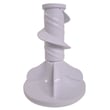
- Agitates poorly or makes ratcheting noise: agitator dog 80040
- Motor runs but basket does not move: washer motor coupling 285753A
Quick cost-to-impact comparison
| Symptom | Likely area | Typical value of repair |
|---|---|---|
| Won’t spin | Lid switch, clutch, coupling | High (restores cycle completion) |
| Won’t drain | Drain pump, drain hose restriction | High (prevents overflow and odor) |
| Poor agitation | Agitator dogs/agitator | Medium (improves cleaning) |
| Loud grinding/leak at tub | Gear case, tub gasket, drive block | Varies (can be higher cost) |
Why it matters
A targeted repair keeps a proven Kenmore direct-drive style washer running for years, and it avoids repeat issues caused by incomplete draining, weak spinning, or unsafe operation. Our manual also emphasizes safe use and avoiding repairs you are not comfortable performing; follow the safety guidance before servicing.
Last updated: February 2026
What are the parts in a washing machine?
A Kenmore washer like model 11023812100 is built from a few core systems: it fills with water (inlet), washes by moving the load (drive and agitation), drains the water (pump and hoses), and stays stable and safe (lid switch and suspension). See the 11023812100 owner's manual for your model’s specific component locations and use details.
Main washing machine parts (what they do)
- Water inlet system: inlet valve, inlet hoses, hose washers; controls and routes hot and cold water into the tub.
- Wash action system: agitator or wash plate; moves clothing through water and detergent.
- Drive system: motor, motor coupling, gear case, clutch; creates agitation and spin.
- Drain system: drain pump, inner drain hose, drain hose; removes wash and rinse water.
- Safety and controls: lid switch, timer or control; prevents spin with lid open and manages cycle steps.
- Tub and basket: outer tub, basket, tub gasket; holds water and the load.
- Suspension and balance: suspension springs, balance ring, counterweight spring; reduces vibration and out-of-balance shaking.
Common parts you may replace on Kenmore 11023812100
These are frequent wear items on this style of top-load washer:
| Symptom | Likely system | Example part for this model |
|---|---|---|
| Won’t spin or drain | Drain or safety | Washer lid switch WP3949238 or washer drain pump WP3363394 |
| Agitator doesn’t move properly | Agitation | Agitator dog 80040 |
| Loud during spin or weak spin | Drive | Clutch 285785 or gear case |
| Won’t agitate, motor runs | Drive coupling | Washer motor coupling 285753A |
Why it matters
Knowing which system matches your symptom helps you troubleshoot faster, order the right Kenmore parts, and avoid replacing good components like the motor or gear case when the real issue is a smaller item (for example, a lid switch or coupling).
Installation and safety notes
For safe setup and correct hookups, follow the 11023812100 installation guide. Key basics include:
- Use a grounded 3-prong outlet (no adapter or extension cord).
- Use proper drain height and secure the drain hose with clamps.
- Level the washer using the leveling feet to reduce vibration.
Last updated: February 2026
What is the average lifespan of a Kenmore washer?
Most Kenmore washers average 10 to 15 years of service life in normal home use. For Kenmore model 11023812100, regular care and avoiding chronic overloading are the biggest factors in reaching the high end of that range; wear items like the lid switch, drain pump, and drive components typically decide when repairs start.
Typical lifespan and what changes it
- 10 to 15 years is the normal expectation for a residential washer.
- Heavy weekly loads, frequent bulky items, and overloading shorten life.
- Good leveling, correct detergent amount, and periodic cleaning extend life.
- Early failures often involve drain, spin, or agitation components.
Parts that commonly drive “repair vs replace” decisions
When a washer nears the end of its typical lifespan, these repairs are common on many Kenmore top-load designs:
- No spin or no drain: washer drain pump WP3363394
- Won’t start or won’t spin with lid closed: washer lid switch WP3949238
- Agitates poorly: agitator dog 80040
- No agitation or spin (motor-to-transmission drive issue): washer motor coupling 285753A
- Spin problems or burning smell: clutch 285785
Quick “is it worth fixing?” checklist
Use this as a practical guide before ordering parts:
| What you’re seeing | Most likely direction | Why |
|---|---|---|
| One clear symptom, washer otherwise solid | Repair | Single-part fixes are usually cost-effective |
| Multiple symptoms (leak + no spin + loud noise) | Replace planning | Stacked wear often means more repairs soon |
| Tub/basket damage or severe vibration over time | Case-by-case | Can involve higher-cost mechanical parts |
| You want maximum reliability | Preventive maintenance | Reduces strain on drive and suspension |
Why it matters
A washer’s “lifespan” is really the point where normal wear and tear makes repairs more frequent. Following the loading and care guidance in the 11023812100 owner’s manual helps reduce stress on the gearcase, clutch, suspension, and basket so the machine stays dependable longer.
Last updated: February 2026





