Owner’s manual
 Error Codes




What is the average lifespan of a Kenmore Elite refrigerator?
Most Kenmore Elite refrigerators last 10 to 15 years with normal household use. For Kenmore model 10678182891 (top-mount), consistent basic care (cleaning, good door sealing, correct temperatures) is what most often determines whether you land closer to 10 years or closer to 15.
What affects lifespan the most
- Condenser coil cleanliness: dirty coils make the compressor run hotter and longer.
- Door gasket condition: air leaks cause longer run times and frost issues.
- Temperature settings: aim for about 37°F fresh food and 0°F freezer.
- Airflow: don’t block vents with food packages.
- Defrost performance: repeated heavy frost can strain the cooling system.
Quick maintenance checklist (best ROI)
- Vacuum coils and the grille area every 6 to 12 months.
- Wipe and inspect door seals; replace if torn, hardened, or won’t seal.
- Keep the refrigerator level so doors close fully.
- Clean spills promptly to prevent odors and airflow restriction.
- After a power outage, confirm temps return to normal within 24 hours.
Common “end-of-life” repairs vs. keep-or-replace
| Issue | Typical symptom | What it usually points to |
|---|---|---|
| Sealed system/compressor trouble | Warm fridge, long run time | Major repair decision |
| Defrost failure | Frost wall in freezer | Heater, thermostat, or control issue |
| Door sealing problem | Moisture, frost, warm spots | Gasket or alignment |
If you’re troubleshooting cooling or frost problems on this model, start with the care and troubleshooting steps in the 10678182891 owner's manual.
Why it matters
A refrigerator that runs longer than it should uses more electricity and wears out key components faster. Simple upkeep (especially coils and gaskets) is the most reliable way to extend service life.
Last updated: January 2026
What is a fridge with freezer on top called?
A fridge with the freezer on top is called a top-freezer refrigerator, also commonly called a top-mount refrigerator. Your Kenmore 10678182891 is this classic style, with the freezer compartment above the fresh-food compartment and separate side-swing doors.
What “top-freezer” (top-mount) means
A top-freezer design is defined by the compartment layout, not by features like an ice maker or water line.
- Freezer compartment is on top
- Refrigerator (fresh-food) compartment is on the bottom
- Typically two separate doors that open from the side
- Air circulates between sections through vents; blocking vents can cause temperature and moisture issues
- Odors can transfer between compartments because air moves between both sections
Quick comparison of common refrigerator styles
| Style name | Freezer location | Typical door layout |
|---|---|---|
| Top-freezer (top-mount) | Top | Two side-swing doors |
| Bottom-freezer | Bottom | Upper refrigerator door(s), lower freezer drawer/door |
| Side-by-side | Left side | Two tall doors |
| French door | Bottom | Two upper doors, lower freezer drawer |
Why it matters
Knowing the style helps you match the right parts and instructions for your exact layout, such as door alignment steps, airflow guidance, and accessory fitment. For model-specific details like controls, door handling, and airflow notes, use the 10678182891 owner's manual.
Last updated: January 2026
What are the common problems with Kenmore Elite refrigerators?
Common problems on Kenmore refrigerators like model 10678182891 include warm temperatures from poor airflow or a failed fan, frost buildup from a defrost or door-seal issue, water leaks from a clogged drain or water line, and unusual noises from the compressor or fan area. Use the 10678182891 owner's manual troubleshooting section to match symptoms to checks.
Most common symptoms and what usually causes them
- Not cooling or weak cooling: dirty condenser coils, blocked vents, evaporator fan issue, or control/thermostat problems
- Frost or ice buildup in freezer: door not sealing, frequent door openings, defrost system problem (heater, thermostat, timer/control)
- Water under the refrigerator or in crisper area: defrost drain restriction, water tube leak, inlet valve seepage
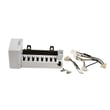
- Ice maker not working: water supply issue, inlet valve problem, ice maker module failure
- Buzzing, clicking, or rattling noises: normal operating sounds, fan blade hitting ice, compressor start components, loose panels
Quick checks we recommend before replacing parts
- Confirm airflow: keep food from blocking return vents; allow space around shelves for circulation.
- Set temperatures and wait: after adjusting controls, allow 24 hours for temperatures to stabilize.
- Inspect door sealing: look for gaps, torn gasket areas, or doors that do not self-close.
- Listen for fan operation: freezer fan noise should be steady; scraping often points to ice contact.
- Check for water line leaks: inspect the tubing and valve area for drips or mineral tracks.
Parts that commonly solve these issues on model 10678182891
| Symptom | Common part to inspect | Example part for this model |
|---|---|---|
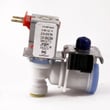
| Ice maker not filling or no ice | Water inlet valve, ice maker | Refrigerator inlet valve WP2315576, ice maker assembly 4317943 |
| Frost buildup, warm fridge section | Defrost thermostat, door gasket | Refrigerator defrost bi-metal WP4387503, refrigerator door gasket 2159061 |
| Water leaking | Water tube, inlet valve | Refrigerator water tube W10823511, refrigerator inlet valve WP2315576 |
Why it matters
Cooling, defrost, and door sealing work together. A small air leak at the gasket can cause frost, which can restrict airflow and lead to warm temperatures, longer run times, and more noise.
Related help
If your Kenmore Elite model displays diagnostic codes, use our Kenmore 106 model refrigerator error codes reference to narrow the failure to a system (cooling, defrost, fan, or sensors).
Last updated: January 2026