Installation guide
 Owner’s manual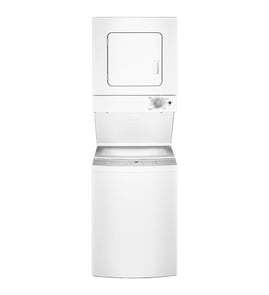


What is the most common problem with Maytag washers?
The most common Maytag washer problems are “won’t drain or spin,” “won’t fill,” leaks, and loud banging or grinding. On the Maytag MET3800TW1 laundry center, many of these start with simple causes like a kinked hose, clogged inlet screens, an unbalanced load, or the lid being open; our owner's manual walks through these checks.
Most common symptoms and what to check first
- Washer won’t agitate or spin: make sure the lid is fully closed; this model will not agitate or spin with the lid open.
- Washer won’t fill or fills slowly: confirm both hot and cold faucets are on; straighten kinked inlet hoses; clean inlet valve screens.
- Cycle seems stuck (fills and drains continuously): verify the drain hose is installed correctly and not creating a siphon.
- Washer won’t drain: check for a drain hose issue first (height, fit, and air gap).
- Loud banging: reduce load size and redistribute items to balance the basket.
Quick troubleshooting table (fast triage)
| What you notice | Most likely “first check” | Why it’s common |
|---|---|---|
| Won’t spin | Lid not closed | Safety interlock stops spin/agitation |
| Won’t fill | Kinked hose or clogged inlet screens | Restricts water flow |
| Stuck filling/draining | Drain hose siphoning | Incorrect drain setup pulls water out |
| Loud banging | Unbalanced or overloaded load | Basket movement increases |
Parts that commonly fix “won’t agitate or spin” complaints
If the washer motor runs but the washer action is weak or inconsistent, these are common wear items on many Maytag-built top-load designs:
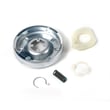
- Agitator dog 80040 (helps the agitator grip and move clothing)
- Coupling 285753A (connects the drive system; wear can stop agitation/spin)
- Clutch 285785 (can affect spin performance under load)
Why it matters
Drain, spin, and fill problems often look like major failures, but they are frequently caused by installation issues (like drain hose height), simple restrictions (inlet screens), or load balance. Checking these first prevents unnecessary part replacement and repeat breakdowns.
Last updated: February 2026
Where can I order Maytag washing machine parts?
You can order replacement parts for your Maytag MET3800TW1 stacked laundry center directly from the parts list for this model, using the diagrams to match the exact part to your washer or dryer section. For part identification and repair guidance, use the MET3800TW1 owner's manual.
How to find the right part for MET3800TW1
- Locate your complete model number and serial number on the label at the top inside the dryer door well.
- Use the model diagrams to identify the exact part location (washer vs. dryer section).
- Match the part by name and part ID, not just by appearance.
- If multiple similar parts show up, compare mounting points, electrical connectors, and kit contents.
- Order the part that matches your symptom and the diagram callout.
Common parts customers order for this laundry center
These are examples of parts available for Maytag MET3800TW1 that often relate to common washer or dryer symptoms:
| Symptom | Section | Example part on this model | What it affects |
|---|---|---|---|
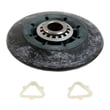
| Dryer squeals or thumps | Dryer | Support WPW10314173 | Drum support and rolling noise |
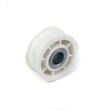
| Dryer will not tumble | Dryer | Dryer idler pulley 279640 | Belt tension and drum movement |
| Washer will not agitate well | Washer | Agitator dog 80040 | Agitator movement |
| Washer will not spin/agitate | Washer | Coupling 285753A | Motor to transmission drive |
Why it matters
Laundry centers share space and components, so ordering by the exact MET3800TW1 diagram callout helps prevent getting a similar-looking part that does not fit, especially for drive, clutch, and dryer drum support components.
Last updated: February 2026
What is the average lifespan of a Maytag washing machine?
Most Maytag washing machines last 10 to 13 years with normal household use and basic maintenance. For your Maytag MET3800TW1 stacked laundry center, keeping loads balanced, using the right detergent amount, and fixing small issues early helps you reach (and often exceed) that typical lifespan; see the owner's manual.
What affects lifespan the most
- Load size and balance: chronic overloading and off-balance loads increase wear on the drive system and suspension.
- Maintenance habits: cleaning residue, checking hoses, and keeping the unit level reduces stress on moving parts.
- Spin and agitation strain: heavy items (rugs, comforters) accelerate wear on couplers, clutches, and drive blocks.
- Water quality: hard water can increase buildup and reduce cleaning performance over time.
- Early repair vs. run-to-fail: replacing worn parts before they damage other components extends service life.
Common wear parts that can shorten washer life
If your MET3800TW1 starts slipping, not agitating, or not spinning, these model-compatible parts are common suspects:
| Symptom | Often involved part | Example part on this model page |
|---|---|---|
| Won’t agitate or spin | Motor coupling | Coupling 285753A |
| Weak agitation | Agitator dogs | Agitator dog 80040 |
| Spins poorly, noisy during spin | Clutch or drive block | Clutch 285785, washer drive block WP389140 |
Why it matters
A washer that is nearing end-of-life often uses more time and energy to finish cycles and can become harder on fabrics due to poor agitation or uneven spinning. Catching wear early helps protect the gearcase, motor, and tub components.
Quick tips to help your Maytag washer last longer
- Keep the unit level to reduce vibration and suspension wear.
- Avoid washing single heavy items alone; balance with similar-weight items.
- Use HE detergent only if your detergent and cycle instructions call for it; too much detergent leaves residue.
- Leave the lid open between loads to help reduce odor and moisture.
- If you notice new noises or slipping, troubleshoot promptly using the owner's manual.
Last updated: February 2026
Is it worth repairing a Maytag washing machine?
Yes, repairing a Maytag washer is worth it when your MET3800TW1 is in otherwise good shape and the fix is a common, parts-available repair (for example, a worn drive coupling or clutch). It is usually time to replace when the repair is major, repeated, or approaches the cost of a replacement unit.
Quick decision checklist (MET3800TW1)
- Repair it when the problem is isolated (no leaks plus no burning smell plus no repeated failures).
- Repair it when the symptom matches a typical wear part (won’t agitate/spin, loud banging, weak spin).
- Repair it when you can confirm the correct procedure and safety steps in the owner's manual.
- Replace it when multiple systems are failing (drain, spin, and timer issues together).
- Replace it when the tub or transmission area has severe damage or the unit has a long history of breakdowns.
- Replace it when the repair requires extensive teardown and you need fast, reliable daily use.
Common “worth repairing” fixes on this laundry center
These are frequent, straightforward repairs where parts are commonly replaced:
| Symptom | Likely area | Example part on this model page |
|---|---|---|
| Washer won’t agitate or spin | Drive connection | Coupling 285753A |
| Washer spins poorly or slips | Drive system | Clutch 285785 |
| Washer bangs loudly | Suspension/support | Washer suspension spring WP63907 |
| Agitator moves one way or slips | Agitator mechanism | Agitator dog 80040 |
Why it matters
A stacked laundry center like the Maytag MET3800TW1 shares space, venting, and electrical connections; a “small” washer issue can turn into bigger downtime if you delay a simple wear-part repair. Fixing early often prevents secondary damage (for example, excess vibration stressing the tub and base).
Before you decide: do these checks first
- Confirm the load is balanced and not overloaded.
- Check for obvious leaks under the washer and at hose connections.
- Listen for grinding, squealing, or repeated loud banging during spin.
- If the dryer is involved, make sure the laundry area stays above 45°F for proper dryer operation (cold rooms can cause performance complaints).
- Use our symptom guide for fast triage: laundry center washer won't agitate or spin.
Last updated: February 2026