Owner’s manual
 Error Codes



Where is the model number on Kenmore Elite dryer?
On a Kenmore Elite dryer like model 79661523210, the model number is printed on the rating label. We most often see that label on the door opening (cabinet frame) when you open the dryer door, or on the back of the dryer near the top.
Most common places to check
- Open the dryer door and look around the door opening on the cabinet frame
- Check the inside edge of the door itself
- Look on the back panel near the top (often upper left or upper right)
- If your unit is stacked, check the visible edges around the door opening first
- If the label is worn, use a flashlight and look for faint printed characters
What the label looks like (and what to copy)
The rating label typically includes the model number, serial number, and electrical information. For parts lookup and diagrams, copy the model number exactly as shown.
| What you see on the label | Why it matters |
|---|---|
| Model number (example: 79661523210) | Ensures we match the correct Kenmore Elite dryer parts list |
| Serial number | Helps identify production variation when applicable |
| Electrical rating | Useful for confirming correct electrical parts and safe service |
Tips if you cannot find it right away
- Wipe dust and lint off the label area; lint buildup can hide the print
- Avoid using harsh cleaners on the label; a damp cloth is enough
- If the label is missing, check your purchase paperwork or the 79661523210 owner’s manual
Why it matters
Kenmore Elite dryers often have similar-looking cabinets across multiple model numbers. Using the exact model number prevents ordering the wrong parts (for example, a heating element or thermistor that does not match your wiring and mounting).
Last updated: February 2026
How much does it cost to replace a heating element in a Kenmore dryer?
For Kenmore Elite dryer model 79661523210, replacing the heating element typically costs about $150 to $450 total (part plus labor). If you do it yourself, the part cost is usually the biggest variable; professional service adds labor and a diagnostic fee.
Typical cost breakdown
- DIY part only: commonly $80 to $300 for an electric dryer heating element (model-specific pricing varies)
- DIY extras (sometimes needed): $15 to $80 for thermostats, thermal fuse, or wiring repairs
- Professional repair total: commonly $150 to $450 including labor
- Service call/diagnostic: often $75 to $150 (may be applied to the repair)
| Scenario | What you pay for | Typical total |
|---|---|---|
| DIY, element only | Heating element | $80 to $300 |
| DIY, element + safety parts | Element + thermostat/fuse as needed | $95 to $380 |
| Pro repair | Element + labor + diagnostic | $150 to $450 |
What changes the price the most
- Exact element style for your model (some are sold as assemblies)
- Whether the dryer is actually heating-element related (airflow problems can mimic a bad element)
- Additional failed parts (high-limit thermostat, thermistor, thermal fuse)
- Time to access the heater housing (varies by design)
How we recommend confirming the right repair
Use the exploded-view diagrams and wiring info in the 79661523210 owner’s manual to identify the heater circuit and access steps. If the dryer tumbles but does not heat, the element is a common cause, but we also check airflow restrictions and temperature controls.
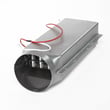
If you’re pricing the part for this model, the heater itself is the lg dryer heating element 5301EL1001H.
Why it matters
A weak or failed heating element can extend dry times and overwork the dryer. Replacing the correct failed part (and fixing venting issues) restores normal heat and helps prevent repeat overheating shutdowns.
Last updated: February 2026
What is the capacity of my Kenmore Elite dryer?
Most Kenmore Elite dryers like model 79661523210 are in the 7.0 to 8.0 cubic feet capacity range, which is considered a large-capacity dryer for everyday family loads. For the exact rated capacity for your specific unit, check the specifications section in the 79661523210 owner's manual.
How to estimate the right load size
A good load fills the drum without packing it tight so air can circulate and the moisture sensor can read accurately.
- Fill the drum about 1/2 to 2/3 full for mixed items
- Dry bulky items (comforters, jackets) one at a time when possible
- Avoid compressing laundry; tight loads dry slower and wrinkle more
- If cycles run long, reduce load size before assuming a heating problem
- Clean the lint screen before every load to keep airflow strong
Load examples (practical guide)
| Load type | Typical items | Best practice |
|---|---|---|
| Small | A few shirts, underwear | Use timed or sensor dry; do not overdry |
| Medium | 6 to 8 towels or a mixed hamper | Keep items loose for airflow |
| Large | Bedding or heavy cottons | Split into two loads if drying slows |
Why it matters
Correct loading helps your dryer heat and vent properly, protects the drive system, and improves sensor-dry accuracy. Overloading can increase wear on the drum drive parts such as the dryer drum belt 4400EL2001F and idler pulley.
If drying performance drops with larger loads
- Verify the exhaust vent is clear and not crushed
- Confirm the lint screen is clean and seated correctly
- If the drum turns but you hear squealing or thumping, inspect belt and rollers
- If clothes stay damp, check for airflow restrictions before replacing the heating element
Last updated: February 2026
Why won't my Kenmore Elite dryer start but has power?
If your Kenmore Elite dryer model 79661523210 has power but will not start, the most common causes are a door not fully latched, a failed door switch, a tripped safety device from overheating, or a drive system problem that prevents the motor from turning. Use the checks below to pinpoint the failure.
Quick checks first (no tools)
- Confirm the door closes firmly and the latch clicks.
- Try a different cycle and press Start for a full 1 to 2 seconds.
- Make sure Control Lock is off (if your console has it).
- Verify the dryer is not set to a delay start.
- If the drum is hard to turn by hand, stop and inspect the belt and rollers.
What usually fails when the dryer has power but will not run
| Symptom | Most likely cause | What to check |
|---|---|---|
| Lights on, nothing happens when you press Start | Door switch or start switch issue | Door closes fully; listen for a click at the door |
| Hums briefly, then stops | Belt, idler pulley, roller drag, or motor issue | Drum turns freely; no burning smell |
| Starts sometimes, then quits | Overheating protection opening | Lint screen and venting are clear |
| Runs but shuts off quickly | Airflow restriction or temperature sensing issue | Lint buildup; crushed or long vent run |
Parts that commonly solve a no-start condition
These are model-matched parts we often see involved when the motor cannot run or the dryer overheats:
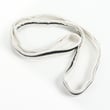
- Dryer drum belt 4400EL2001F (broken belt can prevent normal drum movement)
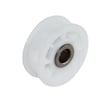
- Dryer idler pulley 4560EL3001A (seized pulley can stall the motor)
- Dryer drum support roller 4581EL2002L (drag can cause a hum and shutdown)
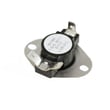
- Dryer high-limit thermostat 6931EL3003D (opens if the dryer overheats)
Why it matters
A dryer that has power but will not start is usually being blocked by a safety interlock (door circuit or overheating protection) or by mechanical drag in the drum drive. Fixing the root cause prevents repeat shutdowns and helps protect the heating system and motor.
For model-specific control features, wiring, and diagnostic steps, use the 79661523210 owner's manual.
Last updated: February 2026
What model number is the Kenmore 79661523210 dryer?
The model number for this Kenmore Elite dryer is 79661523210. You will typically find it on the model and serial number label (often inside the door opening or on the cabinet), and it is the number we use to match the correct Kenmore parts and diagrams.
Where to find the model number on the dryer
Check these common locations on Kenmore dryers like model 79661523210:
- Inside the door opening on the front panel
- On the door frame or door opening lip
- On the cabinet near the lint screen housing
- On a label behind the control panel area (less common)
For label location details and how the number is formatted, use the 79661523210 owner's manual.
Why the exact model number matters
Kenmore model numbers that look similar can use different heating, drum, and sensor parts. Using 79661523210 helps ensure you get parts that fit and function correctly.
Examples of parts that can vary by model
- Heating system components (electric heating element, thermostats)
- Drum drive parts (belt, idler pulley, rollers)
- Moisture sensing components
- Wire harness and control components
Quick check: model number vs. part numbers
| What you are looking at | Example format | What it’s used for |
|---|---|---|
| Model number | 79661523210 | Identifies the exact dryer version |
| Part ID | 5301EL1001H | Identifies a specific replacement part listing |
| Part number | 5301EL1001H | Manufacturer number printed on the part/box |
Related tip: if you are troubleshooting an error code
If your display shows an error code, match it to the correct Kenmore Elite dryer guidance first, then confirm parts by model.
- Use the Kenmore elite dryer error codes reference to interpret the code before replacing parts.
Why it matters
Correct identification prevents ordering the wrong dryer parts, reduces downtime, and helps you target the right repair the first time.
Last updated: February 2026
How do I know if my Kenmore dryer thermal fuse is blown?
On your Kenmore Elite dryer model 79661523210, a blown thermal fuse usually shows up as a dryer that will not start at all (no motor run), even though the control panel lights may still work. The sure way to confirm is a continuity test with a multimeter, following the access steps in the 79661523210 owner's manual.
Quick symptoms that point to a blown thermal fuse
- Dryer won’t start when you press Start (drum never turns)
- You hear no motor hum or click from the drive motor
- The dryer stopped mid-cycle and then would not restart
- You recently had poor airflow (clogged lint screen, crushed vent, long dry times)
How to test the thermal fuse (continuity check)
- Unplug the dryer (or switch off the breaker) before opening any panels.
- Access the fuse location (commonly on the blower housing or exhaust duct area).
- Pull one wire off the fuse terminal so you do not read through the circuit.
- Set your multimeter to continuity (or the lowest ohms setting).
- Touch a probe to each terminal.
What the meter reading means
| Meter result | What it indicates | What to do next |
|---|---|---|
| Beep / near 0 ohms | Fuse is good (closed circuit) | Check door switch, start switch, belt switch, or control issues |
| No beep / OL / very high ohms | Fuse is blown (open circuit) | Replace the thermal fuse and correct the airflow problem |
Why it matters (and what to fix with it)
A thermal fuse opens to protect the dryer from overheating. If you replace the fuse but do not fix the airflow restriction, the new fuse can blow again.
Airflow checks we recommend
- Clean the lint screen and confirm it is not coated with fabric softener residue
- Inspect and clear the vent duct and outside hood flap
- Make sure the vent is not crushed behind the dryer
- Keep vent runs as short and straight as possible
- If the dryer overheated, also inspect thermostats and the heating circuit (for example, the dryer high-limit thermostat 6931EL3003D)
Related help for Kenmore dryers
If your dryer is showing a code or shutting down unexpectedly, use the Kenmore elite dryer error codes guide to match the display code to the most likely cause.
Last updated: February 2026
What are the codes for Kenmore Elite dryer?
For Kenmore Elite dryer model 79661523210, the most common display codes point to power interruptions, control or keypad problems, and temperature-sensing or heating faults. Use the code to narrow the failure to a specific system, then confirm with the diagnostic steps in the 79661523210 owner's manual.
Common Kenmore Elite dryer codes and what they mean
- PF: Power failure or power interruption during a cycle
- F:01: Main electronic control board failure
- F:02: Keypad or user interface failure
- F:20: Heater relay failure
- F:22 / F:23: Outlet thermistor failure (temperature sensor at exhaust)
- F:24 / F:25: Inlet thermistor failure (temperature sensor at intake)
What to do first (quick checks)
- Reset power: unplug for 2 minutes, then restore power and retry a cycle.
- Confirm the outlet has steady power; avoid loose plugs or shared circuits.
- Clean airflow: lint screen, lint screen grille, and venting.
- If the code is temperature-related, inspect wiring connections at the sensor and heater.
- If the code returns immediately, plan a targeted test of the related component.
Parts that commonly relate to heat and sensor codes
If you are seeing F:20, F:22, F:23, F:24, or F:25, these model-compatible parts are often involved:
| Symptom or code family | What it usually points to | Example model-compatible part |
|---|---|---|
| Heater or no-heat faults (F:20) | Heating circuit or safety limit opening | Lg dryer heating element 5301EL1001H |
| Overheating or cycling issues | Safety thermostat opening due to restricted airflow or failed thermostat | Dryer high-limit thermostat 6931EL3003D |
| Thermistor-related faults (F:22-F:25) | Failed thermistor or wiring/connection issue | Dryer thermistor AGM30045804 |
Why it matters
Reading the code correctly prevents guesswork. For example, a thermistor code can be caused by a failed sensor, but it can also be triggered by poor airflow that makes temperatures rise or fall too quickly. Fixing airflow first often prevents repeat failures.
For a broader list and code definitions by Kenmore Elite platform, use Kenmore elite dryer error codes.
Last updated: February 2026
What are common problems with Kenmore dryers?
Common problems we see on the Kenmore Elite dryer model 79661523210 include no heat or poor drying, not starting, loud squealing or thumping, burning smells from airflow restrictions, and moisture-sensor drying issues. Many of these trace back to airflow, wear parts, or heating and temperature controls; check the 79661523210 owner's manual for model-specific operating and care details.
Most common symptoms and what they usually mean
- Dryer will not start: power supply issue, door switch/latch problem, or motor-related fault
- No heat or weak heat: heating circuit issue, thermostat/thermistor problem, or restricted venting
- Takes too long to dry: clogged lint path, crushed/long vent run, or blower airflow problem
- Loud noise (squeal, rumble, thump): worn belt, idler pulley, or drum support rollers
- Burning smell: lint buildup in the cabinet or venting, or overheating from poor airflow
- Clothes still damp on sensor cycles: dirty moisture sensor bars or a failing sensor circuit
Quick checks we recommend first (fast, no parts)
- Clean the lint screen and confirm strong airflow at the outside vent hood.
- Verify the exhaust duct is not kinked, crushed, or packed with lint.
- Try a timed dry cycle to compare results against sensor cycles.
- Listen for changes: squealing often points to the idler; thumping often points to rollers.
- If the dryer stops mid-cycle or overheats, address venting before replacing parts.
Parts that commonly fix these problems on model 79661523210
| Symptom | Common part involved | Example part for this model |
|---|---|---|
| Squealing or drum not turning | Belt or idler pulley | Dryer drum belt 4400EL2001F |
| Thumping/rumbling | Drum support rollers | Dryer drum support roller 4581EL2002L |
| No heat/overheating | Heating and temperature controls | Lg dryer heating element 5301EL1001H, dryer high-limit thermostat 6931EL3003D |
| Sensor cycles end too soon | Moisture sensing | Dryer moisture sensor 6500EL3001A |
Error codes (when the display shows a code)
If your Kenmore Elite dryer shows an error code, match the code to the symptom and follow the recommended checks in our Kenmore elite dryer error codes guide.
Why it matters
Dryer problems often start as airflow or wear issues; fixing them early helps prevent overheating, protects clothing, and reduces strain on the motor, belt, and heating system.
Last updated: February 2026