 Installation guide
 Owner’s manual
 Error Codes



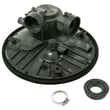
How to fix GE dishwasher arm?
On the GE GDF530PGM5BB dishwasher, a “wash arm fix” usually means cleaning a clogged spray arm or replacing a loose, cracked, or warped arm so it spins freely and sprays strongly. Use the GDF530PGM5BB owner’s manual for the correct rack and spray-arm removal steps for your exact configuration.
- Turn off power at the breaker and let the unit cool before working inside.
- Confirm the spray arm spins freely by hand; it should not hit dishes or the rack.
- Clear blocked spray holes with a toothpick and rinse the arm under hot water.
- Remove and clean the filters; gritty dishes and weak spray often point to restricted filtration.
- Re-load so tall items do not block the arm’s rotation or water path.
- Clean and re-seat the arm: Remove the arm, flush debris out, then reinstall it fully seated so it does not wobble.
- Correct a loose mount: If the arm feels sloppy at the hub, reattach it per the manual so it locks in place.
- Replace the arm if damaged: Cracks, melted spots, or a warped arm will reduce pressure and can stop rotation.
| Symptom | Most likely cause | Best next step |
|---|---|---|
| Arm will not spin | Dishes blocking, arm not seated | Re-load, reinstall arm correctly |
| Weak spray, gritty dishes | Clogged filters or spray holes | Clean filters and spray holes |
| Clicking or rubbing noise | Arm hitting rack or items | Adjust rack load and item placement |
| Detergent not dissolving | Poor spray or blocked dispenser area | Re-load, clean filters, verify spray strength |
A wash arm that cannot spin or spray at full pressure leads to poor cleaning, detergent left in the cup, and longer cycles because the dishwasher cannot circulate water effectively.
For control-related issues (beeping, flashing lights, or a cycle that stops), use our GE electronic dishwasher error codes guide to narrow the problem before replacing parts.
Last updated: February 2026
What is the average life expectancy of a GE dishwasher?
A GE dishwasher typically lasts about 10 years on average. For your GE GDF530PGM5BB, consistent cleaning, correct detergent use, and fixing small issues early (drain, fill, heat-dry) are the biggest factors that help you reach or exceed that lifespan; see the GDF530PGM5BB owner's manual for model-specific care steps.
Most dishwashers fail early due to wear in a few high-use systems.
- Wash system: spray arms, circulation pump, filters
- Drain system: drain pump, drain hose, air gap or high loop
- Water fill: inlet valve, float/overfill protection
- Heating and drying: heater circuit, rinse aid use, venting
- Door sealing: door gasket and latch alignment
These habits reduce strain on the motor, improve cleaning, and prevent odors.
- Clean the filter area and remove debris from the sump regularly.
- Run hot water at the sink before starting a cycle for better wash temperature.
- Use the right detergent amount for your water hardness (too much can cause etching).
- Use rinse aid to improve drying and reduce spotting.
- Periodically run a cleaning cycle (for example, with vinegar as described in the manual).
| Dishwasher age | What we commonly see | What to do |
|---|---|---|
| 0 to 3 years | Minor clogs, loading issues | Improve loading and cleaning routine |
| 4 to 7 years | Drain/fill complaints, noisier wash | Check hoses, filters, and spray arms |
| 8 to 12 years | More frequent leaks, pump or control issues | Compare repair cost vs. replacement |
Knowing the average life expectancy helps you decide when a repair is a smart investment. If your GDF530PGM5BB is near the 10-year mark and needs a major pump or electronic control repair, it often makes sense to weigh total repair cost against the value of a newer, more efficient dishwasher.
For troubleshooting that can extend life (especially when the dishwasher stops mid-cycle or shows a code), use GE electronic dishwasher error codes.
Last updated: February 2026
What is the most common problem with GE dishwashers?
The most common GE dishwasher issue we see on models like GE GDF530PGM5BB is a no-start or won’t-run complaint. In many cases, the cause is simple (power interruption, a door that is not fully latched, or a control lock setting) and can be confirmed in minutes.
- Reset the house breaker or replace the fuse; the manual notes a tripped breaker or blown fuse can stop operation.
- Confirm any nearby wall switch that feeds the dishwasher is turned on (common in some installs).
- Make sure the door closes firmly and latches; a door that is not fully latched can prevent starting.
- Check for control lock or locked controls; unlock per the GDF530PGM5BB owner’s manual.
- Press and hold Start as directed in the manual if the unit needs a reset after an interruption.
These show up often across GE dishwashers, including the GDF530PGM5BB:
- Not draining (standing water after the cycle)
- Not cleaning well (spray arm blockage, loading issues, filter soil buildup)
- Detergent not dispensing (dishes blocking the dispenser door)
- Suds in the tub (wrong detergent, rinse aid spill)
- White film or mineral deposits (hard water)
| Symptom | Most common cause | Best first action |
|---|---|---|
| Has power but won’t run | Door not latched, controls locked, start sequence not completed | Verify latch, unlock controls, restart per manual |
| Suds/foam in tub | Wrong detergent (hand soap) or rinse aid spill | Use automatic dishwasher detergent only; clear suds per manual |
| Detergent left in cup | Dishes blocking dispenser | Reload so nothing blocks the dispenser |
| White film | Hard water minerals | Use rinse aid; run a cleaner cycle per manual guidance |
A “won’t start” report is often a power, latch, or control setting issue, not a failed part. Doing the quick checks first prevents unnecessary downtime and helps you decide whether you need troubleshooting steps like error-code checks.
If your display is flashing codes or beeping patterns, use GE electronic dishwasher error codes to narrow the failure quickly.
Last updated: February 2026





