 Installation guide
 Owner’s manual


What does F5 mean on a Kenmore 11026732500 washer?
On the Kenmore 11026732500 washer, an F5 code points to a lid lock or lid switch problem. The washer is not sensing the lid as safely closed and locked, so it may stop, not spin, or not start until the lid-lock circuit is working correctly (see the troubleshooting section in the owner's manual).
What you’ll notice when F5 is active
- The washer won’t start a cycle or pauses mid-cycle
- No spin or incomplete drain and spin
- Clicking near the lid area (lock trying to engage)
- The lid must be opened and closed repeatedly to continue
- The cycle ends early with wet clothes
Quick checks we recommend first
- Unplug the washer for 1 minute, then plug it back in to reset the control.
- Close the lid firmly; make sure nothing (laundry, detergent cup, hinge area) is preventing full closure.
- Check the lid strike area for cracks, looseness, or misalignment.
- Inspect the lid switch wiring under the top panel for a loose connector.
- If the washer won’t spin, confirm it drains normally; a drain issue can look like a lock issue during spin.
Parts that commonly fix an F5-style lid/lock fault
If the lid is closing properly but the code returns, the most common repair is replacing the lid switch/lock assembly.
| Symptom | Most likely cause | What to check/replace |
|---|---|---|
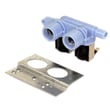
| Won’t start, won’t spin | Lid not sensed as closed/locked | Washer lid switch assembly WP8318084 |
| Starts, then stops when it should spin | Intermittent lid switch signal | Washer lid switch assembly WP8318084 |
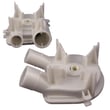
| Drains poorly, then won’t spin | Drain restriction or weak pump | Washer drain pump WP3363394 |
Why it matters
The lid lock and lid switch are key safety devices. If the washer can’t confirm the lid is closed and locked, it prevents high-speed spin to reduce the risk of injury and water slinging.
Last updated: February 2026
How to do a hard reset on a Kenmore washer?
For Kenmore washer model 11026732500, the most reliable “hard reset” is a power reset: unplug the washer for 1 minute, then plug it back in and restart the cycle. This clears many temporary control and cycle issues without changing any mechanical settings; see the 11026732500 owner's manual for normal stop and restart steps.
Hard reset steps (power reset)
- Press the cycle control knob in to stop the washer.
- Unplug the washer (or switch the breaker off) for 60 seconds.
- Plug the washer back in (or turn the breaker on).
- Close the lid fully.
- Select a cycle and pull the cycle control knob out to start.
If it still will not start or finish a cycle
These checks fix the most common “looks dead” or “won’t spin/drain” complaints after a reset:
- Confirm the lid is closing and latching normally; a failed lid switch can prevent spin.
- Make sure the washer is level and the feet locknuts are tight; vibration can interrupt operation.
- Verify both water faucets are fully on.
- If the tub is full of water, focus on draining first (a clog or failed pump stops the cycle).
Parts that commonly relate to “won’t run,” “won’t spin,” or “won’t drain”
| Symptom | What to check first | Common replacement part for this model |
|---|---|---|
| Won’t spin, stops when lid opens | Lid switch function | Washer lid switch assembly WP8318084 |
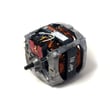
| Hums but won’t drain | Pump and drain path | Washer drain pump WP3363394 |
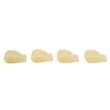
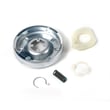
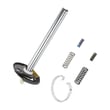
| Agitates poorly | Agitator dogs | Agitator dog 80040 |
Why it matters
A power reset clears a stuck timer position or a temporary electrical state. If the washer still will not drain, spin, or agitate after the reset, the issue is usually a lid-safety circuit, drain system, or drive component rather than something a reset can fix.
Last updated: February 2026
How to tell if a washer pump is bad?
On Kenmore washer model 11026732500, a bad drain pump shows up as a no-drain condition (water left in the tub), leaking during drain, or abnormal noise. A steady hum with some gurgling while draining is normal; grinding, rattling, or no water movement is not.
Quick symptoms checklist
- Water remains in the washer after the drain portion of the cycle
- Washer will not spin because it cannot drain first
- Loud grinding, rattling, or squealing during drain (not a smooth hum)
- Leaks that appear mainly while the washer is draining
- Pump hums but water does not move out
Rule out common “not the pump” causes
These items commonly mimic a failed pump and are called out in the 11026732500 troubleshooting guidance.
- Confirm the lid is fully closed (the washer will not agitate or spin with the lid open)
- Check the drain hose for kinks or clogs
- Make sure the drain hose is not sealed to the standpipe; it needs an air gap
- Verify drain height: top of hose at least 39 in. (99 cm) above the floor; hose end not higher than 96 in. (244 cm)
- Reduce excessive suds; too much detergent can slow draining and stop spinning
Sound guide: normal vs. problem
The manual notes the pump can make a continuous hum with periodic gurgling or surging as the last water leaves the tub.
| What you notice | Most likely cause | Next step |
|---|---|---|
| Smooth hum + occasional gurgle | Normal draining | No repair needed |
| Hum but no draining | Blockage or weak pump | Check hose, then inspect pump |
| Loud grinding/rattle | Debris or worn impeller | Inspect pump inlet/outlet |
Parts that commonly fix no-drain
Why it matters
When the washer cannot drain, it often will not spin; that leaves clothes soaking wet and can strain the drive system.
For drain hose routing and height requirements, use the installation guide.
Last updated: February 2026
How to unclog drain hose on Kenmore washer?
To unclog the drain hose on your Kenmore washer model 11026732500, unplug the washer, remove as much tub water as possible, then disconnect and flush the drain hose to clear lint, coins, or small clothing items. Reinstall the hose fully seated and routed without kinks (see the installation guide).
Safety and prep
- Unplug the washer.
- Turn off both water faucets.
- Set towels and a shallow pan behind the washer.
- Remove standing water with a wet/dry vac at the standpipe or by bailing.
Steps to clear the clog
- Pull the washer forward and check the hose for kinks, crushing, or pinching.
- At the washer outlet, squeeze the clamp with pliers, slide it back, then twist and pull the hose off.
- Flush the hose with hot tap water; push debris through with a flexible brush or small drain snake.
- Check the washer drain outlet for debris you can reach.
- If the washer still will not drain, inspect the pump for a jammed impeller; replacement is common when the pump is damaged or leaking (see washer drain pump WP3363394).
Reinstall the drain hose correctly (key details)
The installation instructions for this model specify:
- Wet the inside of the straight hose end with tap water only.
- Push the hose onto the drain connector until it hits the ribbed stop.
- Place the clamp about 1/4 inch (6 mm) from the end.
- At the standpipe or laundry tub, keep the hooked end and avoid forcing excess hose down the standpipe.
| Symptom | Likely cause | Fix |
|---|---|---|
| Slow drain | Partial hose or pump restriction | Flush hose; clear pump debris |
| Hums, no drain | Pump impeller jam | Clear pump; replace if damaged |
| Water returns | Siphoning at standpipe | Maintain air gap; do not seal hose |
Why it matters
A restricted drain hose makes the washer hold water, spin poorly, and overwork the drain pump, which can lead to repeat no-drain problems.
Last updated: February 2026





