Installation guide
 Owner’s manual
 Error Codes


How many cubic feet is the Kenmore washer model 11026642503?
We treat the Kenmore washer model 11026642503 as a full-size top-load washer; most Kenmore 110-series top-loaders of this style are typically about 3.2 to 3.5 cubic feet. For the exact capacity for your specific configuration, check the specifications section in the owner's manual.
How to confirm capacity the reliable way
Capacity is a spec that can vary by tub and basket design, even within the same model family. Use these checks:
- Look for “Capacity” or “Washer capacity” in the specs/features pages of the owner's manual
- If your washer has a porcelain basket and traditional agitator, it commonly falls in the 3.2 to 3.5 cu. ft. range
- If the basket is larger and the tub opening is noticeably wider, it may be closer to the upper end of that range
- Avoid using “110” prefix alone to estimate; the prefix identifies the model platform, not a single capacity
Typical capacity ranges (what most owners see)
| Washer type (top load) | Typical capacity range | What it means for loads |
|---|---|---|
| Standard agitator top-load | 3.0 to 3.5 cu. ft. | Everyday mixed loads, towels in smaller batches |
| Larger “super capacity” style | 3.5 to 4.0+ cu. ft. | Bulkier items fit more easily |
Why it matters
Knowing the cubic feet helps you choose the right cycle and load size so the washer can agitate properly, rinse well, and spin out water effectively. Overloading is a common cause of poor cleaning, out-of-balance spinning, and extra wear on drive components.
Last updated: February 2026
What is the average lifespan of a Kenmore washer?
A Kenmore washer like model 11026642503 typically lasts 10 to 15 years. Regular care, correct loading, and fixing small problems early (like draining or spinning issues) are what most often determine whether it reaches the high end of that range. See the owner's manual for model-specific care and operating guidance.
What affects washer lifespan the most
- Load size and balance: Overloading and consistently unbalanced loads increase wear on the drive system and suspension.
- Drain performance: Slow draining makes the pump work harder and can lead to repeated cycle issues.
- Lid switch operation: A failing lid switch can stop agitation or spin, leading to repeated restarts and extra strain.
- Leveling and floor support: A washer that is not level vibrates more and wears faster.
- Routine cleaning and correct detergent use: Helps prevent residue buildup and odor issues.
Quick maintenance checklist (high impact)
- Keep the washer level and all feet firmly on the floor (leveling guidance is referenced in the manual).
- Distribute loads evenly; keep the load height below the top row of basket holes.
- Check fill hoses for tight connections and properly seated gaskets.
- Make sure the drain hose is secured correctly to the standpipe or laundry tub.
- Address new noises early; some sounds during drain and before spin are normal, but changes matter.
Common wear items that can shorten life (and what they do)
| Part | What you may notice | What it affects |
|---|---|---|
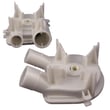
| Washer drain pump WP3363394 | Won't drain, humming, water left in tub | Draining and spin completion |
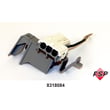
| Washer lid switch assembly WP8318084 | No spin or agitation when lid is closed | Cycle safety and operation |
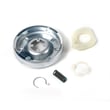
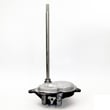
| Washer motor coupling 285753A | Motor runs but tub does not move | Agitation and spin drive |
Why it matters
A washer that is level, drains correctly, and runs balanced loads puts less stress on the clutch, drive components, and tub support. That directly translates into fewer breakdowns and a longer service life.
Last updated: February 2026
How to reset Kenmore washer model 11026642503 top loader?
To reset your Kenmore washer model 11026642503, we recommend a simple power reset: unplug the washer for 1 minute, plug it back in, then set a cycle and pull the Cycle Control knob out to start. If the washer still will not run, check lid closure and power supply first.
Quick reset steps (most common)
- Push the Cycle Control knob in to stop the washer.
- Unplug the washer (or switch the breaker off).
- Wait 1 full minute.
- Plug the washer back in (or turn the breaker on).
- Close the lid fully.
- Select a cycle, then pull the Cycle Control knob out to start.
If it still will not start or spin
These checks solve the most common “won’t agitate/spin” situations on this style of Kenmore top-load washer.
- Confirm power: reset a tripped breaker or replace a blown fuse.
- Close the lid: this washer will not agitate or spin with the lid open.
- Wait out a normal pause: some cycles pause for about 2 minutes.
- Reduce the load size: overloading can stall agitation or spin.
- Check drain hose height: the top of the drain hose should be at least 39 in. (99 cm) above the floor.
What “reset” can and cannot fix
A reset clears minor control/timer glitches and gets you back to a known starting point. It will not correct a failed safety switch, drain problem, or drive issue.
| Symptom after reset | Most likely area to check | Common related part for this model |
|---|---|---|
| No spin, no agitate (lid closed) | Lid switch circuit | Washer lid switch assembly WP8318084 |
| Won’t drain or seems stuck draining | Drain pump or drain path | Washer drain pump WP3363394 |
| Agitates poorly or “ratcheting” in agitator | Agitator dogs/cam | Agitator dog 80040 |
Why it matters
Resetting first prevents unnecessary part replacement and helps you separate a one-time interruption (pause, overload, lid not fully closed) from a repeatable failure that points to parts like the lid switch assembly, drain pump, or drive components.
For cycle-start and stop instructions specific to model 11026642503, follow the steps in the owner's manual.
Last updated: February 2026
How to unclog drain hose on Kenmore washer?
To unclog the drain hose on your Kenmore washer model 11026642503, unplug the washer, remove as much water as possible, then disconnect and flush the corrugated drain hose. Reinstall it at the correct height with an air gap so the washer drains and spins normally.
Safety and prep
- Unplug the washer.
- If you will move the washer, turn off both water taps.
- Protect the floor with towels and a shallow pan.
- Remove standing water from the tub with a cup or wet/dry vac.
Unclog the drain hose (step-by-step)
- Pull the corrugated drain hose out of the washer cabinet gently (do not force excess hose back inside).
- Remove the hose end from the standpipe or laundry tub; drain remaining water into a pan.
- Check the standpipe or tub drain for blockage first.
- Flush the hose with hot water; push out lint or small items with a flexible snake (use light pressure to avoid puncturing the hose).
- If the hose is clear but draining is still weak, check the pump for debris or a jammed impeller; replace the washer drain pump WP3363394 if it is damaged.
Reinstall checks (prevents repeat drain problems)
Use the setup details in the installation guide.
- Keep the top of the drain hose at least 39 in. (99 cm) above the floor.
- Do not route the drain outlet higher than 96 in. (244 cm) above the floor.
- Do not tape or seal the hose to the standpipe; it needs an air gap.
Quick diagnosis table
| Symptom | Most likely cause | Next step |
|---|---|---|
| Water remains in tub | Hose kinked or clogged | Straighten, then flush hose |
| Hums, drains slowly | Debris in pump/impeller | Inspect pump; consider washer drain pump WP3363394 |
| Cycle seems stuck draining | Hose too high or no air gap | Correct height and standpipe fit |
Why it matters
A restricted drain hose or pump prevents proper draining, which can stop the washer from spinning and leave water in the tub. Correct hose height and an air gap prevent siphoning and repeat clogs.
Last updated: February 2026