Owner’s manual




How to find snowblower model number?
For your MTD snow thrower, the model number is printed on the machine’s model and serial number label. On many MTD snowblowers, that label is on the rear of the unit or near the frame by the engine; confirm the exact label location and format in the 31AS3CAD799 owner's manual.
Where to look on the snowblower
Check these common label locations first (wipe off snow, salt, and grime so you can read it):
- Rear of the snowblower frame, behind the engine
- Side of the frame near the wheels or axle area
- Near the auger housing where the front housing meets the frame
- Under or near the belt cover area (if your unit has a removable cover)
- On the handle support area near the lower handle mounting points
What the label looks like and what to write down
Most labels include a model number and a serial number. Record both exactly as shown.
- Model number: identifies the exact design and parts list (example format: 31AS3CAD799)
- Serial number: identifies the production run (useful when parts change by serial range)
- Brand: MTD (sometimes shown as a parent brand or product line)
Quick checklist
- Copy letters and numbers exactly (including dashes)
- Take a clear photo before the label wears further
- If the label is scratched, try a flashlight at an angle to make the imprint easier to read
Why it matters
The model number is how we match the correct parts diagrams and replacement parts for your snowblower, including wear items like belts, skid shoes, and shear pins. Using the wrong model number is the most common reason customers order the wrong part.
Common examples (so you know you found the right thing)
| Item on label | What it’s used for | Example |
|---|---|---|
| Model number | Finds the correct parts list | 31AS3CAD799 |
| Serial number | Confirms production range | (varies) |
| Engine model (if listed) | Helps with engine-specific parts | (varies) |
Last updated: February 2026
What is the typical lifespan of a gas snowblower?
A typical gas snowblower lasts 10 to 15 years with normal residential use and routine maintenance. For your MTD 31AS3CAD799 snow thrower, following the seasonal lubrication, belt checks, and proper fuel storage steps in the owner's manual is what most directly extends service life.
What most affects lifespan
- Maintenance frequency (oil changes, lubrication, belt inspections)
- Operating conditions (wet heavy snow, gravel drives, impacts with ice chunks)
- Storage habits (fuel stabilizer, dry storage, rust prevention)
- Wear items (belts, skid shoes, shear pins)
- How quickly you stop after a jam (reduces gearbox and belt stress)
Maintenance intervals that matter (from the manual)
Your manual calls out several time-based checks that strongly influence longevity:
| Item | When to do it | Why it helps |
|---|---|---|
| Engine oil | After first 2 hours; then every 25 hours | Reduces engine wear |
| V-belts | Inspect about every 50 hours | Prevents slipping and heat damage |
| Spark plug | Clean and gap at least once a season (or every 100 hours); replace every 200 hours | Keeps starting and power consistent |
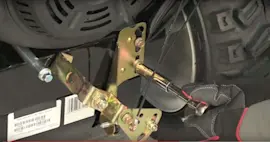
| Pivot points and idler bracket | Lubricate once a season with light engine oil | Prevents binding and cable/control wear |
Parts that commonly wear out first
These parts are normal wear items; replacing them on time helps the machine last longer overall.
- Snowblower ground drive belt 754-04013 (loss of drive, slipping, burning rubber smell)
- MTD snowblower auger drive belt 754-04014 (auger slows or stops under load)
- Skid shoe 784-5580 (scraping, poor clearing height, uneven wear)
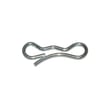
- Shear pins (auger stops after hitting an obstruction; keep spares on hand)
Why it matters
A snowblower usually does not “wear out all at once”; it loses performance as belts glaze, lubrication dries out, and fuel degrades in storage. Staying on the manual’s schedule and replacing wear parts early typically adds years of reliable starting, throwing distance, and drive performance.
Last updated: February 2026
Is it worth fixing an old snowblower?
Yes, it’s worth fixing an older MTD snow thrower like model 31AS3CAD799 when the machine is structurally sound and the repair is limited to common wear items (belts, skid shoes, shear pins, cables). Regular maintenance and safe operation practices in the owner's manual help you get reliable performance for many more seasons.
Quick way to decide
Use this checklist to make a clear repair vs. replace call:
- Fix it if the engine runs well, the auger housing is solid, and the issue is a wear part (belt, skid shoe, shear pin, cable).
- Fix it if the machine only needs adjustment, lubrication, or routine service (oil, spark plug, fasteners).
- Replace it if the frame or auger housing is badly rusted through, cracked, or bent.
- Replace it if major drivetrain components are failing (for example, repeated transmission problems) and the total repair cost approaches the value of a working unit.
- Fix it if you can do the work yourself and parts are available.
Common “worth it” repairs for 31AS3CAD799
These are typical, high-impact repairs that restore performance:
- Replace worn belts (auger and drive) when you see cracking, fraying, or slipping.
- Replace worn skid shoes to protect the auger housing and improve scraping height.
- Replace shear pins after an auger jam to protect the gearbox.
- Tighten and re-check fasteners and hardware periodically.
Parts that often solve the problem
| Symptom | Likely wear item | Example part for this model |
|---|---|---|
| Auger won’t spin or slips | Auger drive belt | MTD snowblower auger drive belt 754-04014 |
| Unit won’t drive well | Ground drive belt | Snowblower ground drive belt 754-04013 |
| Poor scraping, housing drags | Skid shoes | Skid shoe 784-5580 |
| Auger jammed, pin broke | Shear pin | Craftsman snowblower shear pin 738-04124A |
Why it matters
A snowblower that’s maintained and repaired with correct parts stays safer and more dependable. The manual calls out routine checks like belt condition, fastener tightness, and replacing wear items such as skid shoes and shave plate to keep the machine operating properly and reduce damage.
If you repair it, do these safety steps first
Before any inspection or repair:
- Stop the engine and wait for all moving parts to stop.
- Disconnect and ground the spark plug wire.
- Never clear the chute or auger area by hand; use the clean-out tool if equipped.
- Re-check control engagement after repairs and adjust as needed.
Last updated: February 2026
What is better, a 2 stage or 3 stage snow blower?
A 2-stage snowblower is the better choice for most homeowners because it handles typical driveway snowfalls well, throws snow farther, and is simpler to maintain. A 3-stage is better when you regularly face deep, heavy, wet snow or end-of-driveway plow piles and want faster intake.
Quick comparison: 2-stage vs 3-stage
- 2-stage: Auger pulls snow in, impeller throws it out; strong all-around performance.
- 3-stage: Adds an accelerator (a third “intake” component) to feed snow faster; best for very heavy, deep snow.
- Maintenance: 2-stage is typically simpler; 3-stage has more moving parts to inspect.
- Best use case: 2-stage for most driveways; 3-stage for frequent storms, dense snow, and plow berms.
| Feature | 2-stage snowblower | 3-stage snowblower |
|---|---|---|
| Snow intake speed | Moderate to fast | Fastest |
| Heavy, wet snow | Very good | Excellent |
| Plow pile performance | Good | Excellent |
| Complexity | Lower | Higher |
| Typical cost | Lower | Higher |
How to choose for your MTD snow thrower setup
Use these practical decision points:
- Choose 2-stage if you clear 1 to 2 cars wide, get mixed snow, and want easier upkeep.
- Choose 3-stage if you often clear deep drifts, wet snow, or end-of-driveway piles and want quicker clearing.
- If you hit hidden objects (ice chunks, gravel, newspapers), prioritize a machine that uses proper shear pins and keep spares on hand.
- If your current machine struggles, check belt condition and traction adjustments before upgrading.
Why it matters (performance and protection)
In real-world use, “better” usually means matching the machine to your snow type and protecting the drivetrain. For example, when an auger jams, the snowblower is designed to shear the auger shear pins to help prevent gearbox damage. Using the correct shear pins and keeping the auger and drive system maintained helps any 2-stage or 3-stage machine perform reliably.
Maintenance tips that improve either design
- Warm the engine up before heavy throwing so it reaches full power.
- Inspect belts for cracking or fraying; many snowblowers use both an auger belt and a drive belt.
- Lubricate pivot points and drive components on schedule.
- Replace sheared pins only with the correct type.
Helpful resources for your MTD 31AS3CAD799:
Last updated: February 2026