Installation guide
 Owner’s manual
 Error Codes



How much does it cost to replace a heating element in a Frigidaire dryer?
For a Frigidaire dryer like model AEQ7000EE0, the typical total cost to replace a heating element is about $200 to $400 (part plus labor). The heating element itself is often around $100 to $200, and labor commonly adds $100 to $200 depending on access and service rates.
Replacement cost varies most by whether you do it yourself or hire service, and whether the dryer has additional heat-related failures (thermostat, thermal limiter, wiring).
- DIY (part only): typically $100 to $200
- Service call + labor: typically $100 to $200
- Common add-ons: thermal limiter, high-limit thermostat, or a temperature sensor if overheating occurred
- If the dryer runs but will not heat: check the home power supply first (many electric dryers need two fuses/breakers)
| Scenario | What is included | Typical total |
|---|---|---|
| DIY replacement | Heating element assembly only | $100 to $200 |
| Pro repair (best case) | Part + labor | $200 to $400 |
| Pro repair with overheating fix | Part + labor + safety parts | $250 to $500 |
Our Frigidaire dryer troubleshooting guidance starts with the basics because they are the most common causes of “tumbles but no heat.”
- Confirm the dryer is on a dedicated circuit and the plug fits tightly
- For electric dryers, check that both legs of power are present (a blown fuse can let the motor run but stop heat)
- Clean the lint screen and verify strong airflow through the vent
- If the dryer overheated, a one-time safety device may have opened and must be replaced
- Use the wiring diagram/tech sheet stored inside the dryer (noted in the installation instructions)
If you are already opening the cabinet, these are the most common heat-related parts we see replaced together:
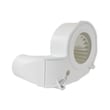
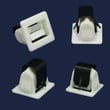
- Frigidaire dryer heating element assembly 131553900
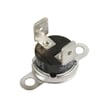
- Dryer thermal limiter 134120900
- Kelvinator dryer high-limit thermostat 3204267
- Dryer thermistor 134587700
A failed heating element can be a simple fix, but restricted venting or an overheating condition can take out safety parts (thermal limiter, high-limit thermostat) and cause repeat failures. Following the diagnostic steps in the AEQ7000EE0 installation guide helps prevent replacing the wrong part.
Last updated: February 2026
How to diagnose a Frigidaire dryer?
For a Frigidaire AEQ7000EE0 dryer, we diagnose problems by starting with the simplest checks (power, settings, airflow), then using the model’s built-in diagnostics or tech sheet to test components and read any error indications. Follow the exact button sequence in the AEQ7000EE0 owner's manual.
- Confirm the dryer is plugged into a properly grounded outlet (no extension cord).
- Verify the breaker is on and the dryer has full power.
- Clean the lint screen and confirm strong airflow at the outside vent.
- Make sure the drum turns freely by hand (with power disconnected).
- Run a timed dry cycle to separate “sensor” issues from basic heat/run issues.
Frigidaire typically stores a wiring diagram and tech sheet inside the dryer cabinet (often attached to an inside panel near the blower housing). Use it to identify test points and expected readings.
- Disconnect power before accessing internal wiring.
- Label wires before disconnecting any connectors.
- After any repair, verify proper operation through a full cycle.
| Symptom | Most likely area to diagnose | Example part for this model |
|---|---|---|
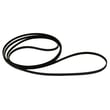
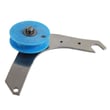
| Drum will not turn, motor runs or hums | Belt and idler system | Frigidaire dryer drum belt 134503600 |
| No heat or overheating shutdown | Heating circuit and safety devices | High-limit thermostat, thermal limiter |
| Long dry times | Venting/airflow, blower, moisture sensing | Venting, lint screen, blower housing |
| Squealing or scraping noise | Drum support and seals | Drum bearing, felt seals, glides |
A dryer can show “no heat” or “won’t start” symptoms from simple airflow restrictions or a tripped safety device. Starting with airflow and power checks prevents unnecessary parts replacement and helps you pinpoint whether the issue is in the heating circuit, drum drive, or controls.
For code-based troubleshooting, we also use the Frigidaire dryer error codes reference to match the displayed fault to the correct diagnostic path.
Last updated: February 2026
What does code e64 mean on a Frigidaire dryer?
On the Frigidaire dryer model AEQ7000EE0, error code E64 means the control is detecting a heating circuit problem, most commonly an issue with the heating element or its wiring. Start by resetting power, then inspect the heater circuit and airflow before replacing parts.
- Unplug the dryer (or switch off the breaker) for 2 minutes, then restore power and retry a heat cycle.
- Clean the lint screen and confirm strong airflow at the outside vent hood.
- Check the exhaust duct for kinks, crushing, or heavy lint buildup.
- Verify the dryer is on a proper dedicated electrical supply (electric models need full voltage to heat).
- If the code returns quickly, move to heater circuit checks.
E64 points to the heater circuit; these components are the usual suspects on a no-heat or heat-fault condition.
| Symptom you notice | Most likely area | Common related part for AEQ7000EE0 |
|---|---|---|
| Runs but no heat | Heater circuit open | Dryer heating element assembly 131553900 |
| Heats then shuts off, overheats, or cycles oddly | Temperature safety/control | Dryer high-limit thermostat 3204267 or dryer thermal limiter 134120900 |
| Heat is inconsistent or temperature seems wrong | Temperature sensing | Dryer thermistor 134587700 |
- Disconnect power before accessing internal components.
- Label wires before removing them; wiring errors can cause improper operation.
- Inspect heater wiring terminals for discoloration, looseness, or melted connectors.
- After any repair, verify proper operation on a timed heat cycle.
For model-specific access steps and component locations, follow the AEQ7000EE0 owner's manual.
When the dryer cannot control heat correctly, dry times increase and components like thermostats and thermal limiters can trip to protect the dryer. Fixing the root cause (often airflow restriction or a failed heater component) restores normal drying performance.
Last updated: February 2026