Installation guide
 Owner’s manual
 Error Codes



What is the capacity of the Maytag MHW7000XW2?
The Maytag MHW7000XW2 is a front-load washer; its capacity is typically listed in cubic feet on the model’s spec label and in the documentation. For the most accurate capacity figure for your exact MHW7000XW2, we recommend confirming it in the MHW7000XW2 owner's manual.
Capacity can vary by model revision and how the manufacturer reports usable tub volume. Use these quick checks:
- Look in the specifications section of the MHW7000XW2 owner's manual
- Check the model and serial tag (often around the door opening or behind the door)
- Compare the listed capacity to the cycle and load guidance (front-loaders often specify load size by drum fill level)
- If you are planning an install, verify space and clearances in the MHW7000XW2 installation guide
If you are estimating for laundry planning (not ordering parts), most Maytag front-load washers of this style fall in a common range.
| Washer type | Typical capacity range | Best use |
|---|---|---|
| Compact front-load | 2.0 to 2.6 cu. ft. | Small households, tight spaces |
| Full-size front-load | 3.5 to 5.0 cu. ft. | Everyday family loads, bedding |
Knowing the correct capacity helps us match the right cycle expectations (load size, water level behavior, spin performance) and helps you avoid overloading, which can contribute to vibration, poor draining, and door boot wear.
Last updated: January 2026
What is the most common problem with a Maytag washer?
The most common Maytag washer problems are draining and spinning failures. On the Maytag MHW7000XW2 front-load washer, these symptoms are usually tied to a drain restriction, a failing drain pump, or a door lock issue that prevents the cycle from advancing.
- Won’t drain or drains slowly: clogged pump filter, blocked drain hose, or a weak drain pump
- Won’t spin: load out of balance, drain problem (won’t spin with water left in tub), or door not locking
- Door won’t lock or unlock: failed door latch/lock assembly or alignment issue
- Leaks at the door: torn bellow/boot, loose clamp, or debris on the door glass
- Excess vibration: washer not level, shipping bolts left installed, or worn suspension components
- Confirm the washer is level; leveling reduces noise and vibration.
- Verify shipping bolts were removed (a common cause of severe vibration on front-load washers).
- Check the drain path: look for kinks, pinches, or a partially blocked standpipe/laundry tub drain.
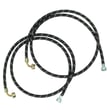
- Check inlet hoses for age and condition; replacing hoses every 5 years helps prevent leaks.
| Symptom | Likely part to inspect | What it affects |
|---|---|---|
| Won’t drain | Drain pump | Removes water so the washer can spin |
| Won’t spin / door error | Door lock/latch | Confirms door is locked so the control can run high-speed spin |
| Leaks at door | Door bellow and clamps | Seals the tub opening to the door |
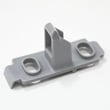
If you suspect a door lock problem, start with the latch WP8183270. For installation and setup checks (leveling, hoses, drain routing, grounding), use the installation guide.
If the display shows an error code, match it to the symptom before replacing parts. Use the Maytag maxima front load washer error codes reference to pinpoint likely causes such as drain faults, door lock faults, or motor control issues.
A front-load washer often will not spin if it cannot drain completely or if the door lock does not confirm a safe, locked condition. Fixing the root cause prevents repeat shutdowns, wet loads, and unnecessary part replacements.
Last updated: January 2026
What's the average lifespan of a Maytag washer?
Most Maytag washers average 10 to 13 years of service life with normal household use. For a front-load model like Maytag MHW7000XW2, consistent maintenance, correct installation, and fixing small issues early are what most often push lifespan toward the high end; see the MHW7000XW2 owner's manual for the care routine.
Lifespan depends most on load size, cycle frequency, water quality, and how well the washer is leveled.
- Average: 10 to 13 years
- Often achievable with good care: 13 to 15 years
- Shortened lifespan drivers: chronic overloading, repeated unbalanced spins, standing water, and detergent overuse
| Usage pattern | What it usually means | Expected outcome |
|---|---|---|
| 3 to 5 loads/week | Normal wear | Typical 10 to 13 years |
| 6+ loads/week | Higher mechanical and bearing wear | More repairs sooner |
| Heavy items often (comforters, rugs) | More strain on suspension and tub | Shorter life if frequent |
These habits reduce stress on the drive system, tub, and door seal.
- Keep the washer level to reduce vibration and bearing wear (leveling steps are in the MHW7000XW2 installation guide).
- Use HE detergent and avoid overdosing to prevent residue buildup.
- Leave the door slightly open between loads so the bellow can dry.
- Run a monthly cleaning cycle (or hot cycle) to limit odor and buildup.
- Replace inlet hoses about every 5 years and inspect for bulges, kinks, cuts, wear, or leaks.
If the washer is otherwise in good shape, these repairs often restore reliable operation.
- Door not locking or intermittent start: check the latch WP8183270.
- Not draining or stopping mid-cycle: drain pump and drain path checks.
- Not filling correctly or temperature issues: inlet valve screens, hoses, and temperature sensing.
A washer that is installed correctly (solid floor, proper leveling, good hose condition) runs with less vibration and fewer leaks. That directly reduces wear on high-cost components like the tub, motor, and control system.
Last updated: January 2026
Is it worth repairing a Maytag Neptune washer?
If you have a Maytag Neptune washer, repairing it is worth it when the problem is a lower-cost, single-part failure and the washer is otherwise in good condition; it is usually not worth it when the repair involves major labor and high-cost assemblies. For comparison, if you own a Maytag MHW7000XW2 front-load washer, we use the same cost-versus-condition approach and confirm safe setup steps in the installation guide.
We recommend using these checkpoints before you spend money on parts or service:
- Repair it if the washer has no leaks, no excessive vibration, and the issue is isolated (won’t drain, won’t lock, won’t fill).
- Replace it if you have repeated breakdowns, loud bearing-like rumbling, or multiple symptoms at once.
- Repair it if the total repair cost is under about 50% of the price of a comparable new washer.
- Replace it if the repair requires major teardown (tub/bearing work, major structural damage).
- Repair it if you can DIY safely and the fix is straightforward (pump, latch, valve).
On many Maytag front-load washers, these are often practical repairs because they are usually single-component failures:
| Symptom | Common cause | Example part for MHW7000XW2 |
|---|---|---|
| Door won’t lock or cycle won’t start | Door lock/latch failure | Latch WP8183270 |
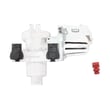
| Washer won’t drain, stops full of water | Drain pump or blockage | Washer drain pump WPW10321032 |
| Washer won’t fill or fills slowly | Inlet valve or supply restriction | Washer water inlet valve assembly WPW10247306 |
These problems often push the repair cost too high, especially on older Neptune units:
- Tub bearings or inner/outer tub damage
- Multiple electronic failures (control plus motor control plus wiring)
- Severe leaks that have damaged the cabinet, wiring, or motor area
A washer can look “fixable” but still be a poor value if the repair requires major disassembly or if other age-related failures are likely soon after. A quick cost-and-condition check helps you avoid paying for one repair only to face another.
If you relocate a washer for service, keep it upright, remove shipping or transport materials correctly, and plug it into a properly grounded outlet as described in the installation guide.
Last updated: January 2026