Owner’s manual
 Error Codes


How many cubic feet is my Kenmore refrigerator model 79551024012?
The exact cubic-foot capacity for Kenmore model 79551024012 is listed on the model’s specification information in the 79551024012 owner's manual. For this Kenmore 795-series side-by-side refrigerator platform, total capacity is typically in the low-to-mid 20 cu. ft. range, depending on the exact configuration.
We recommend checking these spots first because they match the capacity to your exact build:
- The specifications section in the 79551024012 owner's manual
- The model and serial tag inside the fresh food compartment (often on a side wall)
- Any rating label that lists “Total capacity” or “Capacity (cu. ft.)”
- Your original sales receipt or product spec sheet (if you still have it)
If you are planning space, food storage, or replacement shopping, these ranges help set expectations.
| Refrigerator style | Typical total capacity | Notes |
|---|---|---|
| Side-by-side (standard depth) | 22 to 28 cu. ft. | Most common range for full-size units |
| Side-by-side (counter-depth) | 20 to 23 cu. ft. | Shallower cabinet reduces capacity |
Capacity affects more than storage space. It also impacts:
- How much airflow clearance you need around shelves and vents
- How quickly temperatures recover after door openings
- How often the ice maker and dispenser system may cycle
- Whether replacement bins, drawers, and door parts fit as expected
If you are checking capacity because you are troubleshooting weak water flow or slow ice production, a restricted filter or water path is a common cause. Use the how to replace the water filter in a Kenmore refrigerator guide for the correct replacement steps.
Last updated: February 2026
Where is the model number on a Kenmore side by side refrigerator?
On Kenmore side-by-side refrigerator model 79551024012, the model number is printed on the appliance identification label, typically inside the fresh food (refrigerator) compartment along the side wall near the front, or on the ceiling near the top. Use the same label to record the serial number.
- Open the refrigerator door and check the left and right interior side walls near the front edge
- Check the ceiling area inside the refrigerator compartment (near the light housing)
- Look around the crisper drawer frame area (label is often above or beside it)
- If you do not see it in the refrigerator section, check the freezer compartment side wall
- Wipe the area with a damp cloth; labels can be hard to read under dust or condensation
Most Kenmore refrigerators use a white or silver sticker that includes:
- Model number (for example, 79551024012)
- Serial number (a longer code)
- Electrical ratings (volts/amps)
Refer to the 79551024012 owner's manual for the exact label location callouts and diagrams for your unit.
| Item | What it’s used for | What it looks like |
|---|---|---|
| Model number | Matching parts and diagrams | Shorter code like 79551024012 |
| Serial number | Manufacturing date tracking and service history | Longer mixed code (letters and numbers) |
We use the model number to match the correct Kenmore parts list for your refrigerator, including items like the refrigerator water inlet valve 5221JA2006D or refrigerator freezer door gasket 4987JJ1010G. A single digit off can point to a different door style, dispenser setup, or internal water line routing.
Last updated: February 2026
What is the average lifespan of a Kenmore refrigerator?
Most Kenmore refrigerators average 10 to 15 years of service life. For a Kenmore side-by-side like model 79551024012, lifespan depends most on basic care (airflow, clean coils, good door seals) and fixing cooling or water system issues early using the 79551024012 owner's manual.
- Average: 10 to 15 years
- Often achievable with good maintenance: 15+ years
- Shortened lifespan drivers: dirty condenser area, poor door sealing, repeated overheating, and unresolved ice maker or water leaks
| Refrigerator type | Typical lifespan | Notes |
|---|---|---|
| Side-by-side (like 79551024012) | 10 to 15 years | More components (dispenser, ice system) means maintenance matters more |
| Top freezer | 14 to 18 years | Simpler design often lasts longer |
| French door | 10 to 15 years | More doors and airflow paths can add wear points |
- Vacuum dust from the condenser area and keep airflow clear behind the cabinet.
- Keep doors closing tightly; replace worn gaskets if you feel cold air leaking.
- Keep the freezer temperature stable; avoid overpacking vents.
- Change filters on schedule and flush the dispenser after filter changes.
- Address water leaks quickly; a slow leak can damage flooring and promote corrosion.
If performance drops, these are common “keep it running” items for Kenmore 79551024012:
- Refrigerator water inlet valve 5221JA2006D (weak fill can affect ice maker and dispenser)
- Refrigerator thermistor 6500JB2002T (bad sensing can cause warm temps or overcooling)
- Refrigerator condenser fan 4681JB1029B (poor airflow can stress the compressor)
A refrigerator usually fails early from heat and airflow problems or from small water system issues that go unchecked. Staying ahead of airflow, sealing, and water supply problems helps protect major components like the compressor.
Last updated: February 2026
Why is there water leaking from the bottom in my Kenmore refrigerator?
Water leaking from the bottom of your Kenmore 79551024012 side-by-side refrigerator is usually caused by a clogged or frozen defrost drain, a mispositioned drain pan, or a water supply leak from the dispenser/ice maker tubing or inlet valve. Start by checking for ice or debris in the drain path and then inspect the water line connections.
- Unplug the refrigerator before removing panels or working near wiring.
- Look for a sheet of ice on the freezer floor; this strongly points to a frozen defrost drain.
- Flush the defrost drain with hot (not boiling) water using a turkey baster.
- Clear the drain tube with a flexible brush or pipe cleaner until water flows freely to the pan.
- Verify the drain pan is seated correctly and not cracked or overflowing.
Leaks that appear only when dispensing water or after ice maker fills typically come from a loose fitting, split tubing, or a seeping valve.
- Inspect the tubing and couplers for drips, especially at push-to-connect fittings.
- Check the valve area for slow seepage or mineral buildup.
- If you see a drip at a connector, the fitting may need to be reseated or replaced.
Helpful parts to consider for this model:
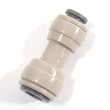
- Refrigerator water tube fitting 4932JA3002C
- Refrigerator water tubing 5210JA2006B
- Refrigerator water inlet valve 5221JA2006D
| What you notice | Most likely cause | Where to look |
|---|---|---|
| Water under crisper drawers, puddle after defrost | Clogged/frozen defrost drain | Freezer drain hole and drain tube |
| Water only after using dispenser | Leaking tubing or fitting | Behind dispenser area and along tubing |
| Random puddles near back/bottom | Seeping inlet valve or loose connection | Rear lower area near valve and supply line |
| Water in drain pan but overflowing | Pan out of place or restricted drain flow | Under cabinet near compressor area |
A blocked defrost drain can refreeze and keep leaking, and a small water-line drip can damage flooring and promote ice buildup. Fixing the root cause also helps your Kenmore 79551024012 maintain stable temperatures and normal defrost operation.
For model-specific panel access and drain locations, follow the steps in the 79551024012 owner’s manual.
Last updated: February 2026
How wide is a Kenmore side-by-side refrigerator?
The Kenmore side-by-side refrigerator model 79551024012 is 35 3/4 inches wide (cabinet width). For installation planning, also account for any added width from door handles and the clearance needed for door swing; confirm the full dimension set in the 79551024012 owner's manual.
When you compare refrigerator dimensions, we recommend tracking these measurements separately:
- Cabinet width: the refrigerator box only (this model: 35 3/4 in.)
- Overall width: cabinet plus any protrusions such as handles
- Door swing clearance: space needed so doors open fully without hitting walls or cabinets
- Installation clearance: small gaps around the cabinet for airflow and leveling
Use a tape measure and write down these numbers:
- Measure the opening width at the front and back (walls are often not perfectly square)
- Measure the narrowest point between cabinets or trim
- Check for baseboards, side panels, or molding that can reduce usable width
- Plan for handle clearance if handles face a wall or pantry
- Verify recommended clearances in the 79551024012 owner's manual
| Dimension to check | What it includes | What to use it for |
|---|---|---|
| Cabinet width | Refrigerator body only | Confirms it fits between cabinets |
| Overall width | Body plus handles/protrusions | Prevents “won’t slide in” issues |
| Door swing clearance | Space beside/in front | Ensures doors open fully |
A tight fit can prevent full door opening, make leveling difficult, and lead to door seal gaps that cause warm spots or frost. Using the correct width measurement helps avoid installation surprises.
Last updated: February 2026
What are the most common problems with Kenmore refrigerators?
The most common problems we see on Kenmore refrigerators like model 79551024012 are cooling issues, water leaks, ice maker or dispenser failures, and unusual noises. These typically trace back to airflow restrictions (dirty coils or a failed fan), defrost problems, or worn water system components; start with basic checks in the 79551024012 owner's manual.
- Not cooling or warm temperatures: dirty condenser coils, failed condenser fan, evaporator frost buildup (defrost issue)
- Water leaking or puddles: clogged defrost drain, cracked water tubing, leaking inlet valve, loose fittings
- Ice maker not making ice: low water supply, frozen fill tube, inlet valve issue, ice maker assembly failure
- Dispenser not dispensing ice: jammed ice chute, failed auger motor, dispenser door not opening
- Loud humming, rattling, or buzzing: condenser fan hitting debris, failing fan motor, compressor noise
- Confirm controls are set correctly (typical targets: 37°F fresh food, 0°F freezer).
- Make sure vents inside both compartments are not blocked by food packages.
- Clean condenser coils and check for strong airflow at the toe grille or rear (depending on installation).
- Listen for the condenser fan; if it is not running when the compressor runs, cooling will suffer.
- If the ice maker is slow, verify household water pressure and check for kinks in the supply line.
| Problem area | Common suspect part | Example part for this model |
|---|---|---|
| No water to dispenser/ice maker | Water inlet valve | Refrigerator water inlet valve 5221JA2006D |
| Weak or leaking water line | Water tubing or fitting | Refrigerator water tubing 5210JA2006B or refrigerator water tube fitting 4932JA3002C |
| Noisy or poor condenser airflow | Condenser fan | Refrigerator condenser fan 4681JB1029B |
| Ice not dispensing | Auger drive issue | Refrigerator auger motor 4681JJ1001B |
Cooling, ice, and water problems often share the same root causes: restricted airflow raises temperatures, and water system leaks can create ice buildup that blocks fans and ducts. Catching the early signs helps prevent food spoilage and repeat breakdowns.
Last updated: February 2026