Installation guide
 Owner’s manual
 Error Codes


Is 3.2 cubic feet a large capacity washer?
A 3.2 cu. ft. washer is typically considered small-to-medium capacity, not large capacity. For a Whirlpool top-load washer like WTW7320YW0, 3.2 cu. ft. usually handles everyday loads well, but bulky items (comforters, large blankets) fit more comfortably in larger-capacity models.
Capacity labels vary by brand and design, but these ranges are a reliable way to compare washers:
| Washer capacity | Typical label | Best for |
|---|---|---|
| 2.0 to 3.2 cu. ft. | Small | Singles, couples, light laundry |
| 3.3 to 4.4 cu. ft. | Medium | Most households, mixed loads |
| 4.5 cu. ft. and up | Large | Families, bulky bedding, fewer loads |
A 3.2 cu. ft. tub is a good fit when you want solid performance without oversizing. You will get the best results by loading correctly and choosing the right cycle.
- Load items loosely; don’t pack clothes down
- Keep the top of the load below the tub rim so water and detergent can circulate
- Wash bulky items one at a time (or in pairs) to reduce imbalance
- Use HE detergent and measure carefully to avoid residue
- If the washer shakes or “walks,” re-level the feet and reduce load size
Capacity affects cleaning and wear. Overloading a smaller tub can lead to poor rinsing, out-of-balance spinning, extra vibration, and faster wear on suspension and drive components.
For cycle recommendations, loading guidance, and any model-specific capacity notes, follow the usage and care instructions in the WTW7320YW0 owner's manual.
Last updated: February 2026
Where is the drain filter on a Whirlpool washer?
On the Whirlpool WTW7320YW0 top-load washer, there is not a front access drain filter like many front-load models. Drain-related clogs are typically found in the drain pump area or the drain hose path; use the WTW7320YW0 installation guide to locate and route the drain hose correctly.
- Unplug the washer before inspecting anything underneath.
- Confirm the drain hose is not kinked, crushed, or pinched behind the washer.
- Make sure the drain hose is not shoved too far into the standpipe (leave an air gap to prevent siphoning).
- Check that the standpipe or laundry tub drain is not slow or backing up.
- If you recently moved the washer, verify the drain hose form is installed correctly for a standpipe or laundry tub setup.
Most “filter” issues on a top-load Whirlpool like WTW7320YW0 are really pump or hose restrictions.
| Symptom | Most likely clog location | Common next step |
|---|---|---|
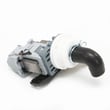
| Won’t drain, water stays in tub | Drain pump or pump inlet | Inspect pump for debris; consider replacing water pump W10536347 |
| Drains slowly | Drain hose or household drain | Clear hose/standpipe; verify correct hose depth |
| Hums but won’t drain | Pump jammed or failing | Check for obstruction; replace pump if needed |
- Unplug power and turn off water supply.
- Prepare towels and a shallow pan for water.
- Tip the washer back carefully (get help if needed).
- Inspect the pump and hoses for lint, coins, socks, or small items.
- Reassemble and run a drain/spin to confirm normal flow.
A restricted drain path can cause no-drain, no-spin, or long cycle times. Correct drain hose routing and a clear pump help prevent water from siphoning back into the tub and reduce strain on the drain system.
Last updated: February 2026
What is the most common problem with Whirlpool washers?
The most common Whirlpool washer problem is a no-start condition where the control panel lights up but the cycle will not begin; on the Whirlpool WTW7320YW0, this is often tied to the lid not locking, a control issue, or an installation or power problem. Check basics first, then test the lid-lock system.
- Confirm the washer is plugged into a grounded 3-prong outlet (no adapter or extension cord).
- Make sure the lid is fully closed and nothing is preventing it from seating.
- Verify both hot and cold water hoses are connected and faucets are fully open.
- Look for an unlevel washer that rocks; vibration can trigger cycle interruptions.
- If the washer was recently moved, confirm all shipping materials were removed.
| Symptom | What it usually points to | What we do next |
|---|---|---|
| Lights on, won’t start | Lid not locking | Inspect/replace the washer lid lock WPW10619844 |
| Starts then stops, won’t spin | Drain or pump issue | Check for drain restrictions; consider the water pump W10536347 |
| Random stopping, odd behavior | User interface or wiring | Inspect connections; consider the washer user interface WPW10297396 |
| Loud vibration, off-balance | Suspension wear or leveling | Level the washer; consider suspension W10247710 |
A washer that powers on but will not start is usually protecting you from unsafe operation (for example, the lid not locked) or reacting to a condition that prevents proper filling, draining, or spinning. Fixing the root cause prevents repeat shutdowns and reduces wear on the drive system.
- Proper leveling reduces excess noise and vibration.
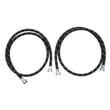
- Replace fill hoses about every 5 years and inspect for bulges, kinks, cuts, wear, or leaks.
- For standpipe or laundry tub draining, keep the drain hose insertion shallow to help prevent siphoning.
For exact operating steps and safety guidance for your Whirlpool WTW7320YW0, use the installation guide.
Last updated: February 2026
What is the life expectancy of a Whirlpool WTW7320YW0 washer?
A Whirlpool WTW7320YW0 top-load washer typically lasts about 11 years with average household use and normal maintenance. Heavy weekly loads, frequent overloading, and poor installation (unleveling, drain issues) can shorten lifespan; good care and correct setup help it reach or exceed that average.
Most washers of this type fall into a predictable range.
- Typical range: 10 to 14 years
- Average expectation: about 11 years
- Shorter lifespan drivers: frequent overloading, repeated off-balance spinning, hard water buildup, chronic draining problems
- Longer lifespan drivers: correct leveling, proper detergent use, periodic cleaning, prompt repair of small leaks/noises
These steps reduce wear on the drive system, suspension, and drain components.
- Keep the washer level to reduce vibration and suspension wear (see the installation guide).
- Avoid overfilling; load loosely so the washplate can circulate items.
- Use the correct amount of HE detergent; too much can cause residue and odors.
- Inspect fill hoses for bulges, cracks, or leaks; replace about every 5 years (the installation guide calls this out).
- Address slow draining quickly; a struggling drain system can overwork the pump.
If your WTW7320YW0 is nearing the end of its service life, these are the most common patterns we see.
| Symptom | What it often means | Parts commonly involved on this model |
|---|---|---|
| Won’t drain or leaves water in tub | Drain restriction or failing pump | Water pump W10536347 |
| Won’t spin, lid won’t lock | Lid lock not engaging | Washer lid lock WPW10619844 |
| Loud banging, walking, frequent off-balance | Worn suspension or uneven leveling | Suspension components, leveling feet |
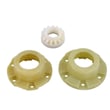
| Grinding/noise during agitation or spin | Drive wear, hub or bearing issues | Hub W10820039, drive/bearing components |
Knowing the expected life helps you decide whether to repair or replace. If the washer is near the 10 to 14 year window and needs a major drive or tub repair, comparing repair cost to replacement value usually leads to a clearer decision.
Last updated: February 2026