Owner’s manual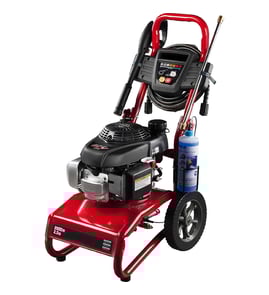



What kind of gas goes in a Craftsman 3000 PSI pressure washer?
For a Craftsman gas pressure washer like model 580754883, we use clean, fresh unleaded gasoline (87 octane/87 AKI minimum). Avoid old fuel and never mix oil into the gas unless your engine specifically calls for a fuel mix in the 580754883 owner's manual.
What to use (and what to avoid)
- Use unleaded gasoline, 87 AKI (minimum)
- Use fresh fuel (stale gas is a top cause of hard starting and surging)
- Avoid gasoline contaminated with water or dirt
- Avoid overfilling the tank; leave room for expansion
- Do not use mixed fuel unless your engine is a 2-cycle design (most are 4-cycle)
Quick fuel checklist before you start
- Turn the engine OFF and let it cool.
- Move the pressure washer to a well-ventilated area.
- Wipe dirt away from the fuel cap area so debris does not fall into the tank.
- Fill with fresh unleaded gas; tighten the cap securely.
Common symptoms of bad or wrong fuel
| Symptom | What it usually points to | What we do first |
|---|---|---|
| Starts then dies | Stale fuel, clogged carburetor jet | Drain fuel, refill with fresh gas |
| Surging at idle | Lean fuel condition, dirty carburetor | Fresh fuel, check air filter |
| Hard starting | Old fuel, fouled spark plug | Fresh fuel, inspect plug |
Why it matters
Using the correct octane and fresh unleaded fuel helps the engine run at the right RPM so the pump can maintain steady pressure (PSI) and flow (GPM). Bad fuel often causes hunting, stalling, and poor cleaning performance.
Parts and diagrams
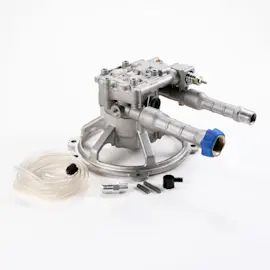
If you need replacement engine or fuel-system parts for your Craftsman 580754883, start with the model parts diagrams; for broader model searches and ordering, use Sears PartsDirect.
Last updated: February 2026
Why does my gas pressure washer have no pressure?
If your Craftsman gas pressure washer model 580754883 runs but has little or no spray pressure, the most common causes are trapped air in the pump, a clogged inlet screen/nozzle, an unloader valve stuck open, or a worn pump seal/valve. Start with the water supply and tip/nozzle checks first.
Quick checks (fastest fixes first)
- Turn water on fully before starting the engine; never run the pump dry.
- Disconnect the spray tip and purge air: hold the trigger open until water flows smoothly with no sputtering.
- Check the garden hose inlet screen for sand or debris; clean it and re-seat it.
- Try a different spray tip; a partially clogged tip can feel like “no pressure.”
- Verify the trigger gun is opening fully and the wand connection is tight.
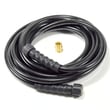
- Inspect the high-pressure hose for a kink, collapse, or internal damage.
Step-by-step: purge trapped air (pump prime)
- Connect the garden hose and turn the spigot on all the way.
- Remove the spray tip from the wand.
- Hold the trigger open for 30 to 60 seconds until the flow is steady.
- Reinstall the correct tip and test again.
If pressure is still low: likely causes and what you’ll notice
| What’s happening | Common symptom | What to do next |
|---|---|---|
| Clogged inlet screen or restricted water supply | Pulsing, weak stream | Clean screen; use a shorter hose; confirm strong flow at spigot |
| Clogged or wrong spray tip | Weak spray, uneven fan | Clean/replace tip; confirm you’re using a high-pressure tip |
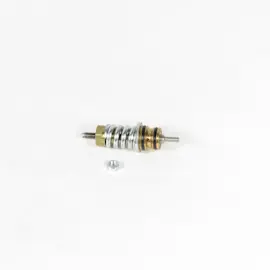
| Unloader valve stuck or misadjusted | Pressure drops when you release trigger, won’t build | Inspect unloader movement; clean if sticking |
| Pump valves/seals worn | Pressure slowly fades, water leaks from pump | Plan for pump service or replacement parts |
Why it matters
Low or no pressure is usually a water-in/water-out restriction issue, but continuing to run with poor flow can overheat the pump and accelerate wear on seals and check valves.
Helpful resources for this model
- Use the 580754883 owner's manual for priming steps, tip selection, and operating limits.
- If you need to look up replacement items by model number, search on Sears PartsDirect.
Last updated: February 2026
Is it worth it to repair a pressure washer?
Yes; repairing a Craftsman gas pressure washer like model 580754883 is worth it when the issue is a wear item or maintenance problem and the engine and pump are basically sound. Replace it when the pump or engine has major internal damage and the total repair cost is about half the price of a comparable new unit.
Quick repair vs. replace checklist
- Repair: starts and runs but has low pressure, surging, or a small leak at a fitting.
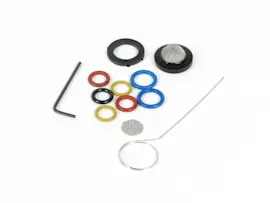
- Repair: problem is a nozzle/tip clog, inlet screen blockage, hose washer/O-ring, or spray gun issue.
- Repair: fuel-related no-start after storage (drain old fuel, clean carburetor, replace spark plug).
- Replace: pump crankcase is cracked, pump is loudly grinding, or it will not build pressure after basic checks.
- Replace: engine smokes heavily, knocks, or has very low compression (internal wear).
What usually tips the scale (time and cost)
Use the exploded views, maintenance intervals, and troubleshooting steps in the 580754883 owner's manual to estimate effort before buying parts.
| Symptom | Common cause | Usually worth repairing? |
|---|---|---|
| Runs but low pressure | Clogged tip, inlet air leak, unloader sticking | Yes |
| Surging/hunting | Partially clogged tip, carb varnish, inlet restriction | Yes |
| Leaks at connections | Hose washer, O-ring, quick-connect wear | Yes |
| No start after storage | Old fuel, dirty carb, fouled plug | Yes |
| Loud pump, no pressure | Internal pump damage | No |
| Smoke/knock | Engine internal damage | No |
Fast checks before you decide
- Confirm strong water supply to the inlet; straighten kinks and clean the inlet screen.
- Swap to a known-good spray tip; a clogged tip can mimic pump failure.
- Check for air leaks at the inlet fitting and hose washers.
- If it sat with fuel, do fuel system service (fresh fuel, carb clean).
Why it matters
Running with restricted water flow or a clogged nozzle can overheat and damage the pump quickly; catching a simple restriction early often turns a “replace” situation into an easy repair.
For diagrams and parts lookup by model number, use the model parts list first; for broader searching, use Sears PartsDirect.
Last updated: February 2026