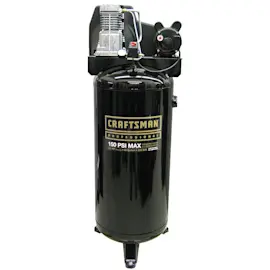
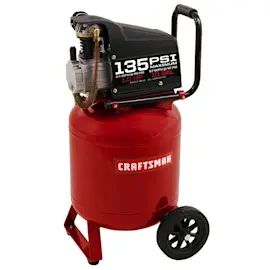
Owner’s manual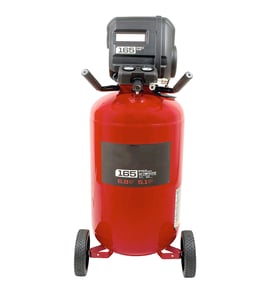
What is the most common cause of air compressor failure?
The most common cause of failure on a Craftsman 919165060 air compressor is poor maintenance that leads to overheating, air leaks, and premature wear. In practice, that usually means restricted ventilation, a dirty intake filter, and moisture left in the tank that causes internal rust and damage.
When an air compressor is used hard and maintained lightly, a few issues show up repeatedly:
- Overheating from restricted airflow: blocked ventilation openings or poor placement can overheat the motor and pump.
- Moisture and rust in the tank: not draining condensed water thins the steel tank over time.
- Air leaks: loose fittings, leaking valves, or hose leaks force longer run times and extra heat.
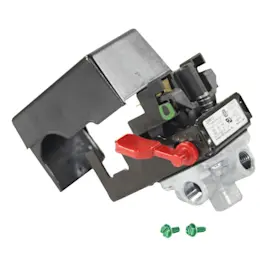
- Pressure control problems: a pressure switch that does not shut off at cut-out can over-pressurize and trip the safety valve.
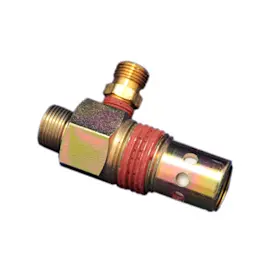
- Check valve issues: a stuck or restricted check valve can cause hard starting and repeated overload trips.
These habits prevent the majority of “sudden” failures we see:
- Drain condensation from the tank after use and before storage.
- Keep ventilation openings clear; do not operate in a tight, dusty corner.
- Check for leaks with soapy water at fittings, regulator, and valves.
- Use the regulated pressure correctly; set it under flow (while the tool is running).
- If the unit will not shut off at pressure, switch it OFF immediately and address the pressure switch.
| Symptom | Most likely cause | What to check first |
|---|---|---|
| Won’t start or restarts slowly | Check valve stuck open, overload tripped, extension cord issues | Unplug, bleed tank pressure, then inspect check valve and power supply |
| Won’t build tank pressure | Intake restriction, leaks, valve problems | Intake filter and leak check |
| Safety valve pops or tank pressure too high | Pressure switch not shutting off or set too high | Turn OFF; inspect pressure switch behavior |
| Tank won’t hold air | Leaks at fittings or tank/weld area | Soapy water test at fittings and drain valve |
Poor maintenance does not just reduce performance; it increases run time, heat, and stress on the motor, pressure switch, and valves. Draining the tank and keeping airflow clear are the fastest ways to extend compressor life and reduce breakdowns.
For model-specific operating and safety guidance, follow the maintenance and troubleshooting sections in the owner's manual.
Last updated: February 2026
Is it worth it to repair a compressor?
Yes, repairing your Craftsman air compressor model 919165060 is worth it when the problem is a common, replaceable failure (pressure switch, check valve, leaking fittings) and the tank is sound. If the air tank is leaking at the tank or welds, replacement is the better choice.
- Repair when the unit won’t start, won’t build pressure, or leaks at fittings or valves.
- Repair when the issue points to a control part (pressure switch) or one-way air control (check valve).
- Replace when there is air leakage in the tank or at tank welds (the manual treats the tank as defective in that case).
- Repair when the compressor otherwise runs normally and the fix is limited to 1 to 2 components.
- Replace when multiple symptoms stack up (won’t start plus won’t build pressure plus frequent safety valve popping).
The troubleshooting guidance for this model calls out a few “repairable vs. not worth repairing” lines:
| Symptom | Common cause | Typical best choice |
|---|---|---|
| Safety valve pops, tank pressure too high | Pressure switch not shutting off | Repair (pressure switch diagnosis and replacement) |
| Air leaks at fittings | Loose fittings | Repair (tighten and reseal) |
| Air leaks at pressure switch release valve | Defective release valve | Repair |
| Air leaks in air tank or at tank welds | Defective air tank | Replace the unit (tank failure) |
For operating and service precautions specific to this compressor, use the owner's manual.
A compressor repair only pays off if it restores safe, automatic cycling. This model can cycle automatically in the ON/AUTO position, and repairs can expose you to moving parts, electrical shock, hot surfaces, and stored compressed air, so the “right” choice is the one that restores safe shutoff and leak-free pressure holding.
- Turn the compressor OFF, unplug it, and bleed off tank pressure before any inspection.
- Check for obvious air leaks at fittings with soapy water.
- If the safety valve pops or pressure climbs too high, suspect the pressure switch.
- If air leaks back toward the pump after shutoff, suspect the check valve.
- Drain water from the tank after use to reduce internal corrosion.
For step-by-step troubleshooting paths, use air compressor won't build tank pressure or air compressor won't start.
Last updated: February 2026
Are air compressor parts interchangeable?
Most air compressor parts are not interchangeable, especially internal components on the Craftsman 919165060 such as pump parts, valves, and pressure-control components. For safe operation and proper fit, we match parts by model number and the exact connection type, not by “looks the same.”
Some external accessories are more standardized, but the compressor’s internal and safety-related parts are model-specific.
- Often interchangeable (if size and style match): air hose fittings, quick-connect couplers/plugs, tire chucks, blow guns
- Sometimes interchangeable (must match specs exactly): regulators, gauges, filters, moisture separators
- Rarely interchangeable (model-specific): pump cylinder/piston parts, reed valves, head gaskets, check valves, pressure switch/unloader setup
- Never “mix and match” to change performance: anything that alters factory pressure settings
Use the identification and specs approach the manual calls out when ordering service parts.
- Confirm the model number: 919165060
- Identify the part description and the exact location on the unit
- Match thread type and size on fittings (common sizes include 1/4 in. NPT, but verify yours)
- Match pressure rating of any attachment to the compressor’s intended operating range
- Keep ventilation openings clear and avoid modifications that affect heat or pressure control
| Part type | What must match | Why it matters |
|---|---|---|
| Quick-connect coupler/plug | Series/style and thread size | Prevents leaks and poor tool performance |
| Regulator/gauge | Port size, pressure range, mounting | Accurate control and readings |
| Pressure switch/check valve | Port layout, unloader compatibility, cut-in/cut-out design | Safe starting and safe pressure control |
This Craftsman compressor is designed to operate at specific factory-set pressures; swapping “close enough” parts can cause air leaks, hard starting, overheating, or unsafe pressure behavior. The manual also warns against modifications to the tank or pressure-related components.
For model-specific identification details and service-ordering info, use the owner's manual.
Last updated: February 2026
What company makes Craftsman air compressors?
Craftsman is a brand; different companies have built Craftsman air compressors for Sears over the years. For Craftsman model 919165060, the manual shows Sears, Roebuck and Co. as the brand owner and documentation publisher, but the actual OEM builder is identified on the compressor’s data plate, not by the Craftsman name.
Use the information stamped or printed on the tank label (data plate) and match it to your model details.
- Confirm the model number on the tank label is 919165060
- Look for a line that says MFG, Manufactured by, Factory, or a company name
- Write down any code numbers, serial number, and date of manufacture
- Check for a UL/CSA listing label; it often includes the responsible manufacturer
- Keep the full label info handy when you order parts or troubleshoot
For label locations, safety markings, and model identification tips, use the 919165060 owner's manual.
On many older Craftsman compressors, the manual and warranty pages reference Sears because Sears sold and supported the product under the Craftsman brand.
| Where you see the name | What it tells you | What it does not tell you |
|---|---|---|
| Manual cover or warranty text | Brand owner and documentation source | The OEM that built the compressor |
| Tank data plate | The specific unit’s manufacturing identification | Nothing about other Craftsman models |
The OEM matters because parts and specs can differ between similar-looking Craftsman units, especially for the pressure switch, regulator, check valve, gauges, and pump components. Matching parts to 919165060 and the data plate prevents wrong-part fit issues.
If you are tracking the OEM because you are diagnosing a failure, these guides help pinpoint the system involved:
Last updated: February 2026