Owner’s manual
 Error Codes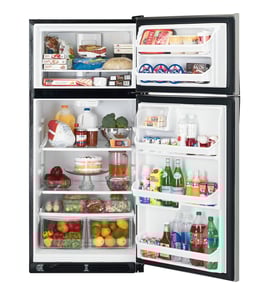


How many cubic feet is my Kenmore refrigerator by model number?
For Kenmore model 10667372801, the most reliable way to get the exact cubic-foot capacity is to look up the model specifications in the 10667372801 owner's manual. If you cannot find it there, the rating plate inside the fresh food section typically lists the capacity and other key specs.
Where to find the cubic feet (fastest options)
- Check the rating plate inside the refrigerator compartment (often on a side wall or near the crisper area).
- Look in the specifications section of the 10667372801 owner's manual.
- If you are measuring space for installation, use the manual’s clearance guidance as a starting point (top-mount units commonly need airflow space around the cabinet).
- If the label is worn, clean it gently and use a flashlight; the print is often faint.
What “cubic feet” means (and why it can vary)
Cubic feet is the interior storage volume of the refrigerator (and sometimes the total of refrigerator plus freezer). Manufacturers may list:
| Spec label you may see | What it usually refers to |
|---|---|
| Total capacity | Fresh food + freezer combined |
| Refrigerator capacity | Fresh food section only |
| Freezer capacity | Freezer section only |
Why it matters
Knowing the correct capacity helps when you are comparing storage space, planning food storage limits, and choosing accessories such as filters or shelves that match the exact configuration for 10667372801.
Last updated: February 2026
How do I tell what model Kenmore fridge I have?
Your Kenmore refrigerator’s model number is printed on the appliance’s rating label. On Kenmore top-mount refrigerators like model 10667372801, the label is usually inside the fresh food compartment or freezer, often along an interior side wall, near the crisper area, or behind the lower kickplate. Confirm the exact characters on the label and match them to the parts list and owner's manual.
Where to look for the model number label
Check these common spots first (use a flashlight and wipe away any frost or spills so you can read it clearly):
- Inside the refrigerator compartment on a side wall
- Inside the freezer compartment on an interior wall
- On the frame just inside the door opening
- Behind or near the lower crisper drawer area
- Behind the lower front kickplate (toe grille)
What to write down (so you get the right parts)
We recommend copying the information exactly as shown on the label.
- Model number (example format: 10667372801)
- Serial number (helps confirm production run)
- Any type or revision code listed
- Brand name (Kenmore)
Quick check: model number vs. part number
| Item | What it identifies | Example | Used for |
|---|---|---|---|
| Model number | The refrigerator | 10667372801 | Finding correct diagrams and parts |
| Part number / part ID | The replacement part | WPW10189703 | Ordering the exact component |
| Serial number | Your specific unit | (varies) | Verifying age and configuration |
Why it matters
Kenmore model numbers can look very similar, but small differences change the correct door gasket, shelf, control board, or evaporator fan parts. Using the exact model number prevents ordering the wrong component and avoids fit and wiring issues.
Last updated: February 2026
How to read Kenmore model numbers?
Kenmore model numbers are read as a prefix plus a full model identifier; the prefix helps identify who manufactured the appliance, and the complete model number is what we use to match the correct parts and documentation for your exact unit (for example, Kenmore refrigerator model 10667372801). For model-specific details, use the 10667372801 owner's manual.
Where to find the model number on a Kenmore refrigerator
On most Kenmore top-mount refrigerators, the model and serial label is on the cabinet frame inside the fresh food section (often near the crisper area or along a side wall). Once you find it, copy the entire model number exactly as shown.
- Check the inside walls of the refrigerator compartment
- Look near the crisper drawers or lower side walls
- Check the door frame area when the refrigerator door is open
- Write down both the model number and serial number for parts matching
How the Kenmore model number is structured
Kenmore model numbers typically follow a pattern where the first three digits are the source (manufacturer) prefix, followed by digits that identify the design family and specific variation.
| Example | What it tells us | Why it matters |
|---|---|---|
| 10667372801 | Prefix 106 plus the full model identifier | Ensures the correct parts list and diagrams for your refrigerator |
| 253.XXXXXXX | Different prefix family | Points to a different manufacturing source and parts system |
| 795.XXXXXXX | Different prefix family | Helps avoid ordering the wrong shelves, gaskets, or controls |
Why the full model number matters for parts
Small differences in a Kenmore refrigerator series can change fit and function for common replacement parts. Using the complete model number helps us match the correct version of items like door gaskets, shelves, and electrical components.
- Door gasket color and size can vary (white vs black)
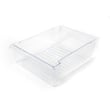
- Shelves and crisper pans can change by revision
- Electrical parts (control board, light switch) must match the wiring and mounting
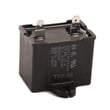
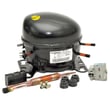
- Cooling system parts (compressor, run capacitor) must match the compressor platform
Parts examples tied to model matching
If you are ordering parts for Kenmore 10667372801, match by the full model number first, then confirm the part ID.
- Refrigerator light switch W11384469 for door-activated interior light issues
- Gasket panel (white) 2159061 if the door seal is torn or leaking air
- Refrigerator electronic control board WP2304099 for certain temperature control or power issues
Last updated: February 2026
What's the average lifespan of a Kenmore refrigerator?
Most Kenmore refrigerators last 10 to 15 years. For a Kenmore 10667372801 top-mount refrigerator, regular maintenance (cleaning, good door sealing, and prompt fixes for cooling or ice issues) is what most directly determines whether it reaches the high end of that range.
Typical lifespan and what affects it most
A refrigerator’s life is usually decided by heat management, airflow, and how hard the sealed system has to work.
- Condenser coil cleanliness (dirty coils make the compressor run hotter and longer)
- Door gasket condition (air leaks cause long run times and frost issues)
- Evaporator fan performance (poor airflow leads to warm temps and icing)
- Defrost system health (failed defrost parts can ice up the evaporator and stop cooling)
- Water filter upkeep (helps prevent slow water flow and ice quality problems on filtered systems)
Maintenance that helps you hit 15 years (and beyond)
Use the care and troubleshooting sections in the owner's manual as your baseline, then focus on these high-impact habits:
- Vacuum dust from the condenser area every 6 to 12 months
- Keep doors closing squarely; avoid overloading door bins
- Set stable temps (avoid extreme cold settings that increase run time)
- Clear freezer vents so cold air can circulate to the fresh-food section
- If you replace a water filter, flush the system before using the ice and water (the manual notes discoloration can happen until flushing is complete)
Quick “what to do” guide
| Symptom | What it often points to | What we check first |
|---|---|---|
| Warm fridge, freezer OK | Airflow/defrost issue | Evaporator fan, frost buildup |
| Frost buildup, weak cooling | Defrost problem | Defrost thermostat, heater circuit |
| Loud humming, hard starting | Start components | Capacitor, relay, compressor health |
Parts that commonly impact longevity on this model
When cooling performance drops, these are common repair paths for a top-mount design:
- Door sealing: replace a torn or warped gasket such as gasket panel (white) 2159061
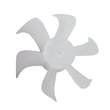
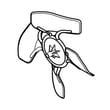
- Airflow: inspect the fan and motor; a damaged blade like refrigerator evaporator fan blade WP2163777 can reduce airflow
- Defrost protection: a failed thermostat like refrigerator defrost bi-metal thermostat WP2321800 can contribute to icing and warm temps
Why it matters
A refrigerator that runs longer to hold temperature uses more electricity and wears the compressor and control components faster. Simple upkeep (coils, gaskets, airflow) reduces run time and extends service life.
Last updated: February 2026