Installation guide
 Owner’s manual
 Error Codes


How can I tell what model washer I have?
For your Kenmore washer, the most reliable way to confirm the exact model is to find the model/serial tag and match it to the full number. For this unit, the model is 11031633611; use that exact number when choosing parts or the 11031633611 use & care manual.
On Kenmore top-load washers like model 11031633611, the tag is commonly in one of these spots:
- Under the lid, around the tub opening (rim)
- On the underside of the lid
- On the back of the washer cabinet
- Along the side or rear edge of the control console area
The label usually includes both a model number and a serial number. To avoid mix-ups, use these tips:
- Look for “Model” or “Mod.” followed by a long number
- Write the model number exactly as shown (all digits)
- Take a clear photo before ordering parts
- Use the serial number only for date/production info, not part matching
| Label item | What it’s used for | Example for this washer |
|---|---|---|
| Model number | Identifies the exact design and compatible parts | 11031633611 |
| Serial number | Identifies the specific unit built | Varies by unit |
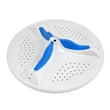
Kenmore model numbers can look very similar, but small differences can change the correct lid lock, drain pump, washplate, or control parts. Confirming 11031633611 first helps us point you to the right diagrams, manuals, and compatible replacement parts.
Last updated: January 2026
What is the average lifespan of a Kenmore washer?
Most Kenmore washers, including the Kenmore 11031633611 top-load high-efficiency model, typically last about 10 to 15 years with normal household use and routine care. Actual lifespan varies most with load habits, maintenance, and whether key wear parts are replaced as needed.
- Load size and balance: frequent overloading or chronic off-balance loads increase stress on the drive system and suspension.
- Detergent choice: using HE detergent helps prevent excess suds and residue buildup.
- Water quality and hose condition: sediment and aging hoses can lead to fill issues or leaks.
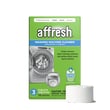
- Monthly cleaning: running the washer’s cleaning routine helps reduce odor and residue.
- Timely part replacement: replacing worn components early can prevent secondary damage.
| Washer age | What we commonly see | What to do next |
|---|---|---|
| 0–5 years | Mostly maintenance needs | Keep up with cleaning and correct loading |
| 6–10 years | Wear items start showing up | Address vibration, draining, or lid-lock issues early |
| 10–15 years | Higher chance of major repairs | Compare repair cost vs. overall condition |
| 15+ years | End-of-life becomes more likely | Plan for replacement if multiple systems are failing |
For Kenmore 11031633611, we recommend these habits from the 11031633611 use & care manual:
- Use HE (high-efficiency) detergent and measure carefully.
- Load items in loose heaps around the washplate, not tightly packed.
- Leave the lid open between uses to help the tub dry.
- Run the Clean Washer cycle on a regular schedule.
- Replace inlet hoses on a schedule and inspect for bulges, cracks, or leaks.
A washer’s “lifespan” is often determined by a few high-wear systems (drain, suspension, lid lock, and drive components). Good loading habits and routine cleaning can reduce strain and help your Kenmore washer reach the upper end of the 10–15 year range.
Last updated: January 2026
How to unclog drain hose on Kenmore washer?
To unclog the drain hose on your Kenmore washer model 11031633611, unplug the washer, turn off the water, then disconnect the drain hose from the home drain/standpipe and the washer outlet. Flush the hose with hot water (or a hot water and vinegar soak) until water runs freely.
- Unplug the washer and keep the lid closed until the tub stops moving.
- Turn off both water faucets (good practice any time you move the washer).
- Pull the drain hose out of the standpipe/laundry tub and drain any water into a bucket.
- Check the standpipe or laundry tub for a clog first; a blocked household drain can mimic a clogged washer hose.
- Disconnect the hose from the washer outlet and inspect for lint, coins, or a sock at the hose ends.
- Flush the hose:
- Run hot water through it, or
- Soak the clogged end in hot water + vinegar for 30 minutes, then rinse.
- Reinstall correctly using the drain hose form and correct insertion depth (see the 11031633611 installation guide).
- Verify the drain hose is not kinked or crushed behind the washer.
- Keep the standpipe clear; slow household drains cause backups.
- Use HE detergent and avoid oversudsing (suds can slow draining).
- Empty pockets; small items can enter the drain path.
- If draining is still slow, the drain pump may be obstructed or failing.
If the hose is clear but the washer still drains slowly, hums, or shows long-drain symptoms, the issue is often at the pump.
| Symptom | More likely cause | What to check next |
|---|---|---|
| Hose flushes clear but washer won’t drain | Pump blockage/failure | Inspect/replace washer drain pump W10876600 |
| Water backs up at standpipe | Household drain restriction | Clear standpipe/drain line |
| Drains sometimes, sometimes not | Intermittent obstruction | Check hose ends and pump inlet |
A restricted drain hose can cause long drain times, wet loads after spin, and water backing up. Clearing the hose and confirming proper drain-hose installation helps protect the drain pump and prevents repeat clogs.
Last updated: January 2026