Owner’s manual



Is it worth repairing an ice maker?
Yes, repairing a Haier HI50IB20SS freestanding icemaker is worth it when the problem is isolated (like a damaged door, drain issue, or a failed sensor) and the total repair cost stays well below the price of a comparable new unit. Replacement makes more sense when sealed-system or compressor repairs are involved.
Quick decision checklist (HI50IB20SS)
- Repair when the unit is otherwise cooling normally and only one function is failing (fill, freeze, harvest, drain).
- Repair when the issue is physical wear or a leak you can pinpoint (hose, reservoir, door seal/fit).
- Repair when you have not had repeated breakdowns in the last year.
- Replace when the compressor will not start or repeatedly trips protection.
- Replace when the unit has poor cooling plus loud running, overheating, or long freeze times.
- Replace when the repair requires sealed-system work (refrigerant components), which typically costs the most.
Common repairs that are often cost-effective
These are typical “high-impact” fixes that do not require sealed-system work:
| Symptom | What to check first | Example model-matched part |
|---|---|---|
| Door will not close, warm air, slow ice | Door alignment, gasket contact, bin seating | Haier ice maker door assembly WR78X29442 |
| Water leaking or not draining | Kinked hose, clogged drain path, loose connections | Haier drain hose WR01X29431 |
| Thin/slow ice production | Dirty condenser, airflow restriction, poor water quality | Clean condenser; review HI50IB20SS owner’s manual |
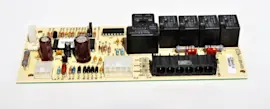
| Unit dead or intermittent display | Power supply, wiring connections, control/display | Haier ice maker electronic control board WR55X29448 |
Why it matters
A freestanding ice maker’s biggest costs are tied to the cooling system. When the compressor or refrigerant-side components are involved, repair costs rise quickly. When the issue is a serviceable part (door, drain hose, reservoir, control), repair usually restores performance for far less.
Safety and service guidance
We follow the same safety priorities called out in the documentation:
- Unplug the ice maker before servicing or cleaning.
- Shut off the water supply before disconnecting water lines.
- Avoid solvent-based or abrasive cleaners inside the unit.
- Do not touch the evaporator while the machine is operating.
- Use a qualified technician for repairs not specifically recommended.
Last updated: February 2026
What are the parts of the ice maker machine?
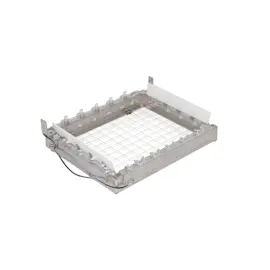
A Haier freestanding ice maker like model HI50IB20SS is built from a refrigeration system (to freeze water), a water-fill and distribution system (to deliver water to the evaporator), controls and sensors (to start and stop cycles), and storage and drain components (to hold ice and remove meltwater). For diagrams and locations, use the HI50IB20SS owner's manual.
Main parts you will typically find
- Compressor and start components (start relay, overload protector)
- Condenser and condenser fan (removes heat so ice can form)
- Evaporator (freezes water into ice)
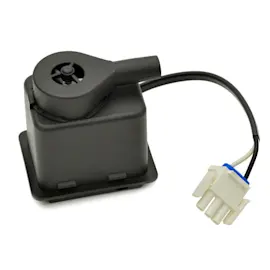
- Water reservoir and inlet tubes (feeds the water trough)
- Electronic control board and display (runs the cycle and user controls)
- Ice storage bin and bin-full probe (stops ice making when full)
- Drain system (drain hose and drain outlet)
- Door and door hardware (access to the bin)
Model HI50IB20SS parts you can shop by name
These are common HI50IB20SS components customers replace when troubleshooting no-ice, slow ice, leaks, or door issues:
| System | Example HI50IB20SS part | What it affects |
|---|---|---|
| Door and storage | Haier ice maker door assembly WR78X29442 | Door seal, closing, and bin access |
| Water supply | Haier water reserv WR14X29469 | Water feed consistency and fill issues |
| Drain | Haier drain hose WR01X29431 | Leaks, standing water, drainage |
| Cooling airflow | Haier condenser fa WR60X29427 | Slow ice production, warm cabinet |
| Controls | Haier ice maker electronic control board WR55X29448 | Power, cycling, and harvest timing |
Why it matters
Knowing which system a symptom belongs to speeds up troubleshooting. For example, the manual notes the unit stops automatically when the bin is full (the bin-full probe is held open), and it can make ice slowly if the condenser is dirty or airflow is blocked.
Quick safety and maintenance notes
- Disconnect power before servicing; the manual also warns: never touch the evaporator while the unit is running.
- Keep the condenser and water distribution areas clean for best performance.
- If water leaks from the bin area, check for a blocked drain hole or a kinked drain hose.
Last updated: February 2026
Why is the ice maker not working in my Haier refrigerator?
If your Haier HI50IB20SS freestanding ice maker is not making ice, the most common causes are no power, the ON/OFF button set to OFF, the water supply tap turned off, a loose water line connection, or the bin-full probe being held open by ice. Use the HI50IB20SS user manual troubleshooting chart to confirm the exact condition.
Quick checks that fix most “no ice” problems
- Make sure the unit is plugged in and the outlet has power.
- Press the front-panel ON/OFF button to ON.
- Turn on the main water supply tap; the unit needs water flow to start.
- Inspect the water supply connection for a loose fitting or a kinked line.
- Pull out the ice bin and confirm it is not overfilled; clear ice from the bin-full probe so it can swing freely.
- Wait a few minutes after starting; the unit transitions into the ice-making stage shortly after power-on.
What to look for based on the symptom
| Symptom | Most likely cause | What we recommend |
|---|---|---|
| No lights, no sound | No power, blown fuse | Restore power; replace fuse if needed |
| Runs but no water enters | Water tap off, supply line not connected | Turn on tap; reconnect supply line |
| Stops making ice with a full bin | Bin-full probe held open | Remove ice; free the probe |
| Water not draining, odd behavior | Drain hose kinked or routed too high | Re-route hose so it drains freely |
Parts that commonly relate to “no ice” symptoms
If you confirm a physical issue during the checks above, these model-specific parts are often involved:
- Haier water reserv WR14X29469 if the trough/reservoir is cracked or not holding water.
- Inlet tube WR01X29445 if the fill tube is blocked, kinked, or leaking.
- Haier drain hose WR01X29431 if the unit cannot drain properly due to a damaged hose.
Why it matters
This ice maker stops automatically when it senses a full bin (the bin-full probe is held open). It also cannot begin an ice-making cycle without steady water supply and proper drainage, so simple supply, bin, and hose checks prevent unnecessary part replacement.
Last updated: February 2026