Owner’s manual
 Error Codes

What is the average lifespan of a Kenmore washer?
A Kenmore washer typically lasts 10 to 15 years. For your Kenmore 11026901690 super capacity plus automatic washer, lifespan depends most on load size, water quality, and how often the washer runs; good maintenance and correct cycle settings help you reach the high end of that range.
Typical lifespan and what affects it
Most top-load washers like model 11026901690 land in the same general window, but these factors move the needle:
- Weekly usage (more cycles per week shortens overall life)
- Overloading (stresses the drive system, clutch, and suspension)
- Out-of-balance loads (increases wear on springs and drive components)
- Water conditions (hard water and sediment can affect valves and internal parts)
- Detergent habits (too much detergent can cause residue and odor issues)
Signs it is nearing end of life
If you are seeing multiple symptoms at once, repairs can add up quickly:
- Frequent no-spin or won’t drain events
- Loud grinding, burning smell, or repeated slipping during spin
- Water leaks from the tub area or hoses
- Agitation is weak or intermittent
- Timer or cycle control becomes inconsistent
Common repairs that can extend life
These are some of the most common wear items we see on this style of Kenmore washer:
| Symptom | Often involved part | Example part for this model |
|---|---|---|
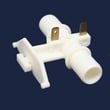
| Won’t spin or stops mid-cycle | Lid safety circuit | Washer lid switch WP3949238 |
| Won’t drain | Drain pump or drain hose restriction | Washer drain pump WP3363394 |
| Agitator moves poorly | Agitator dogs | Agitator dog 80040 |
Why it matters
Knowing the typical 10 to 15 year lifespan helps us decide whether to repair (single, clear failure like a lid switch) or plan replacement (multiple major issues like gear case plus tub leaks). For cycle and feature guidance, use the 11026901690 owner’s manual.
Last updated: February 2026
How to identify a Kenmore washer model?
To identify your Kenmore washer model, we look for the model and serial number plate on the washer cabinet. On Kenmore model 11026901690, the owner’s manual notes the model and serial number plate as a key reference point for parts and service; use the 11026901690 owner's manual to confirm the exact label location for your unit.
Where to look on the washer
Check these common spots first (top-load and front-load locations differ):
- Under the lid on the main cabinet opening (common on top-load washers)
- On the back of the control panel or console
- On the side of the main cabinet near the bottom edge
- Behind the door or in the door jamb (common on front-load washers)
How to use the model number once you find it
Write the model number exactly as shown (letters and numbers) and use it when ordering parts or checking diagrams.
- Match the full model number, not just the first few digits
- Record the serial number too; it helps confirm production details
- Use the model number to select compatible parts like a lid switch, drain pump, or inlet valve
Quick reference: model vs. serial
| Item | What it tells us | When you need it |
|---|---|---|
| Model number | The exact washer design and parts fit | Always, for parts lookup |
| Serial number | Production run details | Helpful for service and revisions |
Why it matters
Kenmore washers often share similar styling across multiple model series. Using the exact model number prevents ordering the wrong component and saves time when troubleshooting issues like no spin, no drain, or no fill.
Last updated: February 2026
Is it worth repairing a Kenmore washing machine?
Yes, it’s usually worth repairing a Kenmore washer like model 11026901690 when the fix restores safe, reliable washing for less than the cost of replacing the machine. This Super Capacity Plus top-load design uses serviceable parts, so many common failures are straightforward repairs.
How we decide if repair makes sense
Use these practical checkpoints before you spend money:
- Compare total repair cost vs. replacement: parts plus labor, plus any follow-up parts you might need.
- Focus on common, high-success repairs: lid switch, drain pump, motor coupling, clutch, agitator dogs.
- Check symptoms first: won’t spin, won’t drain, won’t agitate, won’t start, or leaks.
- Consider downtime: a same-day part like a pump or lid switch often beats shopping for a new washer.
- Confirm features you want to keep: this model has multiple water level and temperature settings and a traditional agitator setup (details in the 11026901690 owner’s manual).
Typical repair scenarios for this model
Many “dead” or “not spinning” complaints come down to a few parts.
| Symptom | Common cause | Example part for this model |
|---|---|---|
| Won’t start or stops mid-cycle | Lid switch not closing | Washer lid switch WP3949238 |
| Won’t drain | Drain pump jammed or failed | Washer drain pump WP3363394 |
| Agitates poorly or “ratcheting” | Worn agitator dogs | Agitator dog 80040 |
| Motor runs but no agitation/spin | Motor coupling worn | Coupling 285753A |
When replacement is the better call
Replacement makes sense when the washer has multiple major issues at once, especially if you’re seeing:
- Gear case problems (loud grinding, oil leaks, repeated spin issues)
- Tub or basket damage
- Recurring leaks that have already been repaired once
- Multiple repairs needed at the same time that push cost close to a new washer
Why it matters
A targeted repair keeps a proven, easy-to-service top-load washer running and avoids paying for features you may not need. For model 11026901690, many failures are tied to a small set of wear parts, so diagnosis often leads to a durable fix.
Last updated: February 2026
How many cubic feet is a Kenmore model 11026901690 washer?
The Kenmore 11026901690 is a Super Capacity Plus top-load washer; that class is typically about 3.2 to 3.5 cubic feet. For the exact capacity listed for your specific stock number and console, confirm it in the 11026901690 owner's manual.
How to confirm capacity for your exact washer
Capacity can vary slightly by series and basket design, even within the Kenmore 110 family. Use these quick checks:
- Match the model number on the model and serial plate to 11026901690
- Check the stock number on the console (often shown as 26901/26902 on this style)
- Look in the specifications or features section of the 11026901690 owner's manual
- Compare your basket style (porcelain basket, unified balance system) to the manual description
- If the manual lists “Super Capacity Plus,” expect the capacity to fall in the typical range above
Why you might care about cubic feet
Knowing the tub capacity helps us choose the right load size and avoid performance issues like poor cleaning, out-of-balance spinning, and extra wear on the drive system.
Practical load-size guidance (works well for this washer type)
Use this as a real-world guide when the manual does not state a single cubic-foot number on the feature page:
| Load type | How full to load (dry) | What to watch for |
|---|---|---|
| Small | 1/4 full | Best for delicates, quick loads |
| Medium | 1/2 full | Most everyday loads |
| Large | 3/4 full | Leave room for rollover and agitation |
| Extra-large | Loosely to the top, not packed | Avoid compressing; improves cleaning and spin |
Related parts that affect “usable capacity”
If the washer is not agitating or spinning correctly, it can feel like the washer “can’t handle” normal loads even when the tub is the right size. These common wear parts can cause that:
- Agitator dog 80040 (worn dogs can stop the upper agitator from grabbing)
- Coupling 285753A (a failed motor coupling can prevent agitation and spin)
- Washer lid switch WP3949238 (a bad switch can stop spin for safety)
- Washer suspension spring WP63907 (weak springs can increase out-of-balance issues)
Why it matters
A washer that is mechanically weak will struggle with normal load sizes; restoring agitation and spin performance often makes the full Super Capacity Plus basket usable again.
Last updated: February 2026