Installation guide
 Owner’s manual


How do I find the error code on my Kenmore dishwasher?
On Kenmore dishwasher model 66512413N411, error information is typically shown through the control panel lights or display. If the dishwasher will not run and multiple lights are blinking (not just Start/Resume), that pattern is the error indicator you use to identify the fault.
How to check for an error indication
- Look at the control panel and note any blinking lights or a displayed code.
- If the Start/Resume light is blinking, close the door and press START/RESUME, or press START/RESUME and close the door within 3 seconds.
- If the dishwasher still will not run and other lights are blinking, treat that as an error condition.
- If the unit powers on but acts “dead,” verify the door is fully closed and latched.
- If the dishwasher is newly installed or recently moved, confirm power and water are on.
Quick checks that often clear “false” error symptoms
These checks come straight from common “won’t run” troubleshooting steps and help you avoid chasing an error that is really a setup issue:
- Check the house circuit breaker/fuse.
- Confirm the door is closed tightly and latched.
- Make sure a cycle is selected correctly.
- Verify the water supply valve is turned on.
- Check for loading interference (large dishes can prevent the door from latching).
What you should write down before looking up the code
| What to record | Example | Why it helps |
|---|---|---|
| Which lights blink | Start/Resume only vs multiple lights | Separates “resume needed” from a fault |
| When it happens | Immediately vs mid-cycle | Points to latch, fill, drain, or wash issues |
| Any symptoms | Not filling, not draining, no heat | Narrows likely parts and checks |
Use an error-code reference that matches your Kenmore platform
Kenmore dishwashers use different code sets depending on the series. For this model family, use a Kenmore-specific guide such as Kenmore 665 model dishwasher error codes.
Why it matters
Reading the correct error indication prevents unnecessary part replacement. For example, a “won’t start” symptom can be a door-latch issue, but it can also be a simple Start/Resume reset or a tripped breaker.
For model-specific operating details (including control panel behavior), follow the steps in the 66512413N411 owner’s manual.
Last updated: January 2026
How to manually drain a Kenmore dishwasher?
To manually drain your Kenmore dishwasher model 66512413N411, use the built-in Cancel/Drain function: open the door slightly to stop the cycle, then press and hold START/RESUME for 3 seconds, close the door within 3 seconds, and let it drain for about 2 minutes (the drain starts only after the door is closed). See the 66512413N411 owner's manual for the exact button labels on your control panel.
Steps to force a drain (Cancel/Drain)
- Open the door slightly to pause the cycle; wait for spraying to stop.
- Press and hold START/RESUME for 3 seconds to cancel selections and drain.
- Close the door within 3 seconds.
- Wait for the drain cycle to finish (typically about 2 minutes).
- Confirm the Cancel/Drain indicator turns off when the drain is complete.
If it still will not drain
A Cancel/Drain command that runs but leaves water behind usually points to a restriction in the drain path or a drain component issue.
- Check the sink/disposer connection; the drain connection must be made before the drain trap and routed high under the counter.
- If connected to a disposer, make sure the disposer inlet plug was removed.
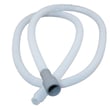
- Inspect the drain hose for kinks, crushing, or a low spot that traps water.
- Clean the filter area so debris does not block water flow.
- If the dishwasher hums but does not move water, the drain pump may be the issue; the model uses a serviceable dishwasher drain pump WPW10348269.
Quick reference: what you should see
| What you do | What the dishwasher should do | Typical time |
|---|---|---|
| Hold START/RESUME 3 seconds | Shows Cancel/Drain and prepares to drain | Immediate |
| Close the door | Starts draining | Within seconds |
| Wait | Pump runs and water exits to sink/disposer | About 2 minutes |
Why it matters
Draining clears standing water that can cause odors, poor wash performance, and error conditions. It also helps you confirm whether the issue is a simple cancel/drain command or a true drain system problem.
Last updated: January 2026
Is it worth replacing a dishwasher circulation pump?
Yes, it’s usually worth replacing the circulation pump on a Kenmore 66512413N411 when the dishwasher is otherwise in good shape and you’re fixing a clear wash-performance problem (poor spray, weak cleaning, unusual pump noise). In many cases, a pump repair restores full cleaning for far less than replacing the dishwasher.
Quick decision checklist
- Replace the pump if the dishwasher fills and drains normally but washes poorly (weak spray, food left behind).
- Replace the pump if you hear grinding or loud humming during wash and the filter area is clean.
- Consider replacement if the tub, racks, and door seal are in good condition and you have no recurring leaks.
- Consider replacement if you can DIY safely; labor is often the biggest cost.
- Reconsider if multiple major parts are failing (pump plus control issues plus leaks).
Check these first (often fixes “bad circulation”)
Before you commit to a circulation pump, we recommend these model-relevant checks from the 66512413N411 owner’s manual:
- Clean and reseat the upper and lower filters; this model uses a triple filtration system and needs regular maintenance.
- Confirm the filters lock in place; running with filters not properly installed can hurt performance.
- Verify incoming hot water is about 120°F for best detergent activation and cleaning.
Common parts involved in wash-performance problems
| Symptom | Often related to | Example part for this model |
|---|---|---|
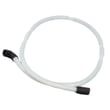
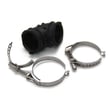
| Weak spray, poor cleaning | Circulation system restriction or pump issue | Dishwasher circulation pump-to-sump hose W10445975 |
| Gritty dishes, debris | Filter maintenance | Dishwasher filter WPW10463906 |
| Standing water after cycle | Drain system issue (not circulation) | Dishwasher drain pump WPW10348269 |
Why it matters
The circulation pump is what drives water through the spray arms. If it’s weak, restricted, or failing, you can get long cycles with disappointing results even when the dishwasher fills and heats correctly.
Cost and effort guidance
- DIY is typically most cost-effective if you’re comfortable shutting off power and water, pulling the dishwasher, and managing hoses and clamps.
- Pro service can make sense when access is tight or you suspect multiple issues (leaks, wiring, or control problems).
For installation clearances, securing the dishwasher, and drain routing rules (high loop or air gap), use the 66512413N411 installation guide.
Last updated: January 2026
How to tell if a dishwasher circulation pump is bad?
On Kenmore dishwasher model 66512413N411, a bad circulation pump typically shows up as poor cleaning (especially on the upper rack), weak or no spray action, and abnormal motor noises during the wash portion of the cycle. Confirm the dishwasher is filling with water first, then focus on spray strength and pump sound.
Quick checks we recommend first
- Make sure the tub has water early in the cycle; after about 2 minutes, open the door and verify water is in the bottom of the tub (a basic operation check in the 66512413N411 installation guide).
- Confirm the door is fully closed and latched; a loose latch can stop wash action.
- Check for excess suds (wrong soap) because foam can prevent proper operation and filling.
- Verify the float moves freely and is not blocked.
- Clean the filters and remove debris that can restrict circulation.
Symptoms that point to a failed circulation pump
- Dishes stay dirty even with correct loading and detergent.
- You hear a loud grinding, squealing, or repeated humming as the motor struggles.
- Little to no water movement at the spray arms (upper rack items remain dry).
- The dishwasher fills but wash action seems weak or stops intermittently.
- You find leaks underneath that appear during wash (pump seal or sump area).
What to inspect (in order)
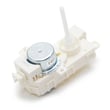
- Water fill and level: If the unit is not filling, the circulation pump cannot spray. A common fill-related suspect is the dishwasher water inlet valve W11175771.
- Filters and sump area: Food buildup can restrict flow and mimic a bad pump.
- Drain performance: Standing water can indicate a drain-side issue instead of circulation; the dishwasher drain pump WPW10348269 is a common drain component.
Circulation vs. drain pump: quick comparison
| What you notice | More likely circulation issue | More likely drain issue |
|---|---|---|
| Dishes not clean, weak spray | Yes | No |
| Loud wash-motor noise during washing | Yes | No |
| Water left in tub at end | Sometimes | Yes |
| Unit drains but does not wash well | Yes | No |
Why it matters
The circulation pump is what drives water through the spray arms. When it is weak, clogged, or failing electrically, the dishwasher can still fill and run but will not clean properly, and the motor can overheat or get noisier over time.
Last updated: January 2026