Installation guide
 Owner’s manual


Why is my Roper washing machine not filling up all the way?
On the Roper RTW4640YQ1, a “not filling all the way” complaint is usually caused by a water-supply issue (one faucet off, kinked hose, or low flow) or the washer pausing during sensing and fill. Confirm both hot and cold supplies are fully on, then follow the fill and lid-start steps in the RTW4640YQ1 owner's manual.
Quick checks that fix most low-fill problems
- Turn both hot and cold faucets fully on (this model expects both supplies available).
- Straighten any kinked fill hoses; make sure hoses are tightly connected.
- Verify the flat hose washers are seated in the hose couplings (helps prevent leaks and air intrusion).
- Check that the lid is closed; if the lid was opened after filling, press Start again to resume.
- If the washer filled but did not start within about 10 minutes, it can pump the water out; restart the cycle.
What to watch on the control panel
The Fill light can come on more than once during a cycle (including during soak or wash). That is normal behavior for this washer.
| What you see | What it usually means | What we recommend |
|---|---|---|
| Wash light stays on and it will not fill properly | Washer is not getting adequate water flow | Check both faucets, hose kinks, and inlet screens |
| It fills, then stops and will not start | Lid open or Start not pressed after lid was opened | Close lid and press Start/Pause/Unlock Lid |
| Water splashes or level seems inconsistent | Washer not level or load is unbalanced | Level the washer; reload evenly |
When a part is likely involved
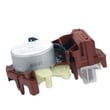
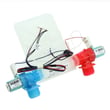
If water supply is good but fill is still weak or slow, the inlet valve screens may be restricted, or the valve may be failing. For this model, the correct replacement is the washer water inlet valve assembly WPW10683603.
Why it matters
Low fill can lead to poor cleaning, detergent not dissolving, and cycles that stop because the washer cannot fill appropriately. Getting full, steady water flow to the inlet valve prevents repeat interruptions.
Last updated: February 2026
What is the most expensive part to replace on a washing machine?
On a Roper RTW4640YQ1 washer, the most expensive repairs are typically major drive and structure components such as the gear case (transmission), the outer tub, or the electronic control board; these parts can cost hundreds of dollars and often involve significant labor.
Most expensive parts (and why)
These are the repairs that usually drive the highest total cost (part price plus time to install):
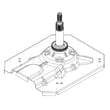
- Gear case (transmission): heavy, labor-intensive, and central to agitation and spin (example: washer gear case W11454741).
- Outer tub: large structural component; replacement often requires major disassembly.
- Main control board: expensive electronics; diagnosis matters before replacing.
- Wash basket: large part; can be costly if damaged or out of balance repeatedly.
- Drive system components: belt, pulley, actuator; usually cheaper than a gear case but can add up if multiple parts are needed.
Typical cost comparison (parts only)
Prices vary by model and supplier, but this table reflects what we commonly see for top-load washers like the RTW4640YQ1.
| Part type | Typical parts cost range | Why it gets expensive |
|---|---|---|
| Gear case (transmission) | $200 to $400+ | High part cost; long install time |
| Outer tub | $150 to $350+ | Major teardown; leak risk if worn |
| Control board | $150 to $300+ | Electronics; misdiagnosis is common |
| Basket | $120 to $300+ | Large component; shipping and labor |
| Drain pump | $60 to $150 | Moderate part cost; easier access |
How we recommend deciding: repair vs replace
Use these checkpoints before investing in a high-dollar part:
- Confirm the symptom matches the failure (noise, no spin, leaks, won’t start).
- Rule out simpler causes first (unbalanced load, power issue, kinked hoses).
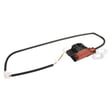
- If the washer won’t run, verify the lid is closing and locking properly (example: washer lid lock assembly W10404050).
- If the washer won’t drain or spin, check for drain restrictions and pump issues.
- Follow the diagnostic and safety guidance in the RTW4640YQ1 use and care guide.
Why it matters
High-cost parts like a gear case or tub can approach the value of an older washer once labor is included. Identifying the correct failure first helps you avoid replacing expensive components that are not actually causing the problem.
Last updated: February 2026
Is it cheaper to repair or replace my washer?
For a Roper RTW4640YQ1 washer, it’s usually cheaper to repair when the problem is a single, common failure (like a belt, lid lock, or drain pump) and the machine is otherwise in good condition. Replacement makes more sense when multiple major components are failing or repair costs approach the price of a new washer.
Quick decision checklist
- If the washer is under about 5 years old and has been reliable, repair is typically the better value.
- If you’ve had repeated breakdowns in the last 12 months, replacement is typically the better value.
- If the issue is a “wear” part (belt, actuator, lid lock), repair is typically the better value.
- If the issue is a major drive system failure (gear case, basket/tub damage), compare repair cost to replacement.
- If the washer won’t run because the lid won’t lock, check the lid lock system first.
- If the washer won’t drain or spin, confirm it’s draining properly before assuming a major failure.
Common RTW4640YQ1 repairs that often cost less than replacing
These are frequent, straightforward fixes on top-load washers like this model:
| Symptom | Often-related part | Example part for this model | Typical “repair vs replace” call |
|---|---|---|---|
| Won’t start, stops mid-cycle, lid won’t lock | Lid lock | Washer lid lock assembly W10404050 | Repair usually wins |
| Won’t spin or agitates poorly | Drive belt or actuator | Washer drive belt WPW10006384 | Repair usually wins |
| Won’t drain, leaves water in tub | Drain pump | Washer drain pump assembly WPW10276397 | Repair usually wins |
| Loud grinding, oil leak, poor agitation/spin | Gear case | Washer gear case W11454741 | Compare costs closely |
Cost comparison rule we use
A practical rule: if the total repair (parts + labor) is 50% or more of the cost of a comparable new washer, replacement is typically the better financial choice. If it’s well under that threshold, repair is typically the better choice.
Why it matters
Repairing the right failure restores safe, normal operation (for example, the lid must be closed for the washer to run). Using the troubleshooting steps in the RTW4640YQ1 owner’s manual helps you avoid replacing good parts and reduces repeat service.
Last updated: February 2026
What are the common problems with Roper washing machines?
Common problems on a Roper top-load washer like model RTW4640YQ1 are no spin or weak spin (clothes still wet), no drain, won’t fill, excessive vibration, and lid-lock related stopping. Most causes come down to load balance, installation leveling, water supply restrictions, or a worn drive or drain component.
Most common symptoms and what usually causes them
- Washer won’t drain or won’t spin: unbalanced or tightly packed load, small items caught in the drain path, or a failing drain pump.
- Loads still wet after spin: low spin speed selection, load not distributed evenly, or drain restriction.
- Washer won’t fill or fills slowly: clogged inlet valve screens, kinked inlet hoses, or faucets not fully open.
- Shaking or banging in spin: washer not level, feet not firmly on the floor, or washing single bulky items.
- Washer won’t start or stops mid-cycle: lid not closed or lid lock not engaging.
Quick checks we recommend first (before replacing parts)
- Confirm power and safety: plug into a grounded 3-prong outlet; avoid adapters and extension cords.
- Level the washer: make sure all feet are firmly on the floor and locked; add a 3/4-inch plywood panel under the washer if the floor flexes.
- Fix load balance: load dry items in loose heaps around the basket wall; avoid tightly packing and avoid washing single items.
- Verify water supply: turn on both hot and cold faucets; straighten kinked hoses; clean inlet screens.
- Use the right cycle: if clothes are wet, run Drain/Spin and redistribute the load.
Parts that commonly solve these problems on RTW4640YQ1
| Problem you see | Part that often fixes it | What it does |
|---|---|---|
| Won’t drain, water left in tub | Washer drain pump assembly WPW10276397 | Pumps water out through the drain hose |
| Won’t fill or fills slowly | Washer water inlet valve assembly WPW10683603 | Controls hot/cold water entering the washer |
| Won’t spin or agitates inconsistently | Washer actuator WPW10006355 | Shifts the drive system between agitate and spin |
| Lid won’t lock, won’t start | Washer lid lock assembly W10404050 | Confirms lid closed so the cycle can run |
Why it matters
These issues often look like a “bad washer,” but RTW4640YQ1 performance depends heavily on correct leveling, proper loading, and unrestricted water flow and draining. Fixing those basics prevents repeat failures and reduces wear on the belt, actuator, and pump.
For model-specific operating tips and troubleshooting tables, use the RTW4640YQ1 owner's manual.
Last updated: February 2026