Owner’s manual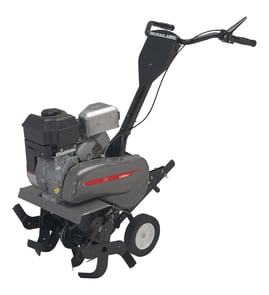


Where is the model number on a Craftsman tiller?
On the Craftsman front-tine tiller model 24729934, the model number is printed on the tiller’s ID label (also called the model tag). On many units, you’ll find that label on the tine shield/guard area or on the engine or fuel tank area; confirm the exact location using the 24729934 operator's manual.
Look for a sticker or metal tag with the model number and serial number. Check these spots first:
- Tine shield (tine guard) near the front tines
- Frame rail near the engine mounting area
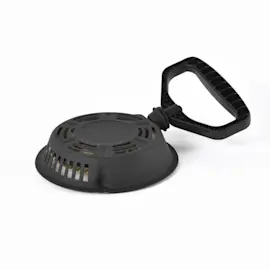
- Engine shroud or blower housing (near the recoil starter)
- Fuel tank area (side of tank or nearby bracket)
- Handle support or handle mounting bracket area
The tag typically includes more than just the model number. Record these items so we can match parts correctly:
- Model number (example: 24729934)
- Serial number
- Engine model information (often listed separately)
- Any product ID or manufacturing code shown
| Item on tag | Why it matters for parts |
|---|---|
| Model number | Matches the correct Craftsman parts diagrams and lists |
| Serial number | Helps confirm production run changes |
| Engine model | Ensures correct engine parts (carburetor, ignition, gaskets) |
Craftsman tillers can look similar across multiple model numbers, but parts like the drive belt, tine assemblies, and depth stake hardware can vary. Using the exact model number from the tag prevents ordering the wrong part.
Last updated: February 2026
What kind of engine is on a Craftsman tiller?
For the Craftsman front-tine tiller model 24729934, the engine shown in the model documentation is engine model 170-V0B. This is the engine family used for parts breakdowns such as the carburetor, ignition, muffler, and recoil starter in the 24729934 owner's manual.
We recommend matching what you see on your machine to the manual’s engine diagram so you order the right tune-up and fuel-system parts.
- Check the engine ID label on the engine shroud or valve cover area.
- Match the engine model text to 170-V0B.
- Compare the carburetor and air cleaner layout to the manual illustrations.
- Verify spark plug style and ignition coil placement.
- Use the tiller model number 24729934 when looking up chassis parts.
These are typical service items on this Craftsman tiller engine; exact part numbers vary by the engine sub-assembly.
| Part type | What it affects | Common symptom when worn |
|---|---|---|
| Spark plug | Ignition | Hard starting, misfire |
| Air filter / air cleaner | Airflow | Black smoke, poor power |
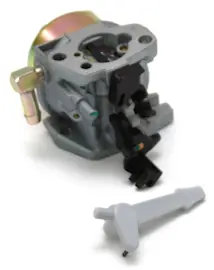
| Carburetor parts (gaskets, jets, float) | Fuel delivery | Surging, won’t idle |
| Recoil starter | Starting | Rope won’t retract or engage |
| Muffler / exhaust gasket | Exhaust flow, noise | Loud operation, exhaust leak |
Craftsman tillers often share similar frames, but engine variants can differ in carburetor and ignition components. Confirming 170-V0B first helps ensure the correct carburetor gaskets, ignition coil, and other engine service parts fit your 24729934.
Last updated: February 2026
What is the bar on the back of a tiller for?
On the Craftsman 24729934 front-tine tiller, the bar at the back is the depth stake (also called the depth gauge or drag bar). It acts like a brake to control how deep the tines dig and how fast the tiller moves forward through the soil.
- Controls tilling depth (shallow for cultivating; deeper for breaking new ground)
- Slows the tiller so the tines can dig instead of the machine “running away”
- Helps keep the tiller stable and reduces bouncing in hard soil
- Lets you make repeatable passes at a consistent depth
Follow the adjustment procedure in the 24729934 owner's manual. In general, you:
- Shut the engine off and disconnect the spark plug wire
- Remove the clevis pin and hairpin clip/lock pin at the depth stake
- Raise the stake for shallower tilling; lower it for deeper tilling
- Reinstall the pin(s) fully and make sure the clip is locked
| Goal | Typical depth stake setting | What you will notice |
|---|---|---|
| Cultivating around plants | Shallow (tines about 1 to 2 inches) | Faster travel, lighter bite |
| General garden prep | Medium (about 3 to 4 inches) | Steady pace, good mixing |
| Breaking hard/new ground | Deeper (multiple passes) | Slower pace, heavier bite |
Depth control is the difference between a tiller that’s easy to manage and one that pulls too fast or digs too aggressively. Setting the depth stake correctly protects the engine from overload, improves soil results, and makes the tiller safer to handle.
Last updated: February 2026
What are the common problems with lawn tillers?
Common lawn tiller problems usually come down to starting issues (fuel or ignition), tines not turning (drive system or debris), poor tilling performance (depth/technique), and safety-related shutdown concerns. For the Craftsman 24729934 front-tine tiller, our 24729934 owner's manual also highlights safe tine-clearing and best practices for tilling depth and slopes.
- Engine will not start: spark plug wire off, stale/contaminated fuel, dirty spark plug, incorrect throttle/choke setting
- Engine runs rough or overheats: restricted airflow, old fuel, heavy load from tilling too deep
- Tines will not turn: debris wrapped in tines, drive belt worn or loose, engagement control not fully applied
- Poor tilling performance: depth set too deep for conditions, soil too dry, moving too fast
- Hard to control on slopes: operating on ground that is too steep, poor footing, incorrect technique
- Stop safely first: shut off the engine, wait for all moving parts to stop, then disconnect the spark plug wire before touching the tines.
- Clear wrapped debris: dry grass, vines, and stringy stalks can tangle; “fishtailing” the handlebars side-to-side while tilling can help self-clear.
- Confirm tine engagement: make sure the engagement lever/control is fully applied.
- Inspect the drive belt: glazing, cracking, stretching, or slipping points to replacement.
- Match depth to the job: cultivating is typically shallow (about 1 to 2 inches); deeper passes are best done gradually.
| Problem | What you notice | What usually fixes it |
|---|---|---|
| Tines jam or stop | Debris wrapped around tines | Safe clearing procedure; adjust technique |
| Tines do not drive | Engine runs but tines do not rotate | Check/replace belt; verify engagement |
| Poor soil breakup | Skips, bounces, leaves clods | Reduce depth, add moisture, make multiple passes |
| Unsafe on slopes | Tiller pulls or freewheels | Till only moderate slopes; go slowly |
If the engine runs but the tines do not rotate, the drive system is the first place we look.
Most tiller failures get worse when we keep running the machine under load. Using the correct depth, clearing tines safely, and avoiding steep slopes protects the engine, belt drive, and tine assemblies while improving soil results.
Last updated: February 2026
What are the parts of a tiller?
A Craftsman front-tine tiller like model 24729934 is built around the engine and drive system that power the tines, plus controls and safety shields that help you set depth and guide the machine. The most common “core” parts are the tines, belt and pulleys, gear case, depth stake, and handle controls (see the 24729934 owner's manual).
- Engine: provides power to the drive system.
- Drive system: belt, pulleys, and linkages transfer power to the transmission.
- Transmission and gear case: reduces speed and increases torque to turn the tines.
- Tines and tine shaft: the digging blades that break up soil; on this model the tines rotate forward when engaged.
- Depth control: depth gage or depth stake components set how deep the tines bite.
- Handle and controls: includes the forward tine engagement lever and clutch cable.
- Guards and shields: help contain soil and debris around the tine area.
These are examples of parts commonly replaced on the Craftsman 24729934:
| Part type | What it affects | Common symptom when worn |
|---|---|---|
| Drive belt | Transfers engine power to the transmission | Tines slip, weak digging, no tine movement |
| Tine assembly | Soil cutting and mixing | Poor tilling, uneven digging, excessive bouncing |
| Hardware (nuts, bolts, pins) | Keeps assemblies tight and aligned | Rattling, looseness, parts shifting |
| Shields/brackets | Protection and mounting | Excess debris throw, misalignment |
Knowing the major parts helps you troubleshoot faster. For example, if the engine runs but the tines do not turn, we focus on the belt, belt keeper, pulleys, and engagement cable before assuming a transmission issue.
The manual highlights several part-care items that prevent premature wear:
- Stop the engine, let moving parts stop, and disconnect the spark plug wire before clearing or servicing tines.
- Keep belts free of lubrication; oil pivot points and linkages lightly.
- Check for loose or missing hardware about every 10 operating hours.
- When removing and reinstalling tines, clean the tine shaft and apply a thin coat of grease to the shaft ends.
Last updated: February 2026
Are Craftsman tillers any good?
Yes. Craftsman tillers are a solid choice for typical home garden work because they’re designed to be powerful, serviceable machines with clear operating and maintenance guidance. For the Craftsman 24729934 front-tine tiller specifically, good performance depends heavily on correct setup, safe operation, and routine belt and tine maintenance (see the 24729934 owner's manual).
Front-tine tillers like model 24729934 are best when you use them for the jobs they’re built for:
- Loosening and mixing already-worked soil
- Working compost and amendments into garden beds
- Maintaining a garden each season (not first-time breaking of hardpan)
- Controlling depth with the depth stake so the machine doesn’t “run away”
- Keeping tines sharp and correctly installed for consistent digging
Some owners report durability or handling issues. In our experience, these are the most common root causes and fixes:
- Handle flex or vibration: check fasteners and hardware for looseness after the first few uses.
- Poor digging or “skipping”: worn or incorrectly installed tines; replace as a set when edges round off.
- Drive issues (won’t pull, slips under load): a worn or stretched drive belt, or incorrect belt tension.
- Parts wearing quickly: tilling rocky soil at full depth in one pass; take shallow passes and increase depth gradually.
If your tiller feels weak, won’t dig, or the drive slips, these parts are the usual suspects:
- Tiller drive belt 954-0428 (controls power transfer to the drive system)
- Tiller tine assembly 642-0003-0637 (digging performance and soil mixing)
- Tiller gear case assembly 986-0091 (internal drive components; less common but high impact)
| Symptom | Most likely area | Typical next step |
|---|---|---|
| Slips or stops moving under load | Belt/drive | Inspect belt condition and tension; replace belt if glazed/cracked |
| Digs poorly, bounces | Tines/depth stake | Verify tine orientation; replace worn tines |
| Loud grinding from tine drive | Gear case | Stop use; inspect gear case and hardware |
A tiller can feel “bad” even when it’s fundamentally a good machine if the belt is slipping, the tines are worn, or the depth stake is set too aggressively. Correct adjustment and maintenance protect the drivetrain and make the tiller easier to control.
Last updated: February 2026
Why are the tines on my tiller not turning?
On a Craftsman 24729934 front-tine tiller, tines usually stop turning because the forward clutch bail and cable are out of adjustment, the drive belt is worn or off, or the tines are jammed. Start with the clutch cable check described in the 24729934 owner's manual, then inspect the belt and tine area.
- Shut the engine off and disconnect and ground the spark plug wire before touching the tines or belt area.
- Make sure you are pulling the forward clutch bail fully up against the handlebar (this engages wheels and tines).
- Clear packed soil, roots, twine, or rocks from the tine shaft and tine area.
- Check that the tines spin freely by hand with the engine off (they should not be locked solid).
- If the tines stopped after tilling for a while, plan on re-checking the clutch cable tension.
The manual procedure is: with the forward tine engagement handle in the neutral (released) position, pull the starter rope several times; the tines should not turn. If they do, reduce cable tension. If the tines do not turn under load when you engage the bail, increase cable tension by adjusting the cable collar and locknut.
| Symptom | Likely cause | Best next step |
|---|---|---|
| Tines never move, even with bail pulled | Belt off, broken, or severe slip | Inspect belt path and pulleys; replace belt if worn |
| Tines move briefly then stop | Cable tension drifting, belt slipping when hot | Re-adjust clutch cable; inspect belt glazing |
| Tines try to move but bind | Debris jam, bent tine, damaged tine assembly | Remove obstruction; inspect tines and hardware |
If inspection shows wear or damage, these model-matched parts are common replacements:
- Tiller drive belt 954-0428 (slipping, cracked, stretched, or broken belt)
- Tiller keeper belt 786-0149 (keeper/guide issues that let the belt jump or mis-track)
- Tiller tine assembly 642-0003-0637 (damaged or excessively worn tine set)
When the clutch cable is misadjusted or the belt is slipping, the engine can run normally but power never transfers to the transmission and tines. Correct adjustment and a healthy belt restore tine rotation and help prevent premature belt wear.
Last updated: February 2026
How much does it cost to fix a tiller?
For a Craftsman front-tine tiller model 24729934, repair cost depends on what failed and whether you do it yourself or pay a shop. Most professional small-engine shops charge an hourly labor rate (often around $60/hour), and many common “recondition” repairs land around $200 to $300 total.
The biggest cost factors are labor time, parts needed, and whether the repair is routine maintenance or a drivetrain issue.
- Drive belt problems (slipping, broken belt, poor tine engagement)
- Tine and tine shaft wear (rusted shaft, damaged tine assemblies)
- Loose or missing hardware (screws, lock washers, lock nuts)
- Control linkage and pivot points needing lubrication or adjustment
- Major assemblies (gear case/chain case) when internal damage occurs
These are practical ranges we see for front-tine tillers like the 24729934.
| Repair type | Typical total cost | Notes |
|---|---|---|
| Basic tune-up and adjustments | $100 to $200 | Often seasonal maintenance plus minor fixes |
| Belt replacement | $150 to $300 | Labor varies; use the correct belt type |
| Tine replacement (pair/set) | $150 to $350 | Depends on how many tine assemblies are replaced |
| Gear case/chain case repair | $400+ | Can exceed the value of an older tiller |
The operator guidance for this model emphasizes routine maintenance that prevents bigger failures.
- Disconnect the spark plug wire before any service
- Check and tighten hardware about every 10 operating hours
- Keep pivot points and linkages lightly oiled (keep belts oil-free)
- Remove tines and clean the tine shaft; smooth rust or burrs, then grease shaft ends
- If replacing the drive belt, use the belt listed for the model in the parts list
Helpful references for this model: 24729934 owner's manual.
If your tiller won’t drive or the tines stop under load, these are frequent suspects.
- Mtd tiller drive belt 954-0428
- Tiller tine assembly 642-0003-0637
- Tiller gear case assembly 986-0091
A small, early fix (like a belt or loose hardware) usually costs far less than running the tiller until it damages tine assemblies or the gear case. Regular cleaning, lubrication, and hardware checks help keep the Craftsman 24729934 dependable for years.
Last updated: February 2026