Installation guide
 Owner’s manual



What are the most common issues with 11065924401?
For Kenmore Elite dryer model 11065924401, the most common problems are no heat or weak heat, long dry times from restricted airflow, squealing or thumping noises from worn drum support parts, and a dryer that will not start due to a door or start switch issue. Use the 11065924401 owner's manual for cycle and care checks.
- No heat or not enough heat: failed heater, high-limit thermostat tripping, or a thermal cut-off opening
- Long dry times: lint buildup in the ducting, crushed vent, or a weak blower wheel
- Squealing, grinding, or thumping: worn idler pulley, drum support components, or drum seal wear
- Will not start: door switch not closing, push-to-start switch failure, or timer/contact issues
- Stops mid-cycle or overheats: airflow restriction causing safety devices to open
If your troubleshooting points to a failed component, these model-matched parts are common fixes:
- Heating problem: dryer heating element WP3387747
- Overheating or no-heat safety trip: dryer high-limit thermostat WP3390291 or cut-off kit 279769
- Noise and drum drive issues: dryer idler pulley 279640 or dryer repair kit 4392067
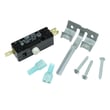
- No-start door circuit: dryer door switch WP3406107
- Poor airflow: dryer blower wheel WP697772
- Clean the lint screen and confirm strong airflow at the outside vent.
- Inspect the vent path for kinks, crushed flex duct, or heavy lint.
- Confirm the door closes firmly and the drum turns freely by hand.
- If electric, verify the dryer is getting full power (a partial power loss can run the motor but not heat).
| Symptom | Most likely area | Common part examples on this model |
|---|---|---|
| Runs but no heat | Heating circuit | WP3387747, WP3390291, 279769 |
| Takes too long to dry | Venting/airflow | WP697772, duct cleaning |
| Squeals or thumps | Drum drive/support | 279640, 4392067 |
| Won’t start | Door/start controls | WP3406107, WP3977456 |
Dryer issues often stack; a clogged exhaust can cause long dry times, overheating, and repeated thermal cut-off failures. Fixing airflow first helps protect the heating element, thermostat, and motor.
Last updated: March 2026
What is the cubic foot of my Kenmore dryer model 11065924401?
The exact cubic-foot capacity for Kenmore Elite dryer model 11065924401 is not listed in the installation instructions excerpt we have for this model. Most 27-inch Kenmore and Whirlpool-built dryers of this style are typically about 6.5 to 7.5 cu. ft.; we recommend confirming the exact capacity in the 11065924401 owner's manual.
- Check the specifications section in the 11065924401 owner's manual (often listed as “capacity” or “drum volume”).
- Look for a model/spec label inside the door opening; some versions list capacity or series info.
- If you are comparing dryers, use the 27-inch platform as your baseline; this model is a 27 in. electric dryer per the installation guide.
- If you are sizing loads, use real-world load guidance (basket size and dry time) rather than capacity alone.
Capacity affects how full you can load the drum without restricting airflow. Overloading increases dry time, raises operating temperature, and can contribute to wear on drum support rollers, the belt system, and the drive motor.
| Dryer size class | Typical capacity range | Best for |
|---|---|---|
| 24-inch compact | 3.4 to 4.4 cu. ft. | Apartments, small loads |
| 27-inch standard | 6.5 to 7.5 cu. ft. | Most households |
| 29-inch large | 7.4 to 9.0 cu. ft. | Bulky items, larger families |
Capacity is rarely the root cause. These checks fix most “takes too long” complaints:
- Clean the lint screen every load; replace a damaged screen if it is torn or warped (see screen W10120998).
- Verify strong airflow at the outside vent hood.
- Keep vent runs short and avoid crushed or kinked ducting.
- If the dryer tumbles but does not heat, test the heater circuit components; the common replacement is the dryer heating element WP3387747.
Last updated: February 2026
What is the life expectancy of a Kenmore dryer?
A Kenmore dryer typically lasts 10 to 13 years. With consistent airflow maintenance (lint screen and venting) and prompt repair of wear items like rollers and the idler pulley, many Kenmore Elite model 11065924401 dryers run 15 years or longer.
Most dryer life expectancy comes down to heat stress and airflow restriction.
- Normal household use: 10 to 13 years
- Light use and excellent venting: often 15+ years
- Heavy use or poor venting: lifespan drops because components run hotter and longer
| Factor | What you see | What it does over time |
|---|---|---|
| Restricted venting | Long dry times, hot cabinet | Overheats heater and safety fuses |
| Worn drum support parts | Thumping, squealing | Wears belt, motor, and drum surfaces |
| Not level | Clothes not tumbling well | Increases wear and can affect sensor cycles |
| Overloading | Slow drying, more wrinkles | Strains belt, idler, and motor |
We recommend these habits for the Kenmore Elite 11065924401:
- Clean the lint screen before every load; replace a damaged screen such as screen W10120998 if it no longer seals or is torn.
- Keep the exhaust duct clear and as short as practical; restricted airflow is the most common cause of overheating.
- Level the dryer using the leveling legs; the installation instructions note that an unlevel dryer can prevent proper tumbling and affect automatic cycles (see the installation guide).
- Avoid overloading; it increases wear on the belt path and drum support system.
- Address new noises early; a roller or idler issue is cheaper to fix before it damages other parts.
These wear items often decide whether an older dryer keeps going smoothly:
- Support WPW10314173 (drum support roller)
- Dryer idler pulley 279640
- Dryer heating element WP3387747
- Cut-off kit 279769 (thermal cut-off fuse kit)
A dryer near end-of-life usually shows up as longer dry times, overheating, or new mechanical noise. Fixing airflow and replacing common wear parts can restore performance and reduce stress on the motor, timer, and heater.
Last updated: February 2026