Owner’s manual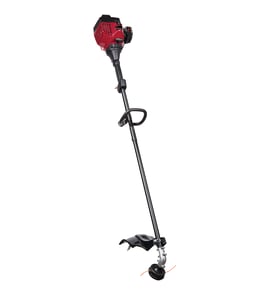



Which is better, .080 or .095 trimmer line?
For the Weed Eater FL26, .080 inch trimmer line is the better choice because the owner’s manual specifies 0.080 inch (2 mm) diameter line only for proper line advance and safe cutting head operation. Using .095 can cause feed problems and poor performance. See the owner's manual.
The FL26 bump-feed head is designed around .080 line thickness. That affects how the line grips the spool, advances when tapped, and stays within the line limiter length.
- Use .080 for normal trimming, edging, and reliable bump-feed advance
- Avoid .095 because it can bind, not advance properly, or overload the head
- Never use wire, rope, or string; those materials can break and become dangerous projectiles
- Keep the shield installed so the line limiter can control maximum cutting length
| Feature | .080 line (recommended for FL26) | .095 line |
|---|---|---|
| Fit and line advance | Designed to advance correctly | Often advances poorly in heads designed for .080 |
| Cutting use | General trimming and edging | Heavier cutting on trimmers designed for thicker line |
| Wear on head | Normal | Can increase drag and head wear |
The manual guidance for the FL26 helps line last longer and reduces vibration.
- Cut efficiently at less than full throttle when you can; full throttle is not needed for every pass
- Tap the head on grass, not concrete or asphalt (hard surfaces wear the head quickly)
- Let the tip of the line do the cutting; do not crowd the line into the work
- For delicate areas (trees, fences), shorten the line and use reduced throttle
Correct line diameter is not just about strength; it controls how the bump-feed system advances line and how the cutting head functions. On the FL26, .080 line keeps feeding consistent and helps prevent premature head wear.
Last updated: February 2026
How to change trimmer line on a gas trimmer?
On the Weed Eater FL26 gas line trimmer, you change the trimmer line by removing the trimmer head cap, taking out the spool, winding in new 0.080 inch (2 mm) line, then reinstalling the spool and snapping the cap back on. Follow the owner's manual for the exact head style on your FL26.
- Shut the engine off and let the head stop completely.
- Disconnect the spark plug before maintenance.
- Wear eye protection and hearing protection.
- Keep the debris shield installed; it also controls maximum line length.
- Use only 0.080 inch (2 mm) trimmer line; never use wire, rope, or string.
- Remove the cap: Press the locking tabs (or unscrew, depending on head version) and lift off the spool cap.
- Remove the spool: Pull the spool straight out and note how the line routes through the eyelets.
- Wind new line:
- Cut two equal lengths (or one length if your spool is single-line).
- Wind in the direction shown on the spool (usually indicated by an arrow).
- Keep the wraps tight and even to prevent tangles.
- Feed the line: Thread the line ends through the eyelets in the trimmer head.
- Reinstall spool and cap: Seat the spool fully, then snap the cap back on.
- Set line length: Pull the line ends so they extend evenly; the line limiter on the shield trims to the correct maximum length during use.
The FL26 bump head advances about 2 inches (5 cm) of line each time you tap the bottom of the head on grass with the engine at full throttle.
- Run at full throttle when bump-feeding.
- Tap on grass, not concrete or asphalt (hard surfaces wear the head quickly).
- If line is worn down to about 2 inches (5 cm) or less, you may need more than one tap.
| Item | What to use | What to avoid |
|---|---|---|
| Line diameter | 0.080 inch (2 mm) | Other diameters |
| Line material | Nylon trimmer line | Wire, rope, string |
| Bump surface | Grass | Concrete, asphalt |
Correct line size and proper winding keep the bump-feed working, reduce head wear, and help the trimmer cut efficiently at lower throttle settings (less vibration and longer line life).
Last updated: February 2026
Can I use .095 trimmer line in a .080 trimmer?
No. For the Weed Eater FL26 line trimmer, we use only 0.080 inch (2 mm) diameter trimmer line; thicker 0.095 inch line can prevent proper line advance and can cause unsafe cutting head operation. Follow the line size and operating steps in the owner's manual.
Using thicker line increases drag on the engine and changes how the bump-feed system works. Common results include:
- Line will not advance correctly when you tap the head
- The trimmer head can jam or feed unevenly
- More vibration and faster trimmer head wear
- Poor cutting performance because the line length is not controlled correctly
- Higher risk of line breakage and thrown debris
For this model, match the diameter first, then choose the shape based on what you cut.
| Item to match | FL26 requirement | Why it matters |
|---|---|---|
| Line diameter | 0.080 in (2 mm) | Ensures proper bump-feed advance and safe head function |
| Material | Trimmer line only (no wire, rope, string) | Prevents dangerous break-off and injury |
| Use case | Light to medium trimming | Keeps engine load and head wear under control |
These operating habits help the FL26 cut efficiently and reduce head wear:
- Run at full throttle only when you need maximum cutting power
- Tap the trimmer head on grass (not concrete or asphalt) to advance line
- Keep the shield installed so the line limiter can control line length
- Let the tip of the line do the cutting; do not force the head into heavy material
- Shorten line and use less than full throttle near fences, posts, and trees
The FL26 trimmer head and line limiter are designed around 0.080 inch line. Staying with the specified diameter keeps the line advance predictable, protects the cutting head, and reduces the chance of debris being thrown.
Last updated: February 2026
What's the difference between a weedeater and a string trimmer?
A “Weed Eater” and a “string trimmer” are the same type of tool; “Weed Eater” started as a brand name, while “string trimmer” is the generic product name. For your Weed EATER FL26, either term refers to a line trimmer that cuts using rotating nylon line.
- Weed Eater: commonly used nickname; originally tied to the Weed EATER brand
- String trimmer: generic name used across brands
- Weed wacker/Weed whacker: slang terms for the same tool
- Line trimmer: another generic term (also accurate for the FL26)
When you’re shopping parts or following instructions, the key is matching the model number FL26 and using the correct consumables and procedures.
- Use the correct cutting line size; the FL26 manual specifies 0.080 in (2 mm) diameter line
- Keep the cutting line at a proper length for best performance
- Replace damaged trimmer head components before using the unit
- Disconnect the spark plug before maintenance (except carburetor adjustments)
| Term you see | What it usually means | What to do for FL26 parts |
|---|---|---|
| Weed Eater | Brand name or nickname | Match parts to FL26 |
| String trimmer | Generic product type | Match parts to FL26 |
| Line trimmer | Generic product type | Match parts to FL26 |
Using the right terminology helps, but model matching prevents ordering the wrong fuel line, carburetor, or throttle parts. For safe operation, the bigger issue is following the FL26 safety and line-size guidance.
For line size, safety rules, and operating techniques (trimming, scalping, mowing, sweeping), use the owner's manual.
Last updated: February 2026