Owner’s manual
 Error Codes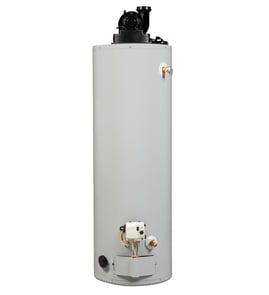




What is the average cost of a 50 gallon gas water heater?
A 50-gallon gas water heater typically costs about $600 to $1,300+ for the unit, and $1,000 to $3,100+ installed once you include labor, venting, gas line work, and code-required updates. For Kenmore model 153332640, confirm venting type and requirements in the owner's manual before pricing.
What changes the price the most
- Venting type: atmospheric vent vs. power vent (power vent units cost more)
- Efficiency level: higher efficiency usually increases upfront cost
- Warranty length: longer warranties often mean higher unit price
- Installation complexity: tight spaces, old shutoffs, or corroded piping add labor
- Local code upgrades: expansion tank, seismic strapping, drip pan, or vent changes
Typical cost ranges (unit vs. installed)
| Item | Typical range | What it usually includes |
|---|---|---|
| Water heater unit only | $600 to $1,300+ | Tank, burner system, basic controls |
| Installed total | $1,000 to $3,100+ | Removal, haul-away, labor, fittings, startup |
| Higher-complexity installs | $2,500 to $4,000+ | Venting changes, gas line updates, extra materials |
How to estimate your installed cost quickly
- Identify your current setup: gas type, venting style, and tank size.
- List likely add-ons: shutoff valve, flex connectors, vent pipe, drip pan, expansion tank.
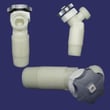
- If your heater uses powered venting components, factor in higher parts and labor (for example, an water heater air intake fan 100111908 is a higher-cost component than basic atmospheric vent parts).
Why it matters
A “50-gallon gas water heater” price can vary widely because the heater is only part of the job. Venting and safety-related installation items often drive the biggest swings in total cost, especially on power-vented systems.
Last updated: February 2026
What is the life expectancy of a Kenmore water heater?
Most Kenmore gas water heaters, including model 153332640, typically last 8 to 12 years. Regular maintenance (flushing sediment, checking safety valves, and replacing wear items) helps you reach the upper end of that range and reduces the chance of premature tank failure.
What affects water heater lifespan most
- Water quality and sediment: Hard water accelerates scale buildup and overheating.
- Maintenance frequency: Annual flushing and inspections slow corrosion.
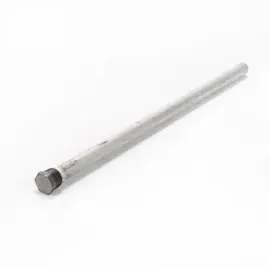
- Anode rod condition: A depleted anode rod speeds up tank rust.
- Operating temperature: Higher setpoints increase stress on the tank and components.
- Venting and combustion airflow: Poor airflow can cause nuisance shutdowns and soot.
Maintenance checklist we recommend
Use your owner's manual for the exact procedure and safety steps for model 153332640.
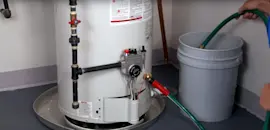
- Flush a few gallons from the tank periodically to reduce sediment.
- Test the temperature and pressure relief (TPR) valve for proper operation.
- Inspect for water leaks at fittings and the base of the tank.
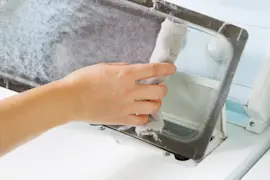
- Check burner area for dust or lint and keep the area clear.
- Replace key wear parts when symptoms show up (for example, a weak anode rod).
Common parts that help extend service life
These are model-matched parts often involved in maintenance or safety:
| Part | What it helps with | When to consider it |
|---|---|---|
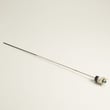
| Water heater anode rod 100111915 | Slows tank corrosion | If hot water smells metallic, rod is heavily corroded, or tank is aging |
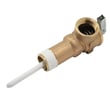
| Water heater temperature and pressure relief valve 100108455 | Safety pressure/temperature protection | If it drips continuously or fails a test |
| Drain valve 100108269 | Easier flushing and draining | If it leaks or won’t open/close reliably |
Why it matters
Once a tank begins to corrode internally, repairs become limited. Staying ahead of sediment and corrosion helps maintain hot water performance, reduces gas water heater stress, and lowers the risk of unexpected leaks.
Last updated: February 2026
What is the most common problem with a gas water heater?
The most common gas water heater problem is loss of heat because the burner is not staying lit (often tied to ignition, airflow, or gas control issues). On the Kenmore Elite 153332640, the next most common complaints are not enough hot water, rumbling from sediment, and water leaks at fittings or the tank. For model-specific checks and safety steps, use the owner's manual.
Quick symptoms and what they usually point to
- Pilot or burner won’t stay lit: airflow/venting issue, weak draft, or a failing gas control
- No hot water or inconsistent temperature: gas control problems or sensor feedback issues
- Rumbling, popping, or banging: sediment buildup in the tank
- Water around the heater: loose connections, a leaking drain valve, or a failing tank
- Error codes or dead display (if equipped): control panel or wiring issue
Parts on this model that commonly relate to “no heat” complaints
If troubleshooting indicates a component failure, these are common suspects for the 153332640:
| Symptom | Likely system | Example part to check/replace |
|---|---|---|
| Burner shuts down, poor combustion air | Air intake/venting | Water heater air intake fan 100111908 |
| Venting proves unsafe, burner won’t run | Draft/pressure proving | Water heater exhaust vent blower pressure switch 100111914 |
| Temperature swings, shutdowns | Sensing/control | Sensor 100110780 |
| No heat, won’t regulate gas | Gas control | Water heater gas control valve 100111913 |
Why it matters
A burner that will not stay lit is more than an inconvenience; it stops hot water production and can signal an airflow or control problem that should be corrected before continued operation.
What we recommend first (safe, practical steps)
- Confirm the thermostat setting is reasonable (many homes use about 120°F).
- Listen for the blower/fan operation (power-vent models) and check for blocked intake openings.
- If you smell gas, do not try to relight or troubleshoot; stop and have a qualified technician handle it.
- Flush a few gallons from the tank periodically to reduce sediment noise.
- If water is present, identify whether it is from a fitting, the drain valve, or the tank seam.
Last updated: February 2026