Installation guide
 Owner’s manual
 Error Codes



Are bottom mount fridges better?
Yes, a bottom-mount refrigerator like the Maytag MFT2673BEM10 is “better” for many kitchens because the fresh-food section sits at eye and waist level, so you reach less for everyday items. The tradeoff is that frozen foods are stored lower in a pull-out drawer.
What “better” usually means in real use
- More ergonomic fresh-food access: milk, produce, and leftovers are easier to see and grab.
- Improved organization for refrigerated items: shelves and crispers are front-and-center.
- Freezer drawer convenience: large bins hold bulky frozen items, but you may need to stack.
- Good fit for frequent cooking: you spend more time in the refrigerator section than the freezer.
- Door swing and clearance: French door and bottom-freezer layouts can need more space to open fully.
Bottom-mount vs top-freezer: quick comparison
| Feature | Bottom-mount (like MFT2673BEM10) | Top-freezer |
|---|---|---|
| Everyday reach | Refrigerator is easiest to access | Freezer is easiest to access |
| Freezer storage | Deep pull-out drawer, stacked items | Shelves, easier to see |
| Best for | Fresh-food heavy households | Frozen-food heavy households |
| Typical feel | More “premium” layout | Simple, traditional layout |
When a bottom-mount is the right choice
- You cook often and want produce and refrigerated foods at comfortable height.
- You prefer wide refrigerator shelves for platters and meal prep.
- You want a freezer drawer for bags, boxes, and larger items.
Why it matters
Layout affects how often doors stay open, how easily you find food, and how comfortably you load groceries. A design that matches your habits helps temperature stability and reduces food waste.
For model-specific features and storage guidance, use the MFT2673BEM10 owner's manual.
Last updated: January 2026
What is the most common problem with Maytag refrigerators?
The most common Maytag refrigerator complaint is ice maker and water dispensing trouble, usually caused by restricted water flow, a failing inlet valve, or ice buildup in the ice path. On the Maytag MFT2673BEM10, start by checking the water filter, water supply, and ice maker operation steps in the MFT2673BEM10 owner's manual.
Most common symptoms we see
- Ice maker not making ice or making small/hollow cubes
- Water dispenser flow is slow or stops
- Ice clumps in the bin or frost buildup near the ice maker
- Clicking or buzzing when the ice maker calls for water
- Door not sealing well, leading to frost and temperature swings
Quick checks that solve many “common problems”
- Confirm temperatures: Refrigerator about 37°F and freezer about 0°F.
- Replace the water filter on schedule: A clogged filter is a top cause of weak water flow and poor ice production.
- Purge air after filter changes: Dispense water for a few minutes to clear trapped air.
- Inspect the freezer door seal: Gaps or wrinkles can cause frost that interferes with ice making.
- Check the shutoff arm or sensor: Make sure the ice maker is turned on and not blocked by the ice bin.
Parts that commonly fix ice and water issues
If basic checks do not help, these model-compatible parts are frequent solutions:
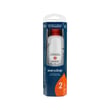
- Refrigerator filter EDR2RXD1 (restricted flow, bad taste/odor, slow dispensing)
- Refrigerator water inlet valve assembly WPW10341329 (no fill, weak fill, buzzing)
- Refrigerator ice maker assembly W11577195 (no ice, intermittent harvest)
Troubleshooting guide: symptom to likely cause
| Symptom | Most likely cause | What to do first |
|---|---|---|
| No ice production | Water supply or inlet valve issue | Verify supply valve is open; replace filter |
| Small/hollow cubes | Low water flow | Replace filter; purge air; check inlet valve |
| Ice clumping/frost | Door seal leak or frequent door openings | Inspect/clean gasket; level doors |
| Slow water dispensing | Clogged filter or air in line | Replace filter; purge dispenser |
Why it matters
Ice maker and water system problems can look like “the fridge is failing,” but they often come down to water flow and sealing. Fixing those early helps protect food temperatures, reduces frost, and prevents repeat ice maker jams.
For step-by-step filter replacement, we also recommend how to replace the water filter in a Maytag refrigerator.
Last updated: January 2026
How to lower wheels on Maytag refrigerator?
On the Maytag MFT2673BEM10 bottom-mount refrigerator, you normally do not “lower the wheels”; you lower the front of the cabinet by adjusting the front leveling legs behind the toe grille. This changes the tilt so the doors close correctly and the refrigerator sits stable. See the MFT2673BEM10 installation guide for the exact access points and adjustment method.
How to lower the front (leveling legs)
- Pull the refrigerator straight out a few inches if you need room to work.
- Remove the toe grille (kick plate) at the bottom front.
- Locate the left and right front leveling legs (they look like threaded feet).
- Turn the leveling leg adjusters to extend the legs downward until the front lowers and the cabinet stops rocking.
- Adjust both sides in small, equal turns to keep the cabinet level side to side.
- Reinstall the toe grille and recheck door closing.
What about the rear wheels?
On this style of Maytag bottom-mount refrigerator, the rear rollers are used mainly for moving the unit. Leveling and tilt are set at the front leveling legs, not by “dropping” the rear wheels.
Quick checks after you adjust
- Doors should self-close from a partially open position.
- The cabinet should not wobble when you press on the front corners.
- Door gaskets should contact evenly all the way around.
Symptoms and the adjustment that fixes them
| What you notice | What it usually means | What to do |
|---|---|---|
| Doors swing open | Front is too low | Raise the front slightly |
| Doors do not close easily | Front is too high or cabinet is twisted | Lower the front slightly; level side to side |
| Refrigerator rocks | One front leg is not firmly on the floor | Extend the “high” side leg until stable |
Why it matters
Correct leveling prevents air leaks at the door gasket, improves temperature stability, and reduces strain on components such as the compressor and ice maker.
Last updated: January 2026