Owner’s manual
 Error Codes

Does my Kenmore top load washer have a filter?
Yes. Kenmore washer model 11020902990 uses a self-cleaning lint filter that’s built into the wash system, so there’s no removable “clean-out” filter like many front-load washers have. For normal use, it’s maintenance-free; focus on good loading and drain care instead (see the 11020902990 owner's manual).
What “filter” means on this washer
On this top-load design, filtration is handled differently than a pump clean-out trap.
- Self-cleaning lint filter: captures lint during agitation and rinsing and flushes it out automatically
- No user-access lint screen to pull and rinse
- Drain pump and hoses can still clog from coins, socks, or debris
- Tub and basket can collect residue over time if detergent is overused
If you’re seeing lint, poor draining, or residue
These checks solve most “filter” complaints on model 11020902990.
- Use the right detergent amount (too much can redeposit lint and grime).
- Sort by fabric type (towels and fleece shed; wash them separately).
- Check pockets to prevent debris from reaching the pump.
- If the washer won’t drain or drains slowly, inspect the drain path.
Common symptoms and likely causes
| Symptom | Most common cause | What to check first |
|---|---|---|
| Lint on clothes | Overloading, overdosing detergent, mixed fabrics | Load size, detergent amount, sorting |
| Slow/no drain | Partial blockage or failing pump | Hoses, then pump |
| Water left in tub | Drain restriction or lid switch issue | Drain path, then lid switch |
Parts that relate to “filter-like” problems
If troubleshooting points to a drain or safety issue, these model-compatible parts are common fixes:
- Washer drain pump WP3363394 if the pump is jammed, leaking, or not moving water
- Drain hose WPW10358149 if the hose is kinked, split, or internally restricted
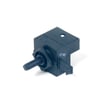
- Washer lid switch WP3949238 if the washer will not spin or drain because the lid isn’t being detected
Why it matters
Knowing this washer has a self-cleaning lint filter helps you avoid unnecessary disassembly. Most “filter” issues on a Kenmore top-load washer come from loading habits or a drain restriction, not a missing part.
Last updated: February 2026
How many cubic feet is a Kenmore 11020902990 washer?
The Kenmore 11020902990 is a classic top-load washer marketed as Super Capacity Plus, which typically falls in the about 3.2 to 3.5 cu. ft. range for this style and era. For the exact capacity rating tied to your specific configuration, use the 11020902990 owner's manual.
How to confirm the exact capacity for your washer
We recommend using the model-specific documentation because capacity can vary slightly by basket design and platform.
- Check the specifications section in the 11020902990 owner's manual
- Look for wording such as “capacity,” “basket volume,” or “Super Capacity Plus”
- If your washer has a model/serial plate under the lid, confirm it matches 11020902990
- Compare your basket style (porcelain on steel basket is common on this platform)
What “Super Capacity Plus” usually means
On Kenmore top-load washers like model 11020902990, “Super Capacity Plus” generally indicates a larger, traditional deep-fill basket intended for medium-to-large loads.
| Label you see | What it indicates | Typical capacity range |
|---|---|---|
| Super Capacity Plus | Larger traditional top-load basket | ~3.2 to 3.5 cu. ft. |
| Standard capacity | Smaller traditional basket | ~2.5 to 3.1 cu. ft. |
| High-efficiency (HE) top load | Low-water wash plate or HE agitator | ~3.5 to 5.0+ cu. ft. |
Why it matters
Capacity affects how much laundry you can wash per load, how much water the washer uses at each water level setting, and how well bulky items (comforters, jackets) circulate around the agitator.
Last updated: February 2026
How to identify a Kenmore washer model?
Your Kenmore washer model number is printed on the model and serial number plate; on Kenmore model 11020902990, it’s typically located under the lid on the top panel area. Once you have the full model number, we can match the correct Kenmore washer parts and diagrams. See the 11020902990 owner's manual for the exact label location and operating details.
Where to look for the model number
Check these common spots first (use a flashlight and wipe dust off the plate):
- Top-load washers: under the lid, around the tub opening or on the underside of the lid
- Front-load washers: inside the door opening, along the door frame
- All styles: back panel near the power cord, or near the control console
- Look for a metal plate or sticker labeled “Model” and “Serial”
- Write the number exactly as shown (include all digits)
What the model number looks like (Kenmore)
Many Kenmore washers use a numeric model format like 110.XXXXXXXX (often shown without the dot on the plate). For this unit, the model is 11020902990.
| What you see on the plate | What it means | Why we need it |
|---|---|---|
| Model number | Identifies the exact washer design | Ensures parts fit and wiring/controls match |
| Serial number | Identifies production run/date | Helps confirm revisions and compatible replacements |
Why it matters when ordering parts
Using the full model number prevents common fit issues, especially on high-wear items such as:
- Lid safety components like the washer lid switch WP3949238
- Drain components like the washer drain pump WP3363394
- Agitation and drive items like the coupling 285753A
Quick tips to avoid mix-ups
- Don’t use the timer knob label or cycle names as identification
- Don’t rely on “110” alone; the digits after it are what narrow the parts list
- If the plate is damaged, check the rear panel for a secondary sticker
Why it matters
Kenmore washers often have multiple versions that look similar; the correct model number is the fastest way to get the right parts, correct troubleshooting steps, and accurate diagrams.
Last updated: February 2026
How to reset a Kenmore 11020902990 washer?
To reset your Kenmore washer model 11020902990, we recommend doing a simple power reset: turn the washer off, unplug it (or switch the breaker off) for 1 minute, then restore power and select a new cycle. This clears many temporary control or cycle interruptions.
Quick reset steps (power reset)
- Turn the cycle selector to Off.
- Unplug the washer from the wall outlet (or turn the circuit breaker off).
- Wait 60 seconds.
- Plug the washer back in (or turn the breaker on).
- Lift and close the lid once, then select a cycle and press Start.
If the washer still will not start after resetting
These checks solve the most common “won’t run” symptoms on this style of Kenmore top-load washer.
- Confirm the outlet has power (test with a lamp).
- Make sure the lid is fully closed; a failed lid switch can stop agitation and spin.
- Verify the timer knob is pulled out (if your console uses a pull-to-start timer).
- Check that the drain hose is not pushed too far down the standpipe (can cause drain issues).
- If it fills but will not agitate or spin, inspect common drive components.
| Symptom after reset | Most likely area to check | Common related part for this model |
|---|---|---|
| No spin/no agitate, motor runs | Drive coupling | Coupling 285753A |
| Stops when lid opens, no spin | Lid safety circuit | Washer lid switch WP3949238 |
| Drains slowly or not at all | Drain pump or blockage | Washer drain pump WP3363394 |
Why it matters
A reset clears a stuck cycle or brief power glitch, but it will not fix a mechanical failure. If the washer repeatedly needs resetting, the underlying issue is often a lid switch problem, a draining problem, or a worn drive component.
Model-specific reference
For control features and normal operation details (water level settings, cycle selection, and usage tips), use the 11020902990 owner's manual.
Last updated: February 2026
Is it worth repairing a Kenmore washing machine?
Yes; repairing a Kenmore washer is usually worth it when the fix restores reliable wash and spin performance for less than the cost of replacing the machine. For Kenmore model 11020902990, many common failures are caused by serviceable parts such as the lid switch, motor coupling, drain pump, or agitator components.
Quick way we decide: repair vs. replace
- Repair it when the washer fills, drains, and spins after a straightforward part replacement.
- Repair it when the cabinet, tub, and basket are in good shape (no severe rust-through or major structural damage).
- Repair it when the problem matches a common wear item (agitator, coupling, clutch, lid switch).
- Consider replacing when multiple major systems are failing at once (leaks plus no spin plus loud gear noise).
- Consider replacing when the gear case is failing and you also have other high-cost issues.
Common repairs that are often “worth it” on this model
These are frequent, fixable causes of “won’t spin,” “won’t drain,” or “won’t agitate” symptoms:
| Symptom | Common cause | Example part for 11020902990 |
|---|---|---|
| Won’t spin or starts then stops | Lid safety circuit issue | Washer lid switch WP3949238 |
| Motor runs but washer won’t agitate/spin | Drive connection worn | Coupling 285753A |
| Won’t drain or drains slowly | Pump jammed or worn | Washer drain pump WP3363394 |
| Agitator moves poorly or “ratchets” | Worn agitator dogs | Agitator dog 80040 |
What to check first (fast, low-cost steps)
- Confirm the cycle and settings; this washer has multiple water level and temperature options and a timer-style cycle selector (details in the 11020902990 owner's manual).
- If it will not spin, test the lid switch function before replacing larger drive parts.
- If it will not drain, check for a clog at the pump inlet and in the drain hose.
- If agitation is weak, inspect the agitator dogs before assuming a transmission problem.
Why it matters
A targeted repair on a proven direct-drive style Kenmore top-load washer can restore full cleaning performance and extend service life significantly, especially when the failure is a single wear part rather than a major drive assembly.
Last updated: February 2026
What is the average lifespan of a Kenmore washer?
A Kenmore washer typically lasts 10 to 15 years. For Kenmore model 11020902990, reaching the high end of that range comes down to load size, water quality, and routine care; the most common age-related failures are in the drive, drain, and lid-safety systems.
Typical lifespan and what affects it
Most washers land in the same general window, but these factors move the needle:
- Overloading (stresses the drive system and suspension)
- Frequent hot washes (accelerates wear on seals and hoses)
- Hard water (builds residue that can affect valves and performance)
- Out-of-balance loads (increases wear on basket support and springs)
- Deferred maintenance (small leaks or slow drains become bigger repairs)
What usually wears out first on this style of Kenmore washer
On a top-load, direct-drive style washer like the 11020902990, these parts commonly drive repair decisions:
| Symptom | Common wear item | Example part for this model |
|---|---|---|
| Won’t spin or agitate correctly | Motor-to-transmission coupling | Coupling 285753A |
| Won’t drain or drains slowly | Drain pump or drain hose | Washer drain pump WP3363394 |
| Won’t start or stops when lid opens | Lid safety switch | Washer lid switch WP3949238 |
| Agitator slips or “ratchets” | Agitator dogs | Agitator dog 80040 |
Why it matters
Once a washer is around 10 years old, normal wear on moving parts (agitator, clutch, drive components) and water-handling parts (pump, inlet valve, hoses) makes breakdowns more likely. Knowing the typical lifespan helps you decide whether a repair is a smart investment or whether multiple aging parts are starting to stack up.
How we recommend extending washer life
Use these habits to reduce strain and prevent premature failures:
- Keep loads evenly distributed; wash bulky items in smaller loads
- Use the correct water level and avoid packing the basket tight
- Periodically check for slow draining and clear hose kinks
- Inspect fill and drain hoses for cracks, soft spots, or seepage
- Follow cycle and feature guidance in the 11020902990 owner's manual
Last updated: February 2026