Error Codes





How do you tell the cubic feet of a Whirlpool refrigerator?
To tell the cubic feet (capacity) of your Whirlpool refrigerator, we recommend using the model number to look up the published capacity; for Whirlpool ET21GKXHW02, you can also estimate it by measuring the usable interior space and converting cubic inches to cubic feet.
Fast ways to find capacity
- Model-based lookup: Use the exact model number ET21GKXHW02 to find the listed capacity for that specific top-mount refrigerator.
- Measure and calculate (good estimate): Measure the interior and do the math (steps below).
- Compare by style (sanity check): Most top-mount refrigerators commonly fall in the mid-range of capacities compared with compact or large French door models.
How to measure and calculate cubic feet
- Empty the compartment enough to measure accurately.
- Measure the interior width, height, and depth in inches (use the flat, usable space; do not include door bins).
- Multiply:
width × height × depth = cubic inches. - Convert to cubic feet:
cubic inches ÷ 1,728 = cubic feet.
Quick reference table
| What you have | What you do | What you get |
|---|---|---|
| Inches (W, H, D) | Multiply W × H × D | Cubic inches |
| Cubic inches | Divide by 1,728 | Cubic feet |
What can throw off your estimate
- Shelves, crisper housings, and air channels reduce usable space
- Rounded interior corners reduce volume versus a perfect box
- Freezer and fresh-food sections should be measured separately, then added
Why it matters
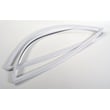
Capacity helps us match the right parts and accessories and set expectations for storage. For example, if you are troubleshooting door closing or warm spots, a worn gasket can affect performance; see the refrigerator door gasket 2159061 if your fresh-food door seal is torn or not sealing.
Last updated: February 2026
How to read Whirlpool model numbers?
Whirlpool model numbers identify the product type, size or series, and the exact design version; for your refrigerator, ET21GKXHW02 is the full model number you should use when looking up parts and diagrams so you get the correct fit.
What each section of a Whirlpool model number usually means
Whirlpool model numbers are built in “chunks.” While the exact coding varies by product line and year, this structure is common:
- Prefix letters: product family (for example, many Whirlpool top-mount refrigerators start with ET)
- Numbers: capacity/series identifier (often tied to size class or platform)
- Middle letters: feature set or design family
- Ending digits: engineering revision (the last 2 digits often separate similar-looking versions)
How to use the model number to get the right parts
When ordering parts for Whirlpool ET21GKXHW02, match the full model number exactly and then confirm the part by name and ID.
- Use the entire model number, not just “ET21”
- Compare the part’s name and part ID to your diagram callout
- If two parts look similar, the last digits of the model number often decide which one fits
- For door-seal or cooling issues, start with the most common wear items first
Common examples for this model
| What you’re fixing | Part to check first | Why it’s tied to the model number |
|---|---|---|
| Fridge light stays on or won’t come on | Refrigerator light switch W11384469 | Switch style and mounting vary by revision |
| Warm temps, frost pattern issues | Refrigerator defrost bi-metal WP4387503 | Defrost system parts differ by design family |
| Door not sealing, moisture, warm spots | Refrigerator door gasket 2159061 | Gaskets are model and door-specific |
Where to find the model number on the refrigerator
On most Whirlpool top-mount refrigerators, the model/serial tag is typically:
- Inside the fresh food compartment on a side wall
- Near the crisper area
- On the ceiling of the fresh food section
- Sometimes behind the toe grille (less common)
Why it matters
A single character difference can point to a different door, gasket, defrost setup, or fan configuration. Using ET21GKXHW02 exactly helps prevent wrong-part returns and speeds up troubleshooting.
Last updated: February 2026
What is the life expectancy of a Whirlpool refrigerator?
Most Whirlpool refrigerators, including top-mount models like ET21GKXHW02, typically last 10 to 18 years with normal household use. Consistent maintenance and good airflow around the cabinet are what most often push a refrigerator toward the high end of that range.
What affects refrigerator lifespan the most
- Condenser coil cleanliness (dust and pet hair make the compressor work harder)
- Door seal condition (warm air leaks increase run time and frost)
- Fan performance (evaporator and condenser airflow keeps temperatures stable)
- Door use habits (frequent long openings add heat and moisture)
- Installation conditions (tight enclosures and high room temps shorten life)
Maintenance that helps you reach the high end of the range
A few simple checks each year reduce wear on the compressor, fans, and defrost system.
- Vacuum coils and the lower rear area regularly
- Keep food from blocking interior air vents
- Confirm doors close on their own and sit square on the hinges
- Clean and inspect gaskets; replace if torn, hardened, or warped
- Listen for unusual fan noise and address it early
Common “wear” parts that can extend usable life
Replacing a failed or worn part is often more cost-effective than replacing the refrigerator, especially when cooling performance is still strong.
| Symptom | Often involved part | Example part for ET21GKXHW02 |
|---|---|---|
| Light stays on or won’t come on | Door/light switch | Refrigerator light switch W11384469 |
| Frost buildup, warm freezer | Defrost safety thermostat (bi-metal) | Refrigerator defrost bi-metal WP4387503 |
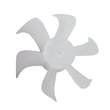
| Warm temps, weak airflow, noisy fan | Evaporator fan blade (and related fan parts) | Refrigerator evaporator fan blade WP2163777 |
| Door not sealing, moisture, heavy run time | Door gasket | Refrigerator door gasket 2159061 |
Why it matters
A refrigerator that runs longer than it should uses more electricity and puts extra stress on the compressor, start relay, and fan motors. Catching airflow and sealing problems early is one of the most reliable ways to extend service life.
Last updated: February 2026
What is the most common problem with Whirlpool refrigerators?
The most common Whirlpool refrigerator problem is poor cooling (fresh food warm, freezer not holding temperature). On your Whirlpool ET21GKXHW02 top-mount refrigerator, this is most often tied to restricted airflow, dirty condenser coils, or a defrost system issue that lets frost block the evaporator.
What you should check first (fast, no parts)
- Confirm the controls are set correctly and the doors fully close.
- Clean condenser coils and the area around the condenser fan (dust buildup is a top cause of weak cooling).
- Make sure vents inside the refrigerator and freezer are not blocked by food packages.
- Listen for the evaporator fan running when the compressor is on (freezer door switch held in).
- Look for heavy frost on the freezer back panel (points to a defrost problem).
Common symptoms and the most likely causes
| Symptom | Most likely cause | What we typically replace |
|---|---|---|
| Fridge warm, freezer cold | Airflow issue or evaporator fan problem | Refrigerator evaporator fan blade WP2163777 |
| Both sections warm | Dirty coils, condenser fan issue, start device issue | Condenser motor W10822259, refrigerator start relay WP4387938 |
| Frost buildup on freezer panel | Defrost system problem | Refrigerator defrost bi-metal WP4387503 |
| Water under crisper or on floor | Defrost drain restriction | Use hot water flush; no part needed most times |
| Door not sealing, moisture or icing | Worn gasket or door alignment | Refrigerator door gasket 2159061 |
Why it matters
Cooling problems usually start as an airflow or heat-release issue. If the refrigerator runs longer to compensate, food temperatures rise and the compressor and fans can wear faster. Catching it early often prevents a bigger repair.
Helpful DIY guidance
If you want a step-by-step troubleshooting path for Whirlpool cooling and sensor-related issues, use our Whirlpool refrigerator error codes guide to narrow down symptoms and likely failed components.
Last updated: February 2026