 Installation guide
 Owner’s manual
How many sq ft will a 70,000 BTU furnace heat?
A 70,000 BTU furnace like the Coleman DGAA070BDTA typically heats about 1,400 to 2,100 sq ft in an average, well-insulated home. The right number depends most on climate zone, insulation, ceiling height, and how the ductwork is sized and sealed; confirm setup details in the DGAA070BDTA installation guide.
Quick sizing rule of thumb
Most homes land in a range of 30 to 50 BTU per sq ft (higher in colder climates or older, leakier homes). Using that common range:
- 70,000 ÷ 50 = ~1,400 sq ft (colder climate, older home, higher heat loss)
- 70,000 ÷ 40 = ~1,750 sq ft (typical mixed climate, average insulation)
- 70,000 ÷ 30 = ~2,333 sq ft (milder climate, tight and well-insulated)
What changes the square footage the most
- Climate zone and winter design temperature
- Insulation and air sealing (attic, walls, rim joists, windows, doors)
- Ceiling height (tall ceilings increase heated volume)
- Duct losses (leaky ducts in attics or crawlspaces can waste a lot of heat)
- Furnace efficiency (AFUE) and actual delivered heat
- External static pressure and airflow; the installation guide notes ductwork static pressure must be set correctly for heating operation
Estimate table (70,000 BTU input)
| Home condition | Typical BTU per sq ft | Estimated area |
|---|---|---|
| Older or drafty, cold climate | 45 to 55 | ~1,270 to 1,555 sq ft |
| Average insulation, mixed climate | 35 to 45 | ~1,555 to 2,000 sq ft |
| Tight, well-insulated, mild climate | 25 to 35 | ~2,000 to 2,800 sq ft |
Why it matters
Oversizing can cause short cycling, uneven temperatures, and more wear on parts like the igniter and blower. Undersizing can mean long run times and rooms that never reach set temperature. Getting the ductwork and airflow right is just as important as the BTU rating.
Last updated: January 2026
What are the specs of dgaa070bdta?
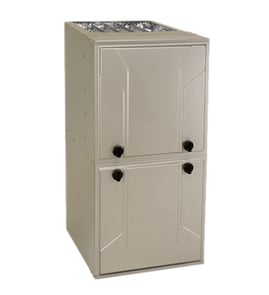
The Coleman DGAA070BDTA is a high-efficiency, sealed-combustion, single-stage downflow gas furnace in the DGAA series. From the installation documentation, the cabinet size is 19-1/2 in. wide x 24-3/4 in. deep x 76 in. high; the “070” size is commonly a 70,000 BTU input class furnace. See the DGAA070BDTA installation guide for the full rating and setup details.
Key specifications (most requested)
- Brand/model: Coleman DGAA070BDTA
- Furnace type: High-efficiency, sealed combustion, single-stage downflow (DGAA series)
- Cabinet dimensions: 19-1/2 in. W x 24-3/4 in. D x 76 in. H
- Input range for DGAA/DGAH series: 56 to 90 MBH input (series range)
- Installation applications: Manufactured (mobile) homes, recreational vehicles/park models, modular homes/buildings
Dimensions at a glance
| Spec | Value |
|---|---|
| Width | 19-1/2 in. |
| Depth | 24-3/4 in. |
| Height | 76 in. |
| Configuration | Downflow |
| Combustion | Sealed combustion |
Where to confirm the exact “rating plate” specs
For the exact BTU input/output, temperature rise, manifold pressure, and approved venting/roof jack combinations, we use the unit’s rating plate plus the documentation.
- Check the rating plate (typically inside the burner compartment behind the upper door)
- Match the plate data to the tables in the DGAA070BDTA installation guide
- Use the ductwork and return-air requirements in the guide to size airflow correctly
Why it matters
Correct specs protect the heat exchanger and safety controls, and they prevent nuisance limit trips. Matching cabinet dimensions, ductwork, and combustion air/venting requirements is also critical for safe, reliable operation.
Last updated: January 2026
How much does it cost to replace a 70,000 BTU furnace?
Replacing a 70,000 BTU furnace typically costs about $4,000 to $9,000 installed (furnace plus labor), depending on efficiency level, venting changes, and local labor rates. For a Coleman DGAA070BDTA, the installation requirements in the DGAA070BDTA installation guide help determine how complex (and costly) the swap will be.
What drives the total replacement price
- Furnace efficiency (AFUE): higher efficiency usually costs more upfront.
- Venting and combustion setup: sealed combustion or vent rework can add labor and materials.
- Gas line and pressure checks: proper manifold and supply pressure verification is part of a correct start-up.
- Ductwork and static pressure: duct modifications may be needed to meet airflow and external static pressure targets.
- Electrical and controls: thermostat wiring, safety switches, and any code-required updates.
- Permits and inspections: often required and priced differently by location.
Typical cost ranges (installed)
| Replacement scenario | What it usually includes | Typical installed cost |
|---|---|---|
| Basic like-for-like replacement | Similar efficiency, minimal vent/duct changes | $4,000 to $6,000 |
| Mid-range upgrade | Some venting, gas, or duct adjustments | $6,000 to $8,000 |
| High-efficiency or complex retrofit | Significant venting/ductwork changes, added accessories | $8,000 to $9,000+ |
Model-specific installation details that affect cost
For the DGAA070BDTA, installers commonly verify items like:
- Approved fuel type (natural gas or LP) and correct setup
- External static pressure of the duct system for heating operation
- Gas leak checks at joints and valves using approved methods
- Manifold and gas line pressure measurements using a manometer
These steps are outlined in the DGAA070BDTA installation guide and can increase labor time if corrections are needed.
Why it matters
A furnace replacement price is not just the box. Correct venting, duct static pressure, and gas pressure setup protect comfort, efficiency, and safe operation, and they are often where “surprise” costs show up.
Last updated: January 2026
What is the life expectancy of a Coleman furnace?
A Coleman furnace typically lasts 15 to 20 years. For your Coleman DGAA070BDTA, reaching the high end of that range depends most on correct installation, clean airflow (filter and ducts), and yearly safety and combustion checks outlined in the DGAA070BDTA owner's manual.
Typical lifespan and what affects it
Most gas furnaces fall into a similar service-life window, but these factors move the needle:
- Maintenance frequency: annual inspection and cleaning extends life
- Airflow health: dirty filters, blocked returns, or undersized ductwork overheat the heat exchanger
- Installation quality: correct gas pressure, venting, and condensate handling (if applicable)
- Run time and climate: longer heating seasons mean more wear on inducer, blower, and igniter
- Electrical stability: repeated low-voltage issues can stress controls and motors
Signs your furnace is nearing end of life
If your DGAA070BDTA is approaching 15+ years, these are the most meaningful indicators:
- Rising heating bills with no thermostat or insulation changes
- Frequent service calls for ignition, flame-sensing, or blower issues
- Short cycling (starts and stops often) or overheating shutdowns
- New rattles, booming, or persistent vibration
- Uneven heat or weak airflow from multiple registers
Repair vs. replace: a quick guide
| What you’re seeing | Usually points to | Typical next step |
|---|---|---|
| Minor airflow issue, dirty filter, loose panel | Maintenance or adjustment | Service and tune-up |
| Repeated ignition or sensor problems | Wear items or wiring | Diagnose and replace failed part |
| Multiple major failures in one season | System aging | Consider replacement planning |
| Persistent overheating trips | Airflow or blower problems | Correct airflow, test blower |
Why it matters
A furnace that’s past its prime can still run, but efficiency drops and safety-related components (like flame sensing and venting performance) become more critical. Staying on schedule with inspections helps protect comfort, fuel use, and reliable heat.
Last updated: January 2026