 Installation guide
 Owner’s manual


Does my Kenmore top load washer have a filter?
Yes, the Kenmore 11022442100 top load washer uses screens and internal pump protection rather than a large, user-cleanable lint filter. Most “filter” issues on this model come from clogged inlet valve screens or a drain pump obstruction; both can be checked during troubleshooting in the 11022442100 owner's manual.
What “filter” means on this washer
On this style of Kenmore top load washer, filtration is typically handled in these places:
- Water inlet valve screens at the hot and cold hose connections (catch grit and sediment)
- Drain pump inlet area (can trap coins, lint, small socks)
- Drain hose/standpipe path (clogs can mimic a “dirty filter” symptom)
Quick checks you can do safely
Turn off power and water before working around hoses.
- If filling is slow: remove hoses and rinse the inlet valve screens
- If it will not drain or spins poorly: check for a kinked/clogged drain hose and a blocked pump
- If the washer stops with the lid open: confirm the lid closes fully (a lid switch issue can look like a drain problem)
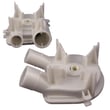
If you suspect a drain blockage and the pump is noisy or not moving water, the washer drain pump WP3363394 is the common service part.
Symptoms and the most likely “filter” area
| Symptom | Most likely area to check | What you’ll notice |
|---|---|---|
| Won’t fill or fills slowly | Inlet valve screens | Sediment in screens, hoses clear |
| Won’t drain | Pump or drain hose | Water stays in tub, pump hums or rattles |
| Leaks during drain | Drain hose/connection | Drips at hose, loose clamp, cracked hose |
| Stops mid-cycle | Lid switch or pause | Lid not fully closed, normal 2-minute pause |
Why it matters
Keeping the inlet screens and drain path clear helps prevent no-fill, no-drain, and long-cycle complaints. It also reduces strain on the motor and pump, which can extend the life of key drive components.
Last updated: February 2026
How to identify a Kenmore washer model?
For Kenmore model 11022442100, the model and serial number label is located under the washer lid. Use that full model number when ordering parts, looking up diagrams, or checking cycle and installation requirements in the 11022442100 owner's manual.
Where to look on the washer
Check these common label locations (start with the first one):
- Under the lid on the main cabinet (most common for this Kenmore compact top-load)
- Along the lid opening (rim of the cabinet)
- On the back of the control panel
- On the side of the cabinet near the bottom
What to write down (and why)
Record the key details exactly as shown on the label:
- Model number (example: 11022442100)
- Serial number
- Purchase date (helpful for warranty and service history)
Quick reference table
| Item | What it’s used for | Example |
|---|---|---|
| Model number | Correct parts list and diagrams | 11022442100 |
| Serial number | Production run details, service records | Varies |
| Purchase date | Maintenance and service planning | Varies |
Why it matters
Kenmore model numbers can look similar, but internal parts like the lid switch, drain pump, and drive system can differ by revision. Using the exact model number helps ensure you get the right replacement part the first time.
Helpful tip during installation or setup
If you are confirming hookups or leveling while you have the washer pulled out, follow the steps and safety notes in the 11022442100 installation guide (for example, using a grounded 3-prong outlet and properly securing the drain hose).
Last updated: February 2026
How to reset a Kenmore 11022442100 washer?
To reset your Kenmore 11022442100 compact washer, we stop the current cycle and restore power, then restart the cycle normally. On this model, the simplest reset is pushing in the Cycle Control knob to stop, then pulling it back out to restart with the lid closed (a power reset can help if it is unresponsive). See the 11022442100 owner's manual.
Quick reset steps (most common)
- Push in the Cycle Control knob to stop the washer.
- Wait about 30 seconds.
- Close the lid fully (the washer will not agitate or spin with the lid open).
- Pull the Cycle Control knob out to restart.
- If the washer is in a normal pause (some cycles pause about 2 minutes), let it continue.
Power reset (if the controls seem stuck)
- Unplug the washer (do not use an extension cord).
- Wait 1 minute.
- Plug it back in.
- Select a cycle and pull the Cycle Control knob out to start.
If it still will not start, check these basics
- Confirm the lid is closing and latching; a failed lid switch can prevent spin/agitate (see washer lid switch WP3949238).
- Make sure the load is balanced and the washer is level.
- Verify the drain hose is not clogged and is not routed higher than 96 in. above the floor.
- Reduce detergent if you see excessive sudsing.
What “reset” fixes vs. what it does not
| Symptom | Reset helps? | What to check next |
|---|---|---|
| Washer paused mid-cycle | Yes | Normal 2-minute pause, lid closed |
| Won’t agitate or spin | Sometimes | Lid switch, load balance |
| Won’t drain | Sometimes | Drain hose routing, pump blockage |
| Repeated stopping | Sometimes | Leveling, oversudsing, lid switch |
Why it matters
A proper reset clears a stuck cycle state and gets the timer and lid-safety logic back into a normal start sequence, which is often all that is needed after a pause, overload, or power interruption.
Last updated: February 2026
Is it worth repairing a Kenmore washing machine?
Yes, repairing a Kenmore washer is worth it when the fix restores reliable washing and spinning for less than replacing the machine. For Kenmore model 11022442100, common repairs (drain, lid switch, drive components) are straightforward and often extend the washer’s usable life.
Quick way we decide: repair vs replace
- Repair when the washer is otherwise in good shape (no major rust, no chronic leaks)
- Repair when the problem is isolated (won’t drain, won’t spin, won’t start)
- Repair when the cost is clearly below a comparable replacement washer
- Replace when multiple major systems are failing (drive system plus leaks plus electrical)
- Replace when the tub or basket damage is severe and recurring
High-value repairs for this model
These are frequent “bang for the buck” fixes on compact/top-load Kenmore designs like 11022442100:
- No drain or slow drain: washer drain pump WP3363394
- Won’t start or stops when lid is opened/closed: washer lid switch WP3949238
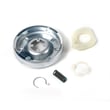
- Agitates but won’t spin (or vice versa) with motor running: coupling 285753A
- Poor spin, burning smell, or slipping under load: clutch 285785
Cost and complexity snapshot
| Symptom | Likely system | Typical DIY difficulty | Typical payoff |
|---|---|---|---|
| Won’t drain | Drain pump, hose | Medium | High |
| Won’t start/spin with lid closed | Lid switch | Easy to medium | High |
| No agitation/spin but motor runs | Motor coupling | Medium | High |
| Weak spin, noisy spin | Clutch/drive | Medium to hard | Medium to high |
Why it matters
A targeted repair prevents repeat breakdowns and protects other components. For example, continuing to run with a weak drain can strain the pump and leave water in the tub, while a failing drive component can cause extra vibration and wear.
Before you spend money: do these checks first
Use the 11022442100 owner’s manual for safety and operating guidance, then:
- Unplug the washer before inspecting parts
- Confirm the lid closes and latches consistently
- Check for a kinked or clogged drain hose
- Run a small test load; loads should move freely during washing
- Avoid pouring undiluted bleach directly on fabrics (it can damage items and create “false problem” complaints)
Last updated: February 2026
What is the average lifespan of a Kenmore washer?
Most Kenmore washers last 10 to 15 years with normal household use and basic maintenance. For the Kenmore compact washer 11022442100, correct installation, avoiding overloads, and addressing early symptoms (drain, spin, or agitation issues) helps you reach the upper end of that range; see the 11022442100 owner's manual.
Typical lifespan by usage
- Light use (1 to 3 loads/week): 12 to 15 years
- Average use (4 to 7 loads/week): 10 to 13 years
- Heavy use (8+ loads/week): 7 to 10 years
What usually shortens washer life
- Overloading (loads should move freely during washing)
- Poor installation conditions (unlevel floor, weak flooring)
- Low or inconsistent water supply (pressure outside typical operating range)
- Running in freezing conditions without winterizing
- Ignoring early leaks, burning smells, or repeated off-balance spinning
Quick maintenance that adds years
| What to do | How often | Why it helps |
|---|---|---|
| Keep loads balanced and not packed tight | Every load | Reduces strain on the drive system and suspension |
| Check fill hoses and connections for seepage | Monthly | Prevents water damage and valve issues |
| Verify the washer stays level | Every 6 months | Cuts vibration and wear on moving parts |
| Clear drain restrictions (lint, coins) | As needed | Prevents slow drain and pump strain |
When a repair is worth it (common decision points)
We typically recommend repair when the washer is under about 10 years old and the issue is isolated to a serviceable part. On this model, common wear items that can affect performance include:
- Washer drain pump WP3363394 (won’t drain, humming, slow drain)
- Washer lid switch WP3949238 (won’t start or won’t spin)
- Coupling 285753A (won’t agitate or spin, motor runs but tub does not move)
Why it matters
A washer near the end of its expected lifespan often shows repeat symptoms (drain problems, spin issues, louder operation). Catching those early can prevent secondary damage to higher-cost assemblies like the gear case.
Last updated: February 2026
What is the capacity of a Kenmore Model 11022442100?
The exact wash capacity (in cubic feet) for Kenmore compact washer model 11022442100 is listed in the product specifications section of the 11022442100 owner's manual. Most Kenmore compact top-load washers of this style are typically in the 2.0 to 3.0 cu. ft. range, which is designed for smaller, lighter loads.
How to find the exact capacity for your washer
Use the manual specs first, then confirm against the model/serial tag under the lid.
- Open the 11022442100 owner's manual and look for “Specifications” or “Product features”.
- Check the model and serial number label under the washer lid to confirm you are matching the correct model.
- If the manual lists basket dimensions instead of cubic feet, use the basket measurements to estimate volume.
- If you are comparing to another washer, compare basket diameter and depth, not just “compact” vs “standard.”
- For best performance, load so items move freely during washing (overloading reduces cleaning and can cause out-of-balance spinning).
What “capacity” means in real-world loads
Capacity is about usable basket volume, but how much you can wash also depends on fabric type and how tightly items pack.
| Load type | What fits best in a compact washer | What to avoid overloading |
|---|---|---|
| Everyday mixed laundry | Small to medium loads | Large comforters, heavy blankets |
| Towels | A few bath towels at a time | Too many thick towels (can unbalance) |
| Delicates | Light loads with room to move | Packing items tightly |
Why it matters
Using the right load size helps your 11022442100 wash better and spin out more water. Overloading commonly leads to poor agitation, longer drain/spin times, and extra wear on drive components such as the coupling 285753A and clutch 285785.
Last updated: February 2026





