Owner’s manual
 Error Codes
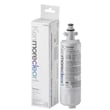


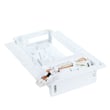
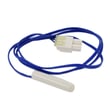
Why is my refrigerator not getting cold at the bottom?
If your Kenmore Elite bottom-mount refrigerator model 79571322412 is warm at the bottom, the most common causes are restricted airflow (blocked vents or an iced-up evaporator area), dirty condenser coils, or a fan problem that prevents cold air from circulating. Start with cleaning and airflow checks, then move to fan and defrost-related symptoms using the 79571322412 owner's manual.
- Make sure food packages are not blocking interior air vents (especially near the back wall).
- Set temperatures to typical targets: 37°F fresh food, 0°F freezer.
- Clean condenser coils and the condenser fan area (dust and pet hair reduce cooling).
- Confirm the doors seal tightly and close on their own.
- Listen for fans: you should typically hear airflow when the compressor is running.
| Symptom | Most likely cause | What to do next |
|---|---|---|
| Freezer is cold but fridge bottom is warm | Airflow restriction or evaporator fan issue | Check vents, listen for fan, inspect for frost buildup |
| Both sections are warming | Dirty condenser coils, condenser fan issue, sealed system/compressor issue | Clean coils, verify condenser fan runs |
| Fridge warms gradually, then improves after unplugging | Defrost problem causing ice buildup | Look for heavy frost on the evaporator cover |
- If you suspect poor cold-air circulation, the evaporator fan motor is a common failure point: refrigerator evaporator fan motor EAU65058315.
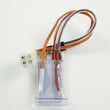
- If temperatures seem erratic or the unit runs too long, a sensor issue can contribute: refrigerator temperature sensor 6500JB2002X.
On model 79571322412, the freezer makes the cold air and the refrigerator section depends on fans and ducts to move that air upward. When airflow is restricted or heat cannot be rejected at the condenser, the refrigerator section often warms first, especially low shelves and drawers.
Last updated: January 2026
What is the average lifespan of a Kenmore Elite refrigerator?
Most Kenmore Elite refrigerators, including model 79571322412, typically last 12 to 15 years with normal use and basic maintenance. Units that get regular cleaning and have good door seal performance often reach the upper end of that range.
A refrigerator’s life is mostly determined by how hard the sealed system and fans have to work, plus how well the doors seal.
- Keep condenser coils clean so the compressor runs cooler and cycles less
- Make sure doors close fully and gaskets seal tightly
- Replace the water filter on schedule to protect the water system and ice maker
- Avoid overpacking vents; blocked airflow can cause warm temps and longer run times
- Level the cabinet so doors self-close and the freezer drawer seals properly
If you’re deciding whether to repair or replace, these are the most common signs the refrigerator is nearing the end of its service life:
- Food compartments won’t hold temperature even after cleaning coils
- Loud or persistent fan noise (evaporator or condenser area)
- Ice maker stops producing and water flow becomes inconsistent
- Frost buildup or recurring defrost drainage problems
- Compressor starts and stops repeatedly (clicking) or runs almost constantly
| Issue type | Typical impact | Usual next step |
|---|---|---|
| Maintenance items (filters, bins, covers) | Restores normal operation | DIY replacement |
| Fan or sensor problems | Temperature swings, noise | Part replacement |
| Sealed system or compressor problems | Poor cooling, high run time | Professional diagnosis |
For this model, common service parts customers replace include the refrigerator water filter 9690 AGF80300801 and, when ice production fails, the ice maker assembly AEQ72909603.
Knowing the expected lifespan helps you plan: if your 79571322412 is already in the 12 to 15 year range, investing in maintenance and smaller repairs often makes sense, while major cooling-system repairs can change the value equation.
For model-specific care and cleaning intervals, follow the 79571322412 owner’s manual.
Last updated: January 2026
What are the common problems with Kenmore Elite refrigerators?
Common problems we see on the Kenmore Elite 79571322412 bottom-mount refrigerator include warm temperatures (poor airflow or sealed-system issues), ice maker or water dispenser trouble, water leaking from a clogged defrost drain, and unusual noises from fans or the compressor area. Use the 79571322412 owner's manual to match symptoms to the correct checks.
- Not cooling or weak cooling: dirty condenser coils, failed evaporator fan motor, iced-over evaporator, or a control/temperature sensing issue
- Ice maker not making ice: low water supply, frozen fill tube, failed ice maker assembly, or a bad inlet valve
- Water leaking inside or under the fridge: clogged/iced defrost drain, cracked drain tube, or a door left ajar causing excess frost melt
- Frost buildup in freezer: door gasket leak, frequent door openings, or a defrost system problem
- Buzzing/clicking/humming: condenser fan area obstruction, compressor start components, or normal refrigerant flow noises
- Confirm settings: refrigerator about 37°F and freezer about 0°F.
- Make sure vents are not blocked by food packages.
- Clean condenser coils and verify the condenser fan runs when the compressor runs.
- Check door seals with the “paper test” (paper should drag when pulled).
- If leaking, inspect the drain trough and drain opening for ice or debris.
| Symptom | Part to consider | Example part for this model |
|---|---|---|
| Leaking water, ice in drain area | Drain tube | Refrigerator drain tube 5251JA3003D |
| Ice maker not working | Ice maker assembly | Lg refrigerator ice maker assembly model AEQ72909603 AEQ72909603 |
| Warm temps, fan noise, poor airflow | Evaporator fan motor | Refrigerator evaporator fan motor EAU65058315 |
| No water to ice maker/dispenser | Water inlet valve | Refrigerator water inlet valve AJU73672505 |
| Poor taste/slow water flow | Water filter | Genuine Kenmore refrigerator water filter 9690 AGF80300801 |
Cooling, ice, and leak complaints often share the same root causes: restricted airflow, water supply problems, or a blocked defrost drain. A few quick checks can prevent food spoilage and help you replace only the part that actually failed.
Last updated: January 2026
What size is Kenmore refrigerator model 79571322412?
Kenmore Elite bottom-mount refrigerator model 79571322412 is a full-size unit; plan for a cabinet opening that fits a roughly 36-inch-wide refrigerator and provides extra room for door swing and airflow. For the exact width, height, depth, and clearance specs, use the 79571322412 manual.
When customers ask about size, they typically need one or more of these measurements:
- Overall width (cabinet and doors)
- Overall height (to top hinge cover)
- Overall depth (cabinet only vs. with doors and handles)
- Clearances (sides, top, back, and door swing)
- Capacity (cubic feet of storage)
Use these as planning targets, then confirm the exact numbers in the manual before installation.
- Width: about 35 to 36 inches
- Height: about 69 to 71 inches
- Depth (cabinet only): about 29 to 32 inches
- Depth (with doors and handles): about 35 to 39 inches
| Measurement | What it affects | What to measure in your kitchen |
|---|---|---|
| Width | Fit between cabinets | Narrowest point of the opening (front and back) |
| Height | Hinge cover clearance | Floor to lowest cabinet/soffit point |
| Depth | How far it sticks out | Back wall to counter front edge |
| Door swing | Drawer and bin access | Space to fully open doors and freezer drawer |
If the opening is tight, the doors can hit walls, the freezer drawer can bind, and restricted airflow can reduce cooling performance. Confirming the exact dimensions also helps when routing the water line for the ice maker and filter.
Last updated: January 2026