Installation guide
 Owner’s manual


What is the average lifespan of a KitchenAid dishwasher?
A KitchenAid undercounter dishwasher like model KUDS30IXWHA typically lasts 10 to 14 years with normal household use. Consistent cleaning, correct installation, and avoiding chronic leaks or drain issues are the biggest factors that keep the wash system, heater, and controls running longer; see the KUDS30IXWHA installation guide for setup details that help prevent early wear.
- Water quality (hard water): mineral buildup can reduce cleaning and drying performance over time.
- Drain performance: slow draining strains the pump and can leave standing water.
- Heating and drying load: frequent heated dry cycles add wear to the heater circuit.
- Door alignment and latching: a door that does not close smoothly can cause cycle interruptions.
- Maintenance habits: cleaning the sump area and checking spray arms helps prevent recirculation problems.
- Run a dishwasher cleaner cycle to reduce grease and odor.
- Check the bottom area for debris that could restrict water flow.
- Confirm the door closes tightly and latches every time.
- Inspect the drain hose routing for kinks and proper high loop.
- Use rinse aid to improve drying and reduce spotting.
| Symptom | Often points to | Example part on this model page |
|---|---|---|
| Won’t drain or leaves water | Drain system | Dishwasher drain pump WPW10348269 |
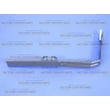
| Poor drying or water not heating | Heating circuit | Heater W10703867 |
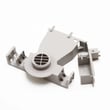
| Loud grinding or weak wash | Wash motor/sump | Dishwasher sump and motor assembly WPW10780877 |
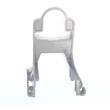
| Door won’t stay closed | Latch/door hardware | Dishwasher door latch WPW10653840 |
If your KUDS30IXWHA is near the 10 to 14 year range, small issues (slow drain, weak heat, door not latching) are worth addressing early. Fixing them promptly helps prevent secondary damage to the motor, controls, and wiring.
Last updated: January 2026
What is the most common problem with a KitchenAid dishwasher?
For the KitchenAid KUDS30IXWHA, the most common issues we see are poor cleaning (often from restricted water flow or filtration problems) and drain-related problems (standing water) that trace back to the drain path or pump. Door-latch and leak symptoms are also frequent.
- Dishes still dirty or gritty: clogged filter area, blocked spray arms, low water temperature, or loading that prevents spray coverage
- Water left in the tub: drain hose routing issue, disposer/air gap restriction, or a failing drain pump
- Won’t start: door not fully closed and latched, power supply issue, or control problem
- Leaks at the front: door seal wear, door not centered/level, or oversudsing from wrong detergent
- Odd noises: debris in the sump area, worn pump components, or items contacting spray arms
Use these checks before replacing anything; they match the basic “does not operate” and “check operation” guidance in the installation instructions.
- Confirm the dishwasher has power (breaker/fuse) and the cycle is set correctly
- Close the door firmly until it latches; a loose latch can stop operation mid-cycle
- Verify the water supply valve is turned on
- Start a short cycle; after about 2 minutes, open the door and confirm there is water in the bottom of the tub
- Inspect the drain hose for kinks and make sure the drain connection is not restricted
Reference: KUDS30IXWHA installation guide
If your symptom matches, these are common repair paths for this model:
| Symptom | Common fix | Example part for this model |
|---|---|---|
| Standing water, won’t drain | Replace drain pump or clear drain restriction | Dishwasher drain pump WPW10348269 |
| Leaks at the bottom of the door | Replace lower door seal | Dishwasher door seal, lower WPW10497235 |
| Door won’t latch or starts then stops | Replace door latch | Dishwasher door latch WPW10653840 |
Cleaning and draining problems often look like “the dishwasher is bad,” but they are usually caused by a single restriction (filter/drain path) or one failed component (like a drain pump). Fixing the root cause restores wash performance and helps prevent leaks and repeat clogs.
Last updated: January 2026
Is it worth fixing a KitchenAid dishwasher?
Fixing a KitchenAid KUDS30IXWHA dishwasher is worth it when you have one clear failure (no-drain, won’t latch, leak, or no-heat) and the total repair cost stays well below the price of a comparable replacement. If multiple major systems are failing, replacement is the better value.
- Repair is a good value when the dishwasher is under 10 years old.
- At 10+ years old, avoid high-cost repairs involving the motor/sump or electronic control.
- One symptom with one likely part (drain, fill, latch, heat) is usually worth fixing.
- Repeated leaks plus electrical symptoms usually means costs stack up quickly.
- If it still cleans well and is quiet, a targeted repair extends life.
| Symptom | Often involved | Why it’s usually worth it |
|---|---|---|
| Won’t drain | Drain pump, drain hose restriction | Restores function with a focused repair |
| Won’t start | Door latch/interlock | Required safety switch; common fix |
| Poor drying | Heater circuit | Often a single-part repair |
| No wash action or loud motor | Sump and motor, circulation motor | Only worth it if total cost stays low |
- Dishwasher drain pump WPW10348269 for standing water or no-drain
- Dishwasher door latch WPW10653840 for won’t start or won’t latch
- Dishwasher drain hose 8269144A for leaks or drain routing issues
- Heater W10703867 for poor drying or no heat
The KUDS30IXWHA guide includes a basic “does not operate” checklist:
- Check the breaker or house fuse.
- Confirm the door closes tightly and latches.
- Verify the cycle is set to start.
- Make sure the water supply is turned on.
- Start a short cycle; confirm water enters the tub within the first couple minutes.
Many dishwashers run 2 to 3 hours per load by design; long cycle time alone is normal. The real decision is whether you’re fixing one defined failure (good value) or chasing multiple symptoms (poor value). See the KUDS30IXWHA installation guide for model-specific checks.
Last updated: January 2026