Installation guide
 Owner’s manual
 Error Codes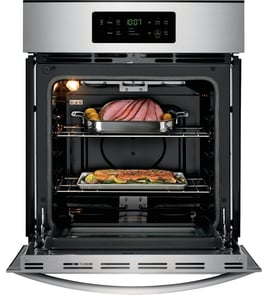



What is the best brand for electric wall ovens?
GE is a strong, reliable choice for electric wall ovens, and it is a great fit if you already own a GE model like JT955SK4SS. The “best” brand depends on your priorities (features, service access, budget, and cooking performance), so we recommend comparing a few top brands against the features you will actually use.
How we recommend choosing the “best” brand
- Fit and installation: Confirm cutout size, electrical requirements, and hard-wiring details in the JT955SK4SS installation guide.
- Cooking performance: Look for even baking, stable temperature control, and convection performance.
- Serviceability: Choose a brand with readily available parts and local service.
- Controls and features: Decide if you want smart features, probe cooking, or advanced convection modes.
- Long-term ownership cost: Consider typical part prices and how easy common repairs are.
Top brands customers commonly compare
These brands are frequently cross-shopped for electric wall ovens:
| Brand | Typical strengths | Best for |
|---|---|---|
| GE / Café | Broad feature sets, strong parts availability | Value plus features, easier ownership |
| Bosch | Quiet operation, refined build | Premium feel, consistent baking |
| Thermador | High-end features and design | Luxury kitchens, advanced options |
Why it matters
A wall oven is a built-in appliance; installation and service access matter as much as brand reputation. For example, GE wall ovens like JT955SK4SS are designed to be hard wired into an approved junction box, and the cabinet must support the oven securely. Checking requirements up front helps avoid costly fit and electrical surprises.
Quick tip for current owners of GE JT955SK4SS
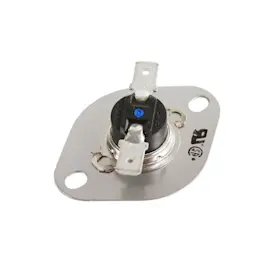
If your decision is driven by reliability concerns such as temperature accuracy, compare brands, but also keep in mind that many “performance” complaints are repairable. A failing sensor can cause uneven baking or temperature swings; the wall oven temperature sensor WB23T10015 is a common part involved in temperature regulation.
Last updated: February 2026
How to reset a GE wall oven?
To reset your GE JT955SK4SS electric wall oven, turn the oven off and reset power at the home breaker (or fuse) for about 1 minute, then restore power. After a power interruption, you typically need to set the clock and reselect any cooking function.
Quick reset steps (power cycle)
- Press CLEAR/OFF to stop any active cycle.
- Turn the oven circuit breaker OFF (or remove the fuse).
- Wait about 1 minute.
- Turn the breaker ON (or reinstall the fuse).
- Set the clock, then start your bake, broil, or convection cycle again.
What you may need to reprogram after a reset
Some settings can change after a power failure, while others stay in memory.
| Item | What usually happens after power loss/reset | What to do next |
|---|---|---|
| Clock/time of day | Often resets or flashes | Set the time using the clock pad and number pads (see JT955SK4SS owner's manual) |
| Active cooking cycle | Stops | Press CLEAR/OFF, reselect the cooking mode, press START |
| Special features | Typically stay in memory | Re-enter special features mode only if needed |
| Sabbath feature | Must be set again | Re-enable Sabbath if you use it |
If the oven still will not come on
A reset fixes many control glitches, but if the oven stays dead, focus on power and control settings.
- Confirm the correct breaker is on (wall ovens often use a dedicated 240V circuit).
- Check for a tripped breaker that looks “on” and fully switch it off then on.
- Verify the controls are set correctly for the mode you want (bake vs. broil vs. timed).
- If the display is in clock black-out mode, change that setting in special features.
- If the oven overheats or shows temperature-related symptoms after resetting, test the sensor circuit; the wall oven temperature sensor WB23T10015 is the common feedback part.
Why it matters
A proper reset clears minor electronic control errors and restores normal operation after a power outage or surge. Setting the clock and restarting the cooking function prevents “no heat” situations caused by incomplete control setup.
Last updated: February 2026
What is the difference between GE and GE Profile wall ovens?
GE Profile wall ovens are the step-up line; they typically add more premium cooking features and design upgrades than standard GE wall ovens. For your GE JT955SK4SS electric wall oven, the exact feature set is defined by its control options (bake, broil, convection, self-clean) and special settings listed in the JT955SK4SS owner’s manual.
Typical differences you’ll see
GE and GE Profile can overlap on core cooking performance, but Profile models more often include higher-end convenience and control features.
- More advanced convection modes and presets (varies by model)
- More “special features” and programming options (timed cooking, proofing, warming)
- More premium styling and handle/trim packages
- More sensor-driven cooking options on some models
- More upgraded control interfaces on some models
How to compare the two lines the right way
We recommend comparing by model number and feature list, not just the badge on the door.
| What to compare | GE line (typical) | GE Profile line (typical) |
|---|---|---|
| Controls and programming | Core settings | More advanced settings and presets |
| Cooking modes | Bake/broil; some convection | Convection and enhanced modes more common |
| Cleaning options | Self-clean varies | Self-clean more common; more options |
| Design/finish | Standard | More premium trim and styling |
What we know about the JT955SK4SS specifically
Your JT955SK4SS documentation shows a feature set that can include convection cooking, timed baking/roasting, proofing, warming, and self-cleaning functions (features can vary by configuration). Use the manual’s “Controls,” “Special Features,” and “Self-Cleaning Oven” sections to confirm exactly what your unit supports.
Why it matters
When you’re shopping parts, accessories, or comparing performance, the model’s exact control system and cooking modes matter more than whether it says “GE” or “GE Profile.” That is also why we always match parts to the full model number.
Last updated: February 2026
How long do GE wall ovens last?
Most GE wall ovens last about 12 to 15 years with normal household use. For the GE JT955SK4SS electric wall oven, lifespan depends most on heat exposure to electronics, door seal condition, and keeping airflow and cooling fans working as designed (see the JT955SK4SS owner's manual).
Typical lifespan and what affects it
A wall oven’s service life is usually limited by heating components and control electronics.
- Usage frequency: daily high-heat baking and self-cleaning shortens life
- Ventilation and cooling: blocked airflow can overheat controls
- Power quality: repeated breaker trips and surges stress the control board
- Door seal and hinges: heat leaks raise cabinet and control temperatures
- Cleaning habits: heavy grease buildup can cause odor, smoke, and extra heat retention
What “normal” aging looks like vs. early failure
| What you notice | Common cause | What to check first |
|---|---|---|
| Oven temperature swings | Sensor drifting | Wall oven temperature sensor WB23T10015 |
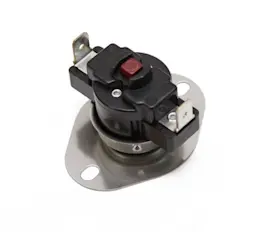
| Oven shuts off or won’t heat | Overheat protection opening | Wall oven safety thermostat WB24T10060 |
| Fan runs after cooking | Normal cooling cycle | Cooling fan operation per manual |
| Long cool-down, hot control area | Weak or noisy fan | Wall oven cooling fan assembly WB26K5061 |
Maintenance that helps you reach 15 years
These steps reduce heat stress and keep temperatures stable.
- Keep vents clear and confirm the cooling fan runs during and after baking
- Avoid back-to-back self-clean cycles; use the shortest effective cycle
- Wipe spills after the oven cools to reduce smoke and insulation odors
- If baking seems off, test with an oven thermometer and recalibrate if your model supports it
- Replace a worn door hinge if the door doesn’t close firmly
Why it matters
A wall oven can keep working for years, but overheating and inaccurate temperature control accelerate wear on the control board, wiring, and insulation. Catching fan, thermostat, or sensor issues early helps prevent repeat shutdowns and uneven baking.
Last updated: February 2026