

What is the average lifespan of a Kenmore washer?
A Kenmore washer like model 11082881110 typically lasts 10 to 15 years. Lifespan depends most on load size, how often you run it, water quality, and whether wear items (like the drive system and pump) are replaced before they cause bigger damage.
Typical lifespan and what affects it
- Loads and frequency: Daily, heavy loads shorten life faster than moderate weekly use.
- Overloading: Strains the clutch, drive block, and suspension, increasing vibration and wear.
- Detergent and suds: Too much detergent can cause oversudsing, residue, and extra stress during drain/spin.
- Water quality: Hard water can contribute to mineral buildup and valve issues.
- Maintenance and timely repairs: Replacing small wear parts early often prevents major failures.
Signs it is nearing end of life
- Loud grinding or banging during spin (possible drive, clutch, or suspension wear)
- Agitator not moving properly or “slipping”
- Slow draining or water left in the tub
- Frequent out-of-balance events, even with properly distributed loads
- Leaks from the tub area or recurring seal problems
Common repairs that can extend service life
| Symptom | Often involved system | Example part for this model |
|---|---|---|
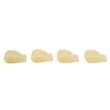
| Agitator slips or barely moves | Agitator drive | Agitator dog 80040 |
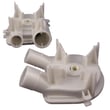
| Won’t drain or drains slowly | Drain system | Water pump WP3363394 |
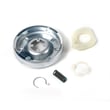
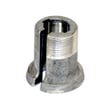
| Won’t spin or has weak spin | Drive system | Clutch 285785 |
Why it matters
If your 11082881110 is within the 10 to 15 year range, fixing a targeted issue (like a worn agitator dog or failing pump) can be a cost-effective way to get more years out of the washer. If multiple major systems are failing at once, replacement usually makes more sense.
Last updated: January 2026
How to reset Kenmore washer model 11082881110 top loader?
To reset your Kenmore top-load washer model 11082881110, disconnect power for about 5 minutes, then restore power and try a normal cycle. This clears many temporary control glitches after a power interruption or a stalled cycle.
Quick reset steps (most common)
- Turn the washer OFF.
- Unplug the power cord from the outlet.
- Wait 5 minutes (this lets the control fully power down).
- Plug the washer back in.
- Set a Normal cycle and press Start.
If it still will not start after a reset
These checks solve the most common “looks dead” or “won’t run” complaints on this style of Kenmore washer.
- Confirm the outlet has power (try a lamp or phone charger).
- Reset the home breaker or GFCI if tripped.
- Make sure the lid is fully closed; a lid switch issue can stop agitation and spin.
- If the washer fills but will not agitate or spin, inspect the drive system; a worn motor coupling is common.
- If the washer will not drain, check for a clog or a failing drain pump.
Parts that commonly relate to “won’t agitate/spin” or “won’t drain”
| Symptom | What it often points to | Example part for this model |
|---|---|---|
| Motor runs, tub does not move | Broken drive connection | Coupling 285753A |
| Washer will not drain or drains slowly | Clogged or failed pump | Water pump WP3363394 |
| Agitator moves poorly or “ratchets” | Worn agitator components | Agitator dog 80040 |
Why it matters
A proper power reset is the fastest way to clear a stuck control state without replacing parts. If the same symptom returns right after the reset, the washer is usually reacting to a real problem (lid switch, drain restriction, coupling, pump) that needs troubleshooting.
Last updated: January 2026
How to unclog drain hose on Kenmore washer?
To unclog the drain hose on your Kenmore washer model 11082881110, we recommend disconnecting the hose, clearing the blockage from both ends, then flushing the hose with hot water to remove soap scum and lint. If draining is still slow, the drain pump is often the next restriction point.
Step-by-step: unclog the drain hose safely
- Unplug the washer to prevent accidental starting.
- Turn off both water supply valves.
- Place towels and a shallow pan under the hose connection.
- Disconnect the drain hose from the washer and from the home drain standpipe or sink.
- Check both ends for lint, coins, socks, or sludge; remove debris by hand or with a small bottle brush.
- Flush the hose with hot water; for buildup, soak the clogged end in hot water mixed with vinegar for about 30 minutes, then flush again.
If it still will not drain
A clog is not always in the hose; it is commonly in the pump inlet, pump housing, or the standpipe.
- Inspect the home drain standpipe for a backup (water should flow freely).
- Check for kinks or a crushed section of hose.
- Listen during drain: a loud hum with little water movement often points to a restriction at the pump.
- If the pump is jammed or leaking, replacement is a common fix: water pump WP3363394.
Quick symptom guide
| What you see | Most likely cause | What to check next |
|---|---|---|
| Tub full of water, no drain | Hose or pump blockage | Hose ends, then pump inlet |
| Drains slowly | Sludge/soap scum buildup | Hose flush, standpipe flow |
| Hums during drain | Pump jammed | Pump impeller area |
| Drains but leaves water | Partial restriction | Hose routing, pump performance |
Why it matters
A restricted drain path can cause long cycle times, poor spin performance, and water left in the tub. Clearing the hose and confirming the pump is moving water protects the drive system and helps prevent repeat clogs.
Last updated: January 2026
How many cubic feet is the Kenmore washer model 11082881110?
Kenmore washer model 11082881110 is a traditional 110-series top-load design; washers in this class run about 3.0 to 3.5 cu. ft. of capacity, with around 3.2 cu. ft. being a common real-world size for load planning.
What that capacity means for everyday loads
Use capacity as a guide for how full the basket should look during washing (not when dry clothes are packed down).
- Fill loosely to about 2/3 full for most mixed loads.
- For towels, load so items can roll over freely during agitation.
- For bulky items, wash one comforter or blanket at a time.
- If the washer goes out of balance often, reduce load size and redistribute.
Quick load-sizing guide (typical for 3.0 to 3.5 cu. ft. top-loaders)
| Load type | Typical “right size” | What to avoid |
|---|---|---|
| Mixed everyday load | Basket about 2/3 full, loose | Packing to the rim |
| Towels | Medium load that tumbles easily | Tight, heavy wad of towels |
| Bulky item | 1 comforter or 1 blanket | Multiple bulky items |
Parts that can affect usable space and rollover
If the washer seems to “hold less” than expected, these parts can change how well items circulate.
- Basket W10389328: the wash basket; dents, wobble, or a replacement basket can change usable volume.
- Washer agitator WP389386: the agitator profile affects rollover and how tightly loads bunch.
- Washer suspension spring WP63907: weak suspension increases off-balance issues that make normal loads feel too large.
Why it matters
Sizing loads to the washer’s practical capacity improves cleaning, reduces out-of-balance spinning, and helps protect drive components such as the clutch and motor coupling.
Last updated: January 2026