Owner’s manual
 Error Codes


Where is the water filter on a GE side by side refrigerator?
On the GE GSHF6KGZBCWW side-by-side refrigerator, the water filter is typically located inside the fresh food (refrigerator) compartment at the upper-left area. You access it by opening the filter housing/compartment and pulling the filter straight out.
- Open the refrigerator (fresh food) door, not the freezer door.
- Look along the upper-left interior wall or ceiling area.
- Find a small filter compartment or twist-in filter head.
- Press the release tab (if your housing has one) or rotate the filter (if it is a twist style).
- Pull the filter out; keep a towel handy for a few drips.
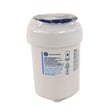
If your ice production or water flow has slowed, a clogged filter is a common cause. For this model, a compatible replacement is the GE refrigerator water filter MWFP. After replacing the filter:
- Run and discard several glasses of water to flush air and carbon fines.
- Check the filter area for leaks.
- Reset the filter indicator (if your dispenser has one) using the steps in the owner's manual.
| Symptom | Common filter-related cause | What to do |
|---|---|---|
| Slow water at dispenser | Filter media restricted | Replace filter, flush lines |
| Small or hollow ice cubes | Low water flow to icemaker | Replace filter, verify supply valve is fully open |
| Bad taste/odor | Filter overdue | Replace filter, flush water |
A properly installed, fresh water filter helps maintain normal water pressure to the dispenser and icemaker, improves taste, and reduces the chance of air pockets that can interrupt ice making.
Last updated: February 2026
Why is my GE refrigerator not dispensing water?
If your GE GSHF6KGZBCWW refrigerator isn’t dispensing water, the most common causes are a clogged water filter, low household water pressure, a frozen water reservoir line, or a failed inlet valve. Start with the filter and supply checks, then move to electrical tests.
- Confirm the water shutoff valve is fully open.
- Verify the supply line isn’t kinked behind the refrigerator.
- Dispense water for 2 to 3 minutes to purge air after a filter change.
- Replace the filter if flow is weak or the filter is overdue (many filters are changed about every 6 months).
- Check for a frozen reservoir line (often happens if the fresh food section is set too cold).
If the quick checks don’t restore flow, these model-compatible parts are common culprits:
- GE refrigerator water filter MWFP (clogged filter restricts flow)
- Refrigerator water valve WR57X33326 (valve not opening to send water to the dispenser)
- Refrigerator water reservoir assembly WR17X11440 (can freeze or restrict flow)
| What you see | Most likely cause | What to do next |
|---|---|---|
| No water, ice maker also not filling | Supply issue or inlet valve | Check shutoff, pressure, then test/replace valve |
| No water, ice maker still works | Dispenser side issue or frozen reservoir | Thaw reservoir, check dispenser switch/wiring |
| Water is slow or sputters | Filter restriction or air in line | Replace filter, purge air by dispensing |
| Hums when dispensing but no water | Frozen line or valve problem | Check for freezing, then test valve |
A restricted filter or failing inlet valve can make the dispenser stop completely and can also reduce ice production. Fixing the water flow early helps protect the valve and keeps the dispenser working normally.
Use the owner's manual for your GE GSHF6KGZBCWW to confirm the correct filter location, filter reset steps (if equipped), and the recommended temperature settings to help prevent reservoir freezing.
Last updated: February 2026
How to defrost GE GSHF6KGZBCWW side by side?
To defrost your GE GSHF6KGZBCWW side-by-side refrigerator, we recommend using a safe manual defrost (power off, doors open, ice melt) unless your owner's manual provides a specific forced-defrost key sequence for your exact control panel.
- Move perishable food to a cooler.
- Turn the refrigerator off at the controls, then unplug the power cord (or switch off the breaker).
- Open both doors; remove bins and shelves as needed for airflow.
- Place towels at the bottom of the freezer and a shallow pan to catch meltwater.
- Let ice melt naturally; use a fan to speed thawing.
- Wipe everything dry, restore shelves/bins, then power back on.
- Do not chip ice with a knife or screwdriver; it can puncture the evaporator.
- Do not use a hair dryer near standing water or plastic liners.
- Do not pour hot water directly onto ice inside the freezer.
Heavy frost usually means the automatic defrost system is not clearing ice from the evaporator.
| Symptom | Most likely area | Parts on this model that often relate |
|---|---|---|
| Freezer cold, fresh food warm | Airflow blocked by frost | Refrigerator evaporator fan motor WR60X10307 |
| Thick frost on freezer back wall | Defrost heat not happening | Refrigerator defrost heater WR51X10055 |
| Frost returns in 3 to 10 days | Defrost sensing/control issue | Refrigerator defrost bi-metal thermostat WR50X10065 |
Defrosting restores airflow across the evaporator coil. If ice builds up again quickly, temperatures drift, the compressor runs longer, and you can lose cooling in the fresh food section first.
Last updated: February 2026
Are GE side by side refrigerators good?
Yes. GE side-by-side refrigerators like model GSHF6KGZBCWW are a solid choice for everyday reliability and easy organization; they typically offer strong shelf adjustability, convenient door storage, and quick access to ice and water, with straightforward serviceability when parts wear out.
A side-by-side design is a good fit when you want freezer access at eye level and predictable storage zones.
- Easy-to-reach freezer shelves and bins
- Narrow door swing compared with many French-door models
- Built-in ice and water convenience (when equipped)
- Simple airflow layout that is usually easy to troubleshoot
- Common replacement parts are widely available
Most side-by-sides share a few compromises that are normal for the design.
| What you want | What to watch for | Practical tip |
|---|---|---|
| Fast ice and cold water | Ice makers can be noisy during harvest cycles | Keep the ice bin seated fully and level |
| Even temperatures | Warm spots can happen if vents are blocked | Avoid packing food tight against air ducts |
| Strong cooling | Fans run more often in hot kitchens | Clean condenser area and keep airflow clear |
These steps prevent many cooling, ice, and water complaints.
- Replace the water filter on schedule; a clogged filter can slow dispensing and reduce ice production (see GE refrigerator water filter MWFP).
- Keep condenser airflow clear; dust buildup makes the compressor and fans work harder.
- If temperatures swing, check for a failing sensor; inconsistent readings can cause uneven cooling (see GE profile refrigerator temperature sensor WR55X10025).
- If frost builds up on the back freezer panel, the defrost system may need attention (see refrigerator defrost heater WR51X10055 and refrigerator defrost bi-metal thermostat WR50X10065).
- Use the settings and care guidance in the owner's manual for your exact control layout and recommended temperatures.
A “good” refrigerator is one that holds safe temperatures consistently and does it efficiently. Basic maintenance (filter changes, airflow, and defrost health) protects food quality, reduces noise, and helps avoid expensive sealed-system strain.
Last updated: February 2026