 Owner’s manual


How do I tell what model Kenmore dishwasher I have?
Your Kenmore dishwasher model number is usually printed on a rating label inside the door area. For Kenmore dishwashers, it often starts with 665; for example, this parts page is for model 66515831791. Use the model number to match the correct parts, cycles, and troubleshooting steps in the owner's manual.
Where to look for the model number label
Check these common spots first (in order):
- Along the inner door frame (left or right side)
- On the top edge of the door (visible when the door is open)
- On the tub wall just inside the door opening
- Near the hinge area (lower left or lower right)
- On the side of the door itself (inside edge)
What the label looks like and what to write down
The label is typically a sticker or metal plate and includes multiple identifiers.
- Model number (the most important for parts lookup)
- Serial number (useful for age and production details)
- Electrical ratings (volts/amps) and sometimes a type or series
Quick ID checklist
| If you see… | It usually means… | What to do next |
|---|---|---|
| A number starting with 665 | Kenmore dishwasher built on the 665 platform | Use the full model number (all digits) for parts |
| Missing or worn label | Label is damaged or covered | Check the top door edge and tub wall again; clean gently |
| Multiple numbers | Model and serial are both present | Record both; use model for parts |
Why it matters
Kenmore dishwashers can look similar across series, but parts like the inlet valve, door latch, spray arm hardware, and racks vary by model. Using the exact model number helps us match the right replacement part the first time.
Helpful tip once you find the model
After you confirm your model, use the troubleshooting section in the owner's manual to narrow symptoms before ordering parts.
Last updated: February 2026
What are common problems with Kenmore dishwashers?
Common problems on Kenmore dishwasher model 66515831791 include not starting, not filling, poor cleaning, spotting/film, long run times, odors, leaks, and draining trouble. Many of these issues trace back to door latching, water supply temperature/pressure, loading and detergent use, or a worn part.
Most common symptoms and what usually causes them
- Won’t start or stops mid-cycle: door not fully closed or latched; power issue; motor overload reset
- Won’t fill: water shut-off valve closed; overfill protector (float) stuck; low water pressure
- Runs too long: incoming water not hot enough; unit extends time while heating
- Dishes not clean: improper loading; water too cool; not enough or wrong detergent; suds slowing spray arms
- Spotting/film: hard water; low water temperature; rinse aid not used; insufficient fill from low pressure
Quick checks we recommend first
- Confirm the door closes firmly and the latch engages; if it feels loose or intermittent, inspect the dishwasher door latch WP3380854.
- Verify the household breaker is on and the dishwasher has power.
- Make sure the water shut-off valve is fully open.
- Check that the overfill protector (float) moves freely; press it down to release if it is stuck.
- Use fresh dishwasher detergent only (never soap or laundry detergent) and load dishes so spray arms can rotate.
Parts that commonly solve these problems (when a part is needed)
| Symptom | Common part to inspect/replace | Example from this model’s parts list |
|---|---|---|
| Won’t start | Door latch | Dishwasher door latch WP3380854 |
| Won’t fill or fills slowly | Water inlet valve | Inlet valve W10844024 |
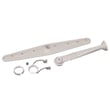
| Poor cleaning | Spray arm and seals | Spray arm WP8268874, dishwasher lower spray arm seal WP3376846 |
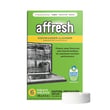
| Odor buildup | Cleaner and maintenance | Glisten W10282479 |
Why it matters
These problems often overlap. For example, low incoming water temperature (the manual calls out 120°F (49°C) minimum) can cause long cycles, poor cleaning, and spotting. Low water pressure can also reduce fill and cleaning performance.
Helpful model-specific guidance
We follow the troubleshooting steps and care recommendations in the owner's manual for Kenmore 66515831791, including checks for door closure, power supply, water shut-off position, float movement, detergent use, and water temperature/pressure.
Last updated: February 2026
Does a Kenmore dishwasher model 66515831791 have a filter?
Yes. Your Kenmore dishwasher model 66515831791 uses an internal soil-removal system (ULTRA WASH) that includes a grinder and module at the bottom of the tub; it functions like a self-cleaning filter system rather than a simple, removable screen. For cleaning and care details, follow the owner's manual.
What “filter” means on this model
On 66515831791, food soil is handled by the ULTRA WASH soil removal system, which is designed to grind and dispose of food particles during the wash.
What you typically will (and will not) see:
- No easy twist-out cylindrical filter like many newer dishwashers
- A bottom area where the ULTRA WASH module and overfill protector sit
- Soil handling done during the cycle by the grinder and pump flow
How to check for a clog or restriction
If you suspect a filter-related issue (poor cleaning, gritty residue, slow drain), we recommend these quick checks:
- Remove the lower rack and look for debris around the bottom intake area
- Check the spray arms for blocked holes and clear them
- Make sure the drain path is clear and the hose is not kinked
- Run a cleaning cycle using glisten W10282479 to help remove buildup
- If you see leaking at the spray arm base area, inspect the dishwasher lower spray arm seal WP3376846
Symptoms and the most likely area to inspect
| Symptom | Most likely area | What to do first |
|---|---|---|
| Grit or food bits left behind | Bottom intake and grinder area | Clear debris; run cleaner |
| Dishes not getting clean | Spray arms, water feed, wash system | Check spray arm holes and loading |
| Standing water after cycle | Drain path | Check drain hose routing and clogs |
| Overfilling or water level issues | Overfill protector/float area | Make sure float moves freely |
Why it matters
Knowing whether your dishwasher has a removable filter changes the maintenance approach. On this Kenmore ULTRA WASH design, performance problems are usually caused by debris in the sump area, blocked spray arms, or buildup, not a filter that needs routine removal.
Last updated: February 2026
Is it worth repairing a Kenmore dishwasher?
Yes, repairing a Kenmore dishwasher is worth it when your Kenmore model 66515831791 has a specific, fixable failure (like a fill, heat, drain, or door-latch issue) and the tub is in good shape; targeted repairs typically cost less than replacement and avoid reinstalling the dishwasher.
Quick way to decide
We use these practical checkpoints to decide whether to repair or replace:
- One clear symptom (won’t fill, won’t drain, won’t heat, won’t latch) points to a repairable part.
- Leaks from hoses, seals, or valves are usually repairable; tub damage is the bigger deal.
- Repeated breakdowns in different systems (fill, wash, heat, drain) points toward replacement.
- Parts cost vs. value: if a single major part is a large share of a new dishwasher’s cost, replacement can make more sense.
- Age and performance: if cycles are long, cleaning is poor, and repairs are stacking up, replacement is often the better long-term choice.
Common repairs that are usually “worth it”
These are frequent, straightforward fixes on many Kenmore dishwashers, including 665-series designs:
| Symptom | Common fix | Example part on this model page |
|---|---|---|
| Dishwasher won’t start or stops mid-cycle | Door won’t latch securely | Dishwasher door latch WP3380854 |
| Not filling or fills slowly | Water inlet valve issue | Inlet valve W10844024 |
| Poor cleaning, weak spray | Spray arm or seal issue | Spray arm WP8268874 or dishwasher lower spray arm seal WP3376846 |
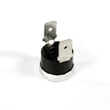
| Water not heating, poor drying | Heater circuit component | Thermostat WP661566 or heater WPW10082896 |
| Not draining well | Drain path restriction or hose issue | Dishwasher drain hose WP3374077 |
Why it matters
A dishwasher that doesn’t fill, heat, or drain correctly can leave dishes dirty, increase cycle time, and strain the wash system. Fixing the root cause restores cleaning performance and helps prevent secondary issues like odors, standing water, or repeated error conditions.
What we recommend before buying parts
Use these steps to avoid replacing the wrong part:
- Check the troubleshooting section in the owner's manual.
- Confirm the symptom: fill problem vs. wash problem vs. drain problem.
- Inspect for simple causes first: kinked drain hose, clogged spray holes, or a door that isn’t closing squarely.
- If you see an error code, match it to the right failure path using Kenmore 665 model dishwasher error codes.
Last updated: February 2026







