Error Codes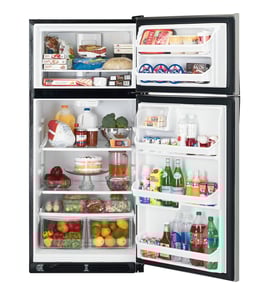



Which is better, top mount or bottom mount refrigerator?
A top-mount refrigerator like the Frigidaire LFHT2117LW8 is usually the better pick if you want lower cost, simpler repairs, and strong efficiency. A bottom-mount is usually better if you want fresh-food items at eye level and easier access to the refrigerator section.
| Feature | Top mount (freezer on top) | Bottom mount (freezer on bottom) |
|---|---|---|
| Everyday access | Freezer is easiest to reach | Fresh food is easiest to reach |
| Typical price | Lower | Higher |
| Repair complexity | Simpler design, fewer high-cost components | More complex layouts are common |
| Organization | Basic shelves and bins | Often more drawers and zones |
| Best for | Budget, reliability, garages or secondary fridges | Heavy fresh-food use, less bending |
- A straightforward, reliable layout with fewer “extras” to maintain
- Lower upfront cost and typically lower repair costs
- Easy freezer access for frozen foods
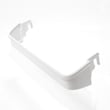
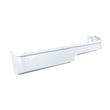
- Simple door storage replacements (for example, a broken bin can be replaced with Frigidaire refrigerator door bin 240337901)
- Fresh-food items at eye level (less bending for daily use)
- More drawer-style organization for produce and deli items
- A freezer that’s easier to organize with pull-out baskets (common on many models)
The “better” style depends on what you open most. If you cook with fresh ingredients daily, bottom-mount convenience is hard to beat. If you want a dependable, cost-effective refrigerator that’s easy to live with and maintain, top-mount designs like the LFHT2117LW8 are a strong long-term value.
- Keep door seals clean and closing tightly
- Avoid overpacking so air can circulate
- Set stable temps (about 37°F fresh food, 0°F freezer)
- Use efficient habits from how to use your refrigerator efficiently
Last updated: February 2026
What is the upper part of a fridge called?
In a top-mount refrigerator like the Frigidaire LFHT2117LW8, the upper compartment is called the freezer. It’s designed to keep foods frozen (typically around 0°F) and is also where ice is made and stored when your unit has an ice maker.
The freezer section is built to maintain sub-freezing temperatures and circulate cold air through the appliance.
Common freezer-related components include:
- Evaporator and airflow components that move cold air
- Defrost system parts that prevent frost buildup
- Door gasket that seals in cold air
- Shelves, bins, and door storage
Here are the most common names customers use for the “upper part” of a fridge.
| What you call it | Common meaning | Where it is on LFHT2117LW8 |
|---|---|---|
| Freezer | Frozen-food compartment | Top |
| Freezer compartment | Same as freezer | Top |
| Upper section | Usually the freezer on a top-mount | Top |
| Fresh food section | Refrigerator compartment | Bottom |
Knowing the correct compartment name helps when you’re troubleshooting cooling issues, ordering parts, or describing a problem to a technician. For example, frost buildup or warm temperatures in the upper section often point to airflow or defrost concerns.
If you’re dealing with cooling or frost issues that seem to involve the upper compartment, these resources and parts are commonly relevant:
- How to fix your evaporator cooling fan
- Refrigerator defrost bi-metal thermostat 5303918202
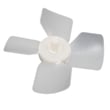
- Refrigerator evaporator fan blade 5308000010
Last updated: February 2026
How do I reset my Frigidaire refrigerator control panel?
For a Frigidaire LFHT2117LW8 top-mount refrigerator, the most reliable control panel reset is a power reset: unplug the refrigerator (or switch off the breaker) for 5 minutes, then restore power and allow the controls a few minutes to reboot. This clears many display and keypad glitches.
- Unplug the refrigerator or turn off the circuit breaker.
- Wait 5 minutes (this lets the control board fully power down).
- Restore power.
- Wait 2 to 5 minutes for the control panel to reinitialize.
- Confirm temperatures are set to typical targets: 37°F fresh food and 0°F freezer.
These checks fix the most common “looks dead” or “buttons don’t work” complaints on top-mount refrigerators.
- Make sure the outlet has power (test with a lamp).
- Check for a tripped breaker or GFCI.
- Open and close the doors firmly; some models ignore inputs if a door switch is stuck.
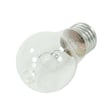
- If the interior light is out, replace the refrigerator light bulb 316538904 and retest the panel.
- If cooling is also weak or noisy, inspect airflow and fan operation; use how to fix your evaporator cooling fan for troubleshooting steps.
| Reset type | What it does | What it will not fix |
|---|---|---|
| Power reset (5 minutes off) | Reboots the control board; clears many temporary faults | Failed control board, broken wiring, bad door switch |
| Temperature change | Restores normal setpoints after a glitch | Cooling system problems (sealed system, compressor issues) |
| Component repair | Replaces the failed part | Not needed if the issue is only a temporary lockup |
A control panel that is locked up can prevent temperature changes and can mask real cooling problems. A proper power reset is the fastest way to separate a temporary electronics glitch from a part failure.
Last updated: February 2026
What's the life expectancy of a refrigerator freezer?
A Frigidaire top-mount refrigerator like model LFHT2117LW8 typically lasts 10 to 15 years, and many top-freezer designs reach the upper end of that range with basic maintenance and good airflow. If cooling performance drops, addressing common wear items early can extend service life.
Top-mount (top-freezer) refrigerators are generally simpler than French door or side-by-side designs, so they often run longer with fewer costly repairs.
| Refrigerator type | Typical life expectancy | Notes |
|---|---|---|
| Top-mount (top-freezer) | 10 to 15 years | Often the longest-lasting mainstream style |
| Side-by-side | 10 to 14 years | More components, more door openings |
| French door | 9 to 13 years | Complex airflow and ice/water features |
| Built-in | 15 to 25 years | Heavier-duty, higher cost to repair |
We see these factors make the biggest difference in real-world longevity:
- Dirty condenser area: heat cannot shed efficiently, so the compressor works harder.
- Poor door sealing: warm air leaks in, causing longer run times and frost issues.
- Overpacking: blocks vents and reduces airflow across the evaporator.
- Warm room temperatures: garages and hot kitchens increase run time.
- Delayed repairs: small issues (fan noise, frost buildup, warm temps) become major failures.
These steps help a LFHT2117LW8 run colder with less strain:
- Keep food from blocking interior air vents.
- Make sure doors close fully and do not bounce open.
- Clean spills quickly to prevent odors and airflow restriction (see how to get rid of refrigerator smells).
- If you notice frost buildup or warm temperatures, check for airflow problems early.
- If the unit runs constantly, verify the door seal is tight and the condenser area is clean.
A refrigerator’s most expensive wear is usually tied to run time: anything that forces longer cycles (air leaks, restricted airflow, poor heat release) accelerates wear on the sealed system and fans. Fixing airflow and sealing issues early is the simplest way to protect the compressor.
Last updated: February 2026
What is the most common problem with Frigidaire refrigerators?
The most common Frigidaire refrigerator problem (including the LFHT2117LW8 top-mount) is a cooling complaint: the fresh food section gets warm, temperatures swing, or the freezer cools better than the refrigerator. The usual causes are restricted airflow, dirty condenser coils, or a defrost issue that lets frost build up and block air movement.
- Refrigerator section warm but freezer still cold
- Frost or ice buildup on the freezer back wall
- Weak airflow from the refrigerator vents
- Food freezing in the refrigerator section (airflow or control issue)
- Unusual fan noise (rattling, buzzing, or intermittent)
- Set temps to typical targets: 37°F for the refrigerator and 0°F for the freezer.
- Make sure vents are not blocked by food packages.
- Clean condenser coils and confirm the condenser fan area is clear.
- Check door seals for gaps, tears, or sections that do not sit flat.
- Look for heavy frost in the freezer; that points to a defrost system problem.
| What you notice | Most likely cause | What to check next |
|---|---|---|
| Freezer OK, fridge warm | Airflow problem | Evaporator fan, blocked vents, frost buildup |
| Heavy frost on freezer wall | Defrost problem | Defrost thermostat, heater circuit, door sealing |
| Warm temps everywhere | Heat not being rejected | Dirty coils, condenser fan, airflow around cabinet |
| Door won’t seal, moisture/frost | Leaking gasket | Inspect and reshape gasket, verify door alignment |
If you confirm a specific failure, these model-matched parts are commonly involved:
- Refrigerator evaporator fan blade 5308000010 (fan noise, weak airflow)
- Refrigerator defrost bi-metal thermostat 5303918202 (frost buildup, defrost failures)
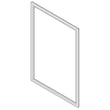
- Universal/multiflex Frigidaire refrigerator door gasket (white) 242193213 (warm fridge, moisture, frost from air leaks)
Cooling problems usually get worse over time. Restoring airflow (fans, vents, defrost) and reducing heat load (clean coils, good door seal) protects food safety, reduces compressor run time, and helps the refrigerator hold steady temperatures.
Last updated: February 2026
Why is my Frigidaire top mount freezer not freezing?
If your Frigidaire LFHT2117LW8 top-mount freezer is not freezing, the most common causes are warm-air leaks at the door gasket, poor airflow from a stalled fan, or a cooling system that cannot shed heat because the condenser area is dirty or blocked. Start with temperature settings and airflow checks first.
- Set the freezer control colder and wait 24 hours to judge results (avoid frequent door openings during this time).
- Make sure food packages are not blocking vents inside the freezer or refrigerator section.
- Confirm the freezer door closes fully and does not pop open.
- Listen for the evaporator fan running when the compressor is on (you may hear a steady fan sound).
- Check for heavy frost on the freezer back wall (a clue of a defrost or airflow problem).
| Location | Normal target | What it means if warmer |
|---|---|---|
| Freezer | 0°F (typical range: -5°F to 5°F) | Freezer not freezing well, ice cream soft |
| Fresh food | 37°F (typical range: 35°F to 40°F) | Food spoils faster, condensation |
Warm air leaks quickly prevent freezing and create frost.
- Inspect the gasket for gaps, tears, or hardened sections.
- Clean the sealing surface with mild soap and water; dry fully.
- If the gasket is damaged or won’t seal, replace it with the correct gasket for your door (for example, the fresh food door uses a universal/multiflex Frigidaire refrigerator door gasket (white) 242193213).
If the evaporator fan is not moving air, the freezer warms up.
- If you hear the compressor but no fan sound, check for ice buildup blocking the fan.
- If the fan blade is broken or loose, replace the refrigerator evaporator fan blade 5308000010.
- Use our how to fix your evaporator cooling fan guide for step-by-step diagnosis.
A solid frost blanket on the freezer back wall often points to a defrost failure.
- A common service part in this circuit is the refrigerator defrost bi-metal thermostat 5303918202.
- A full defrost diagnosis may require electrical testing; schedule service if you are not comfortable using a meter.
A freezer that is not freezing is usually an airflow, sealing, or defrost problem. Fixing the root cause prevents food loss, reduces energy use, and helps protect the compressor from running nonstop.
Last updated: February 2026
What are signs of a failing refrigerator?
A failing Frigidaire LFHT2117LW8 refrigerator usually shows up as poor cooling, temperature swings, unusual noises, frost buildup, or water leaks. If you notice any of these symptoms consistently, troubleshooting early can prevent food spoilage and help you pinpoint whether a door seal, fan, or sealed-system issue is developing.
- Food spoils faster than normal or drinks never get fully cold
- Freezer frost or ice buildup that keeps returning after defrosting
- Loud or new sounds (buzzing, clicking, grinding, or a fan rubbing noise)
- Water pooling under the refrigerator or inside the fresh food section
- Excess condensation on shelves, bins, or packaged food
- The cabinet sides feel unusually hot for long periods
Start with the simplest, most common causes before assuming a major failure.
- Confirm settings: refrigerator about 37°F, freezer about 0°F
- Make sure doors close fully and nothing is blocking the gasket
- Check for heavy dust on the condenser area (restricted airflow raises temps)
- Listen for the evaporator fan; a failing blade can get noisy or stop moving air
- Look for torn, warped, or loose door gaskets that let warm air in
If you suspect airflow problems, our how to fix your evaporator cooling fan guide walks through the typical symptoms and fixes.
| Symptom | Common cause | What to do next |
|---|---|---|
| Warm fridge, freezer OK | Airflow issue, iced evaporator | Check vents, look for frost pattern |
| Warm freezer and fridge | Condenser fan/compressor start issue | Clean condenser area; listen for fan |
| Frost buildup | Door not sealing, defrost issue | Inspect gasket; check defrost components |
| Water leak | Defrost drain issue, drain pan issue | Clear drain path; inspect pan |
These are model-matched examples that commonly tie to noise, frost, or cooling complaints:
- Refrigerator evaporator fan blade 5308000010 (fan noise, weak airflow)
- Universal/multiflex Frigidaire refrigerator door gasket (white) 242193213 (condensation, frost, warm temps)
- Refrigerator defrost bi-metal thermostat 5303918202 (defrost-related frost buildup)
A refrigerator that is struggling to cool runs longer, wastes energy, and can overheat key components like the compressor. Catching a bad door seal, airflow restriction, or defrost problem early is often the difference between a straightforward repair and a much bigger cooling failure.
Last updated: February 2026