Owner’s manual
 View engine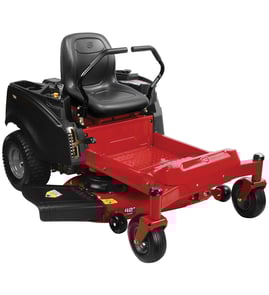





What is the difference between a front engine and rear engine riding mower?
A front-engine riding mower places the engine under the hood ahead of the operator, while the Craftsman 917204140 is a rear-engine riding mower with the engine behind the seat. That layout changes weight balance, turning feel, service access, and how well the mower handles slopes and tight spaces.
Key differences that affect how it mows
- Weight distribution: Rear-engine designs put more weight over the drive wheels, which can help traction on flat ground and during starts.
- Turning and maneuvering: Rear-engine riders are often compact and can feel nimble in tighter yards; front-engine tractors typically feel more stable at speed.
- Deck and visibility: Front-engine tractors often have a more “tractor-like” hood and longer wheelbase; rear-engine riders usually have a shorter overall footprint.
- Service access: Front-engine models often make engine checks easier from the hood area; rear-engine models may require lifting the seat/cover area for access.
- Typical use case: Rear-engine riders are commonly chosen for smaller to mid-size lawns; front-engine tractors are commonly chosen for larger lawns and more attachments.
Quick comparison
| Feature | Front-engine riding mower (lawn tractor style) | Rear-engine riding mower (like 917204140) |
|---|---|---|
| Engine location | In front of operator | Behind operator |
| Overall footprint | Usually longer | Usually shorter/more compact |
| Common strengths | Stability, attachment capability | Maneuverability, compact storage |
| Common tradeoffs | Larger turning radius on some models | Less suited to heavy towing/attachments |
Why it matters
Engine placement affects traction, handling, and what the mower is best at. If you are choosing between styles, match the mower to your yard size, obstacles (trees, beds, gates), and whether you plan to tow or use attachments.
Model-specific tip
For operating and maintenance guidance specific to your Craftsman 917204140, we recommend following the safety and setup details in the Craftsman 917204140 owner’s manual.
Last updated: January 2026
Where do I find the model number on my Craftsman riding lawn mower?
On a Craftsman riding mower like model 917204140, the model number is printed on a product identification label (a sticker or metal tag) attached to the mower’s frame or body. We use that exact model number to match the correct diagrams and replacement parts.
Common places to check on model 917204140
Look for a label in one of these spots (clean off grass and dirt first):
- Under the seat pan or on the seat support area
- On the rear frame near the engine or transaxle
- Along the left or right side of the frame rail
- Near the footrest area or running board
- Under the hood area (if equipped) or near the dash tower
For diagrams that show typical label locations and how the number is formatted, use the 917204140 manual.
What to write down (so parts match correctly)
We recommend recording the information exactly as shown on the label:
- Model number (for the mower itself): 917204140
- Product number (if listed)
- Serial number (helps confirm production run)
- Any engine model/type/code numbers (these are separate from the mower model)
Quick ID guide
| Label item | What it’s used for | Example |
|---|---|---|
| Mower model number | Chassis, deck, steering, electrical parts | 917204140 |
| Engine model/type/code | Engine-specific parts (filters, carb, ignition) | Varies |
| Serial number | Version confirmation | Varies |
Why it matters
Craftsman model numbers can look similar across different riding mowers, but small differences can change belt routing, deck hardware, switches, and safety interlocks. Using the exact 917204140 number helps us keep you from ordering the wrong part.
Last updated: January 2026
What year is Craftsman Model 917?
Craftsman model numbers that start with 917 identify the manufacturer family, not the build year. For your Craftsman 917204140 rear-engine riding mower, the exact year is typically determined from the product’s date code on the ID label, not from “917” alone; see the 917204140 owner’s manual for label location guidance.
How to find the year on model 917204140
On Craftsman riding mowers like model 917204140, the build date is usually shown on the product identification label (often under the seat, on the frame, or near the engine area).
- Locate the ID label and write down the serial number and any date code
- Look for a 6-digit date code format (common examples are MMDDYY or similar)
- If you see a code like 072811, that typically reads as July 28, 2011
- If the label shows only a serial number, the year is still encoded, but the format varies by production run
- Use the manual’s diagrams to confirm you are reading the correct label for the mower (not the engine tag)
What “917” means (and what it does not)
“917” is a Craftsman model prefix used across many riding mower and tractor platforms. It helps identify the product line and manufacturer source, but it does not directly translate to a single year.
| Item on the mower | What it tells you | Use it for |
|---|---|---|
| Model number (917204140) | Exact configuration family | Finding correct parts and diagrams |
| Serial number | Unique unit identifier | Dating the mower, service history |
| Date code (if present) | Build date | Determining the year |
Why it matters
Getting the correct year helps when you are matching parts like belts, pulleys, switches, and safety interlocks to the exact production version. For example, if you are diagnosing PTO engagement issues, confirming the correct lawn tractor pto switch 582107601 fit depends on the exact model and build variation.
Last updated: January 2026
What motor is in a Craftsman riding lawn mower?
The exact engine (motor) model used on Craftsman rear-engine riding mower model 917204140 can vary by production run and is typically confirmed by the engine ID tag on the engine itself. We recommend using the 917204140 manual to locate identification labels and follow safe access steps.
How to identify the engine on model 917204140
Look for the engine manufacturer label (often on the blower housing, valve cover area, or near the starter). Record these items:
- Engine brand (commonly Briggs & Stratton, Kohler, or similar)
- Model number
- Type (or spec) number
- Code (date code)
- Displacement or HP rating (if shown)
Quick checks before you order engine-related parts
Even when the mower model is correct, engine parts must match the engine’s model/type code.
- Match parts to the engine model and type, not just the mower model number
- Clean the label area so numbers are readable
- Compare the engine pulley and belt routing before replacing drive components
- If the mower will not crank, inspect safety interlocks and ignition components first
Common “engine problem” symptoms and likely mower-side causes
Many no-start or no-run complaints are caused by mower controls, not the engine itself.
| Symptom | Often caused by | Example part to check |
|---|---|---|
| No crank | Safety interlock open | Lawn tractor safety switch 539101080 |
| Cranks but won’t start | Ignition switch or wiring issue | Lawn tractor ignition switch 586836702 |
| Engine runs but blades won’t engage | PTO circuit or clutch control issue | Lawn tractor pto switch 582107601 |
Why it matters
The mower model 917204140 identifies the chassis and deck system, but the engine model identifies the correct tune-up and internal engine parts. Confirming the engine ID first helps prevent wrong-part returns and speeds up troubleshooting.
Last updated: January 2026
What are the common problems with Craftsman lawn mowers?
On the Craftsman 917204140 rear-engine riding mower, the most common problems we see are no-start or intermittent starting, poor cutting quality (uneven cut or scalping), and deck-drive issues such as squealing or blades not engaging. Many of these trace back to normal wear items and safety interlocks outlined in the Craftsman 917204140 owner’s manual.
Most common symptoms (and what they usually point to)
- Engine will not crank: weak battery connections, failed safety switch, or ignition switch issue
- Cranks but will not start: stale fuel, restricted fuel flow, or ignition/engine tune-up needs
- Blades will not engage: PTO switch problem, clutch issue, or deck belt/pulley wear
- Uneven cut: deck not level, worn gauge wheels, or bent/worn deck components
- Squealing or vibration from deck: idler pulley/mandrel wear, loose hardware, or belt glazing
Quick checks we recommend first
- Verify the parking brake is fully set and you are seated firmly (seat switch must close).
- Inspect battery terminals and ground cable for corrosion and looseness.
- Confirm fresh fuel and that the fuel valve (if equipped) is open.
- Look for obvious belt damage, debris wrapped around pulleys, or a loose deck idler spring.
- Check that all safety switches click and their connectors are fully seated.
Parts that commonly fail on riding mowers (examples for this model)
If your symptoms match, these model-compatible parts are common culprits:
- Lawn tractor safety switch 539101080 (prevents starting/blade engagement if conditions are unsafe)
- Lawn tractor ignition switch 586836702 (can cause no-crank or intermittent electrical power)
- Lawn tractor pto switch 582107601 (can prevent blades from engaging)
- Lawn tractor ground drive belt, 1/2 x 56-5/16-in 539110411 (slipping or loss of drive)
- Husqvarna lawn tractor blade drive belt, 5/8 x 153-7/8-in 539114557 (blades stop, squeal, or cut poorly)
Symptom-to-system guide
| Symptom | Most likely system | What to inspect first |
|---|---|---|
| No crank | Safety interlocks, ignition | Seat switch, brake switch, ignition switch |
| Blades won’t engage | PTO/clutch/deck drive | PTO switch, belt routing, idlers |
| Uneven cut | Deck setup/wear | Deck level, gauge wheels, baffles |
| Squeal/vibration | Pulleys/mandrels/belt | Idler pulleys, mandrel assembly, belt condition |
Why it matters
Catching wear early helps prevent secondary damage, like a slipping belt overheating pulleys or a loose deck component enlarging mounting holes. On a mower like the Craftsman 917204140, a few quick inspections can often narrow the problem to one system before you buy parts.
Last updated: January 2026
How much oil does a Craftsman 917 take?
For the Craftsman rear-engine riding mower model 917204140, the exact engine oil capacity is determined by the engine specification listed for this mower. We confirm the correct fill amount by following the oil and maintenance specifications in the 917204140 owner’s manual.
How to confirm the correct oil capacity on your mower
Even within the Craftsman “917” model prefix, oil capacity is tied to the specific mower model and engine configuration. For model 917204140, use the mower’s manual specs and the dipstick level check.
- Park the mower on level ground before checking oil
- Let the engine cool so oil drains back into the crankcase
- Use the dipstick to verify the final level (do not rely on “ounces added” alone)
- Add oil slowly, then recheck the dipstick after each small addition
- Stop at the FULL mark; do not overfill
Quick oil-fill procedure (best practice)
- Clean around the dipstick and fill area to keep dirt out.
- Remove dipstick, wipe clean, reinsert fully, then remove to read.
- Add oil in small amounts.
- Recheck until the oil reaches the FULL mark.
What to use as your final “measurement”
| Method | Best for | Notes |
|---|---|---|
| Manual specification | Target fill amount | Use the spec for model 917204140 |
| Dipstick reading | Final confirmation | Most accurate for preventing overfill |
Why it matters
Correct oil level protects the engine from overheating and premature wear. Overfilling can cause smoking and leaks; underfilling can quickly damage internal engine components.
Last updated: January 2026