Owner’s manual
 View engine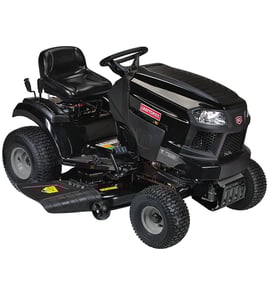




What engine does Craftsman riding mower use?
The Craftsman riding mower model 917270653 uses a 15.5 HP gasoline engine (electric start) as specified in the product documentation. For the exact engine manufacturer and model details, match the engine ID information shown in the 917270653 owner's manual.
How to identify the exact engine on your 917270653
Look for the engine identification label on the engine shroud or valve cover area; it typically lists the maker (often Briggs & Stratton on many Craftsman tractors), the model/type, and code.
- Turn the key off and let the engine cool before inspecting
- Lift the hood and locate the engine ID sticker or stamped tag
- Write down the model, type, and code (or spec number)
- Use those numbers when ordering engine parts like spark plugs, air filters, and carburetor parts
- Keep the ID numbers with your maintenance records for faster troubleshooting
Specs we can confirm from the manual
The manual for model 917270653 includes these engine-related specifications for routine service.
| Item | Specification |
|---|---|
| Horsepower class | 15.5 HP |
| Fuel capacity and type | 1.25 gallons, unleaded regular |
| Engine oil type | SAE 30 (above 32°F), SAE 5W-30 (below 32°F) |
| Engine oil capacity | 3.0 pints |
| Spark plug | Champion RC12YC (gap 0.030 in.) |
Why it matters
The engine maker and model determine the correct tune-up parts and settings. Using the right oil viscosity, spark plug, and maintenance schedule helps starting, power, and transaxle-friendly operation.
Last updated: January 2026
Where can I find my lawn mower engine model number?
On the Craftsman riding lawn tractor model 917270653, the engine identification numbers are typically stamped on the engine itself, most often on the blower housing (the top shroud/cover) or near the valve cover area. Use the 917270653 owner's manual to confirm the exact engine family and where to access it safely.
Where to look on the engine
Check these common locations first (with the engine off and cool):
- Top engine shroud/blower housing: often has a stamped tag or label
- Valve cover area: sometimes stamped into metal or printed on a label
- Near the starter or flywheel screen: label may face the frame and be easier to see with a flashlight
- On the side of the engine block: stamped numbers can be partially hidden by dirt or guards
- Under a removable plastic cover: some engines place the ID under a snap-on shroud
What numbers you need (and why)
For parts and service, we use the engine’s:
- Model number
- Type number
- Code (date) number
On this tractor, the manual identifies the engine as a Briggs & Stratton model 28U707, type 1174-E1; matching all three numbers helps ensure you get the correct tune-up and fuel system parts.
Quick ID checklist
Before you write the numbers down:
- Park on a flat surface, set the parking brake, and remove the key
- Let the muffler and engine cool completely
- Wipe the ID area clean so stamped characters are readable
- Use a flashlight and take a photo for backup
Tractor model vs. engine model (what’s different?)
| Item | Example for this unit | Used for |
|---|---|---|
| Tractor model number | 917270653 | Mower deck, belts, steering, chassis parts |
| Engine model/type | 28U707 / 1174-E1 | Engine-specific parts (carburetor, ignition, gaskets) |
Why it matters
Engine model and type numbers prevent wrong-part returns, especially for ignition keys, fuel line components, and engine gasket sets that can vary within the same tractor series.
Last updated: January 2026
Is it worth replacing a lawn mower engine?
Replacing the engine on a Craftsman 917270653 riding mower is worth it when the mower deck, transaxle, and steering are in good shape and the total engine swap cost stays well below the cost of a comparable replacement tractor. If the chassis is worn out or multiple major systems need work, replacing the mower is the better value.
Quick decision checklist
- The deck shell is solid (no cracks/rot) and blades engage normally
- The tractor stops properly and the brake can be adjusted to spec
- The mower deck drive system is serviceable (belt, idlers, mandrels)
- You can do the labor yourself or have a shop you trust
- The engine replacement cost is comfortably under about half the price of a comparable new tractor
What to inspect on model 917270653 before you buy an engine
Use the 917270653 owner's manual to confirm safety checks and basic service procedures, then inspect these high-cost areas:
- Operator presence and interlock system: engine should only start with clutch/brake fully depressed and PTO disengaged; leaving the seat with PTO engaged should shut the engine off
- Brake performance: stopping distance and parking brake hold
- Mower deck condition: excessive vibration, loud bearing noise, or wobble at the blade area can point to mandrel wear
- Deck drive belt and pulleys: glazing, cracking, slipping, or a belt that jumps grooves
- Blade hardware and torque: blade bolts must be tightened securely (the manual calls out 27 to 35 ft-lbs)
Common “while you’re in there” deck parts
If the deck has vibration, poor cut, or belt issues, it often makes sense to refresh wear items at the same time as an engine swap:
| Symptom | Likely deck-related cause | Example part for this model |
|---|---|---|
| Blades won’t stay engaged | Worn belt or pulley issue | V-belt 532138255 |
| Excessive vibration at deck | Worn mandrel/bearing | Husqvarna lawn tractor mandrel assembly 532130794 |
| Poor mulching/cut quality | Dull or incorrect blade | Husqvarna lawn tractor mulching blade, 21-in 532134149 |
Why it matters
An engine swap only pays off when the rest of the tractor is safe and mechanically sound. If the deck drive, mandrels, or braking system also need major work, the “engine plus everything else” total can quickly exceed the value of the mower.
Last updated: January 2026