Installation guide
 Owner’s manual
 Error Codes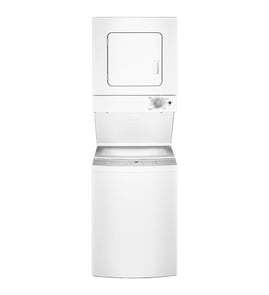



What are the most common issues with 41797822700?
For the Kenmore 41797822700 stacked laundry center, the most common problems are dryer no-heat or overheating, dryer noise from drum support wear, washer not draining, and washer not spinning. These issues usually trace to airflow restrictions, worn drum support parts, or a failing drain pump.
Common symptoms and what they usually mean
- Dryer runs but no heat: heating circuit safety parts tripped, restricted venting, or a failed thermostat/limiter
- Dryer overheats or shuts off: clogged lint path, crushed vent, or a high-limit thermostat opening
- Squealing, scraping, or thumping in dryer: worn drum bearing, glide, or support shaft
- Washer won’t drain: blocked pump, clogged hose, or a failing drain pump
- Washer won’t spin or spins weakly: worn drive belt, load imbalance, or drive system wear
Parts that commonly fix these problems
If your symptoms match, these model-compatible parts are frequent solutions:
| Symptom | Common part to check | Example part on this model page |
|---|---|---|
| Dryer noise | Drum support and bearing surfaces | Dryer drum bearing 131825900 |
| Dryer overheating | High-limit safety control | Kelvinator dryer high-limit thermostat 3204267 |
| Dryer no heat (safety open) | Thermal safety device | Dryer thermal limiter 134120900 |
| Washer not draining | Pump and drain path | Washer drain pump 137221600 |
| Washer not spinning | Belt drive | Electrolux washer drive belt 134511600 |
Quick checks we recommend before replacing parts
- Clean the lint filter and confirm strong airflow at the outside vent hood
- Inspect the vent duct for kinks, crushing, or heavy lint buildup
- Check the washer drain hose for clogs and proper standpipe height
- Listen for grinding or squealing that changes as the dryer drum turns
- Unplug power before opening panels; shut off water before hose or pump work
Why it matters
Airflow and drum support issues can cause long dry times, overheating, and premature wear. Drain and belt problems can leave water in the tub, stop the spin cycle, and strain the drive motor.
For model-specific access steps, wiring references, and troubleshooting flowcharts, use the owner's manual.
Last updated: March 2026
What is the cubic feet capacity of a Kenmore washer model 41797822700?
The washer in Kenmore stacked laundry center model 41797822700 has a 3.9 cu. ft. wash capacity. Use the capacity to size loads correctly so the washer cleans well and the stacked electric dryer can dry efficiently; see the 41797822700 owner's manual for operating guidance.
What 3.9 cu. ft. means for everyday loads
A 3.9 cu. ft. washer is a full-size capacity for a 27-inch laundry center. Use these practical guidelines:
- Load loosely; keep items below the top of the basket so they can tumble and rinse
- For towels and jeans, fill the basket about 3/4 full
- For bulky items (comforter, blankets), wash one large item at a time
- If the load is unbalanced during spin, redistribute items and restart the spin
- Use the correct detergent amount to prevent oversudsing and poor rinsing
Quick capacity comparison
| Washer category | Typical capacity | Where 41797822700 fits |
|---|---|---|
| Compact 24-inch washer | 1.5 to 2.4 cu. ft. | Larger than compact |
| 27-inch laundry center washer | 3.5 to 4.0 cu. ft. | 3.9 cu. ft. |
| Large-capacity top-load washer | 4.5 to 5.5+ cu. ft. | Smaller than large-capacity |
Why it matters
Correct capacity helps prevent overloading, which reduces cleaning performance, increases vibration during spin, and can add wear to drive components such as the washer drive belt 134511600. It also helps you choose the right cycle and water temperature for better results.
Last updated: February 2026
What is the life expectancy of a Kenmore washer?
Most Kenmore washers typically last 10 to 15 years with normal household use and basic maintenance; for the Kenmore 41797822700 stacked laundry center, following the care and operating steps in the 41797822700 owner's manual helps you get the full expected lifespan.
Typical lifespan and what affects it
A washer’s life depends more on use and upkeep than the brand badge. The biggest factors are load size, installation, and how quickly small issues are corrected.
- Load habits: frequent overloading shortens motor, belt, and suspension life
- Drain and spin performance: slow draining or off-balance spinning increases wear
- Detergent use: too much detergent can cause residue and odors that lead to repeat cleaning cycles
- Ventilation and moisture control: high humidity can accelerate corrosion in a laundry area
- Timely repairs: replacing a worn belt or pump early prevents bigger failures
Quick maintenance checklist (high impact)
Use these as your baseline routine for a stacked laundry center like model 41797822700:
- Keep loads balanced and avoid stuffing the tub
- Check pockets and remove heavy items that can damage the basket
- Inspect fill hoses periodically and replace if cracked or bulging
- Clean the washer area so lint and dust do not build up around components
- If the washer stops from overheating, let it cool; the motor overload protector can allow a restart after a cool-down period
Common wear items and what they usually mean
| Symptom | Often related to | What to do next |
|---|---|---|
| Won’t drain or drains slowly | Drain pump or drain path | Check for clogs; consider washer drain pump 137221600 if the pump is failing |
| Won’t spin or struggles under load | Drive belt or motor load | Inspect belt condition; replace if glazed or cracked |
| Stops mid-cycle then runs later | Motor overheating protection | Reduce load size, improve airflow around unit, re-test |
Why it matters
A washer that is maintained and not overloaded reaches its normal service life more consistently, and it reduces secondary damage to parts like the drive system and drain components.
Last updated: February 2026