 Installation guide
 Owner’s manual
 Error Codes




Does the PDT750SSF7SS have a stainless steel tub?
Yes. The GE PDT750SSF7SS dishwasher has a stainless steel tub and a stainless steel inner door; minor scratches or dents in the stainless surface will not rust or corrode during normal use. For model-specific care details, follow the PDT750SSF7SS owner’s manual.
How to confirm what “stainless” refers to on this model
GE uses the model number ending to identify the exterior door panel finish, which is separate from the tub material.
- If the model number ends in SS, it indicates a stainless steel door panel finish.
- The tub and inner door are described as stainless steel in the care and cleaning section.
- The tub material does not change how you load racks, but it does affect cleaning and appearance.
| Area of dishwasher | What “stainless” means | Where to verify |
|---|---|---|
| Tub and inner door | Stainless steel construction | PDT750SSF7SS owner’s manual |
| Exterior door panel | Finish depends on last letters of model number (SS = stainless) | PDT750SSF7SS owner’s manual |
Why you may still see water at the end of a cycle
A small amount of water left in the bottom after a cycle is common and does not indicate the tub material.
- Condensation and residual rinse water can remain after drying.
- Opening the door after the cycle helps moisture escape.
- If water is pooling deeply, check for a drain issue (filter, drain hose routing, disposer plug).
Why it matters
A stainless steel tub is durable, resists rust and corrosion, and typically holds heat well for drying performance. It also changes which cleaners you should use to avoid dulling or scratching the interior.
Last updated: January 2026
Is GE profile considered high end?
Yes. GE Profile is generally considered GE’s higher-end line; it typically adds more premium design, features, and performance options than standard GE models. For your GE dishwasher model PDT750SSF7SS, the exact feature set is best confirmed in the PDT750SSF7SS owner's manual.
What “high end” usually means for GE Profile
In practical terms, GE Profile appliances are positioned above GE’s core lineup and often include upgrades such as:
- More advanced wash and dry options (cycle and sensor features)
- Quieter operation compared to many entry-level models
- More premium finishes and control styling
- More convenience features (rack adjustability, indicator lights, specialty cycles)
- More emphasis on fit and finish
How to tell where your dishwasher sits
For a dishwasher like the GE PDT750SSF7SS, we recommend comparing these items:
- Cycle selections and options (AutoSense, Heavy, Normal, etc.)
- Drying features (heated dry, sanitize options, rinse aid indicator)
- Interior materials (stainless steel tub and inner door are common on higher-tier models)
- Noise rating (lower dBA is typically more “premium”)
- Control style and indicators
Quick comparison guide
| Line | Typical positioning | What you usually get |
|---|---|---|
| GE (standard) | Mid-range | Core cycles and features |
| GE Profile | Higher-end | More features, quieter designs, upgraded styling |
| GE Cafe / Monogram | Premium | Luxury styling and higher-end design focus |
Why it matters
Knowing the product tier helps set expectations for cycle length, noise level, and feature availability. It also helps when choosing compatible replacement parts and following the correct operating and care steps for your specific dishwasher.
Last updated: January 2026
Can a clogged drain cause an FTD error?
Yes. On the GE PDT750SSF7SS dishwasher, an FTD (fail to drain) error commonly happens when water cannot pump out due to a clog in the drain path, such as the air gap, disposer connection, or drain hose.
What to check first (fast, common fixes)
- Turn the dishwasher off, then check and clean the air gap (if your installation has one).
- If the dishwasher drains into a garbage disposer, run the disposer and confirm the disposer drain plug was removed.
- Inspect the sink drain; if the sink is slow to drain, the dishwasher can back up too.
- Look for kinks, pinches, or a sagging section in the drain hose routing.
- Confirm the drain setup matches the required method for your home (air gap required in some setups).
Drain setup details that can trigger drain problems
Your installation matters as much as the dishwasher itself. The installation instructions note key limits and requirements:
| Item | Typical requirement | Why it matters |
|---|---|---|
| Max distance to drain | 15 ft | Longer runs can reduce drain flow |
| Air gap requirement | Needed if waste tee/disposer connection is under 18 in above the floor (or if local code requires it) | Prevents siphoning and backflow |
| Disposer connection | Drain plug must be removed | Leaving the plug in blocks draining |
For diagrams and the approved drain methods, use the installation guide.
Parts that can be involved if clearing clogs does not fix it
If the drain path is clear and the dishwasher still will not drain, these model-compatible parts are commonly involved in drain-related symptoms:
- Dishwasher drain hose WD24X10062 (cracked, kinked, or internally restricted)
- Dishwasher float switch WD21X10519 (can affect fill and drain behavior if stuck or faulty)
Why it matters
A dishwasher that cannot drain can leave standing water in the tub, cause poor cleaning, and may stop mid-cycle. Fixing the drain path (air gap, disposer connection, hose routing) is the most direct way to clear an FTD condition.
For additional code explanations and display behavior, check the GE electronic dishwasher error codes.
Last updated: January 2026
What are the most common problems with GE dishwashers?
The most common problems we see on GE dishwashers like model PDT750SSF7SS are not draining, not starting, leaking, poor cleaning, and poor drying. Many of these issues trace back to routine maintenance (filters, air gap), door-latch closure, or a fill and drain problem.
Most common symptoms and what usually causes them
- Won’t start or beeps: door not fully closed or cycle interrupted; the manual notes beeping can occur when the door is left open during operation.
- Not draining: clogged filters, blocked air gap (if installed), kinked drain hose, or a drain restriction.
- Leaking: tub gasket wear, loose hose connections, or a leak detection event that cancels the cycle.
- Dishes not getting clean or feel gritty: filters need cleaning; spray arm flow can be reduced by debris.
- Not drying well: low rinse aid, incorrect detergent amount, or cycle selection.
Quick checks we recommend first (before replacing parts)
- Clean the filters; GE recommends inspecting and cleaning periodically (often about every other month, depending on use). See the PDT750SSF7SS owner’s manual.
- If you have an air gap, clean it (cap and passage can clog and block draining).
- Confirm the door closes firmly and latches every time.
- Use automatic dishwasher detergent only; wrong detergent can cause suds and performance issues.
- Refill rinse aid and wipe up any spills immediately.
Parts that commonly solve these problems on PDT750SSF7SS
| Symptom | Common part to check | What it affects |
|---|---|---|
| Won’t start, stops mid-cycle | GE dishwasher door latch lock WD21X10490 | Door-closed signal and safe operation |
| Overfilling or odd fill behavior | Dishwasher float switch WD21X10519 | Water level sensing |
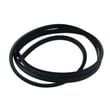
| Leaks at the tub perimeter | Dishwasher tub gasket WD08X23477 | Door-to-tub sealing |
| Not draining, water left in bottom | Dishwasher drain hose WD24X10062 | Drain path to disposer or drain |
Why it matters
These “common problems” often come from airflow, water flow, or door closure. Keeping filters clean and ensuring proper draining prevents gritty dishes, odors, and cycle interruptions, and it reduces strain on the pump and control system.
Last updated: January 2026





