Error Codes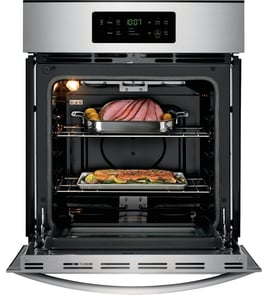


Can you still buy wall ovens?
Yes. You can still buy new wall ovens, and they remain a common choice for kitchen remodels and replacements. For an older built-in model like the GE JTP45BW2BB wall oven, we also support ongoing ownership by offering replacement parts when you need a repair.
What “buying a wall oven” usually means
Wall ovens are sold as complete appliances (single or double ovens) in standard cutout sizes, and they are typically hardwired into a dedicated circuit.
Common options you will see when shopping:
- Single wall oven vs. double wall oven
- Electric vs. gas (JTP45BW2BB is electric)
- Convection vs. standard bake
- Self-clean vs. manual clean
- Finish options such as stainless steel, black, or white
If you already own a wall oven, repairs often make sense
If your GE JTP45BW2BB is not heating correctly, overheating, or showing temperature swings, a repair is often straightforward and cost-effective.
Parts that commonly relate to heating and temperature complaints:
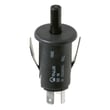
- Wall oven temperature sensor WB23X5340 (helps the control regulate oven temperature)
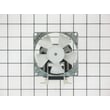
- Wall oven cooling fan assembly WB26K5061 (helps manage cabinet and control area temperatures)
Quick symptom-to-part guide
| Symptom | Commonly related part | What you may notice |
|---|---|---|
| Oven temperature is inaccurate | Temperature sensor | Food undercooks or overcooks |
| Oven shuts down or runs hot around controls | Cooling fan assembly | Hot trim area, fan noise changes |
| Door will not stay aligned or closes poorly | Hinge assembly | Uneven door gap, heat loss |
Why it matters
Wall ovens are designed to last a long time, and parts support helps you keep an existing built-in oven running without changing cabinetry or electrical connections.
Last updated: January 2026
What is the error code F9 on a GE wall oven?
On the GE JTP45BW2BB wall oven, an F9 error code points to a door lock or door latch circuit problem. This usually shows up when the oven thinks the door lock is stuck, not moving, or not being sensed correctly (often around self-clean).
What to check first (safe, quick steps)
- Press Clear/Off and let the oven sit for 2 to 5 minutes, then try Bake.
- If F9 appeared during self-clean, let the oven cool completely; the lock can stay engaged until it cools.
- Verify the door is fully closed and nothing is obstructing the latch area.
- Turn off power at the breaker for 1 minute, then restore power and retest.
- If the door is locked and won’t open, do not force it; forcing can bend the latch mechanism.
Common causes of F9 on GE wall ovens
- Door lock motor not moving as commanded
- Door lock switch not changing state (control never “sees” lock/unlock)
- Wiring connection issue at the latch assembly or control
- Control board logic detecting an out-of-range latch signal
Parts that are often involved
If troubleshooting points to the lock mechanism itself, the lock motor assembly is a common suspect on many GE wall ovens.
| Symptom | Most likely area | What it suggests |
|---|---|---|
| F9 only during self-clean | Door lock system | Lock not reaching locked position |
| Door stays locked after cooling | Lock motor or switch | Lock not returning to unlocked |
| F9 appears immediately on start | Switch signal or wiring | Control sees invalid latch state |
If you’re seeing temperature-related symptoms along with error codes (uneven baking, overheating, long preheat), also check the oven temperature sensor because incorrect temperature feedback can complicate diagnostics; see wall oven temperature sensor WB23X5340.
Why it matters
The oven uses the door lock circuit as a safety system, especially for self-clean. When the control can’t confirm the correct lock position, it stops operation and posts F9 to prevent unsafe heating.
Related help: GE wall oven error codes.
Last updated: January 2026
What voltage does a wall oven use?
Most GE electric wall ovens like model JTP45BW2BB are designed for a 240-volt circuit, but many homes supply 208V, 220V, or 240V. A wall oven rated for 240V typically operates normally on 208V or 220V, with slightly reduced heating performance at 208V.
What to expect in a typical home setup
- 240V is the most common nominal rating for electric wall ovens.
- 208V is common in some condos and apartments (often from 3-phase service).
- 220V is an older “nominal” label; many people use it interchangeably with 240V.
- If your supply is 208V, preheat and bake times can be longer.
- The oven still needs the correct wire size, breaker, and junction box for the circuit.
Quick comparison: 208V vs 240V
| Supply voltage | Where it’s common | What you’ll notice |
|---|---|---|
| 240V | Most single-family homes | Normal preheat and bake performance |
| 208V | Many apartments/condos | Slower preheat, slightly less heating power |
How to confirm what your oven is actually getting
- Check the breaker (many wall ovens use a dedicated 2-pole breaker).
- Use a multimeter to measure voltage at the junction box (L1 to L2).
- If you are unsure or readings are unstable, have an electrician verify the supply.
- If the oven is not heating correctly, check common heat-related components such as the wall oven temperature sensor WB23X5340.
Why it matters
Correct voltage helps your GE wall oven heat properly and prevents nuisance issues like slow preheating, weak broiling, or temperature swings that can look like a control or sensor problem.
Last updated: January 2026
Are all 24 inch wall ovens the same size?
No. “24-inch wall oven” is a nominal size class, not a guarantee of identical cutout, depth, or trim overlap. Also, GE model JTP45BW2BB is not a 24-inch wall oven; it fits the larger 30-inch class, so you must size by the exact cutout specs for the oven you’re installing.
What “24-inch” means in the real world
Manufacturers label ovens by a nominal width, but cabinet cutout requirements vary by design, insulation, and trim.
- Overall width and trim can be wider than the cabinet opening
- Cutout height varies by single vs. double ovens
- Depth varies with cooling airflow and wiring clearance
- Mounting points and trim overlap differ by brand
Typical 24-inch vs. 30-inch wall oven sizing (quick comparison)
Use this as a planning guide; always confirm the exact cutout for your specific model.
| Size class | Typical cabinet cutout width | Typical cutout height | Typical cutout depth |
|---|---|---|---|
| 24-inch wall oven | About 22 1/2 to 24 in. | About 27 to 29 in. | About 22 to 24 in. |
| 30-inch wall oven (like JTP45BW2BB class) | About 28 1/2 to 30 in. | Varies widely (single vs. double) | About 23 to 25 in. |
How we recommend measuring before you buy or swap
These steps prevent fit problems and rework.
- Measure cutout width, height, and depth in three spots (top, middle, bottom)
- Check that the oven door can open fully without hitting adjacent cabinets
- Confirm the junction box location will not block the oven body
- Verify the circuit matches the oven rating (most electric wall ovens use 240V)
- Confirm trim overlap will cover any gaps around the cutout
Why it matters
Even a 1/4-inch mismatch can stop the oven from sliding in, leave visible gaps, or restrict airflow. Correct sizing protects the cabinet, supports proper cooling, and helps the oven bake evenly.
Related repair note for GE wall ovens
If your GE wall oven is baking unevenly after installation, temperature sensing is a common cause. The wall oven temperature sensor WB23X5340 is the part used to monitor oven temperature on many GE designs.
Last updated: January 2026