Owner’s manual

Where to find model number on Craftsman Wet Dry Vac?
On the Craftsman wet/dry vacuum model 113177778, the model and serial numbers are located on the handle. We recommend writing both down and keeping them in a safe place so you can match the correct repair parts and accessories later; see the 113177778 owner's manual.
Where to look on the vacuum
Check these common label locations first (starting with the correct spot for this model):
- Handle area: look for a sticker or plate that lists MODEL NO. 113.177778 and the serial number
- The label may be on the back side of the handle where it is protected from wear
- Wipe dust off the handle with a dry cloth so the print is readable
- Use a flashlight; the label text can be small
- Record the serial number too; it helps confirm production details when ordering parts
What the model number helps you do
Having the exact model number (and serial number) prevents mismatches when you shop or troubleshoot.
| What you need | Why it matters | Example for this vacuum |
|---|---|---|
| Model number | Identifies the correct parts list and diagrams | 113177778 |
| Serial number | Helps narrow variations within the same model | Found on the same handle label |
Why it matters
Wet/dry vac parts and accessories (like filters, hoses, and nozzles) often look similar across Craftsman models but fit differently. Using the handle label information helps ensure you get parts that match 113177778 the first time.
Last updated: February 2026
How do you remove the filter from a Craftsman wet dry vac?
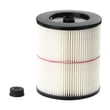
On the Craftsman wet/dry vacuum model 113177778, we remove the filter by turning the vacuum OFF, then unscrewing the filter nut on the filter cage, lifting off the filter plate, and lifting the filter straight off for cleaning or replacement (do not remove the filter cage).
Filter removal steps (model 113177778)
- Unplug the wet/dry vacuum (safety first).
- Remove the power head (motor lid) from the drum if needed for access.
- Locate the filter nut on the end of the filter cage.
- Unscrew the filter nut.
- Remove the filter plate.
- Lift the filter off the filter cage.
Important safety and performance notes
- Keep the filter cage installed; it helps protect fingers from the blower wheel.
- Reinstall the filter before picking up dry debris; running without a filter can damage the blower wheel and motor.
- For large liquid pickup, we recommend removing the filter to prevent saturation and exhaust misting.
Quick guidance: dry pickup vs. liquid pickup
| What you are vacuuming | Filter installed? | Why |
|---|---|---|
| Dry debris and dust | Yes | Reduces leaks and protects the motor/blower |
| Small amounts of liquid | Usually yes | Filter can stay in place for minor liquid pickup |
| Large amounts of liquid | No | Prevents filter saturation and misting |
Why it matters
Removing the filter the right way prevents damage to the filter cage and helps maintain suction. A clean, properly installed filter also reduces dust leaks and protects the motor during dry material pickup.
For diagrams and the exact filter assembly layout, use the 113177778 owner’s manual.
Last updated: February 2026
How to empty a Craftsman vacuum?
To empty your Craftsman wet/dry vacuum model 113177778, unplug it first, then drain liquids using the drain cap or remove the power assembly and dump the drum into a proper waste container. Follow the steps and safety notes in the 113177778 owner's manual.
Steps to empty the drum (dry debris or mixed pickup)
- Unplug the power cord before you start.
- Pull the flexible latches outward on both sides to release the lid.
- Lift the power assembly up and away from the drum.
- Set the power assembly upside down on a clean surface.
- Dump the drum contents into an appropriate waste container.
If you picked up liquid
For liquid cleanup, we recommend using the drain first because it is safer and easier than lifting a full drum.
- Unplug the vacuum.
- Unscrew the drain cap.
- Lift the opposite side of the drum slightly to pour out the liquid.
- If the float shuts off airflow (airflow stops and motor pitch rises), turn the vacuum off, unplug it, and empty the drum.
Safety and performance tips
- Do not lift a vacuum that is heavy with liquid or debris; scoop out or drain enough to lift comfortably.
- Keep the filter correctly positioned for dry pickup to reduce leaks and protect the vacuum.
- Empty the drum and clean the filter more often when picking up very fine dust.
- Dry the filter after liquid pickup to help prevent mildew and protect the filter.
Quick reference
| What you picked up | Best way to empty | Filter note |
|---|---|---|
| Dry debris | Remove power assembly and dump drum | Filter must be dry for dry pickup |
| Small amount of liquid | Drain cap or remove power assembly | Filter can stay in place |
| Large amount of liquid | Drain cap first | Remove filter to reduce misting |
Why it matters
Emptying the drum the right way helps prevent back strain, protects the motor from running with the float raised, and keeps suction strong by avoiding a clogged or wet filter.
Last updated: February 2026
Do shop vac filters fit Craftsman?
Some Shop-Vac brand filters can fit Craftsman wet/dry vacuums, but fit depends on the filter’s mounting style and size, not the brand name. For Craftsman model 113.177778, match the filter type listed in the 113177778 owner's manual to the filter you are buying.
What fits Craftsman 113.177778 (from the manual)
This Craftsman 16-gallon wet/dry vacuum uses a paper pleated filter as the standard dry-pickup filter.
Common filter options called out for this model:
- 9-17816: paper pleated filter (standard)
- 9-17918: high efficiency filter (better for very fine dust)
How to confirm a Shop-Vac filter will fit
Use these checks before you buy:
- Mounting method: does it use the same center mount and retainer style as your Craftsman?
- Diameter and height: compare the cartridge dimensions to your current filter
- Vac size class: many 16-gallon units use larger cartridges than compact vacs
- Pickup type: dry fine dust needs a clean, dry filter; wet pickup may require removing the filter for large amounts
- Connection size: accessories for this model are commonly 2-1/2 inch (helpful when matching related attachments)
Dry vs. wet pickup filter rules (why fit is not the only issue)
Using the right filter the right way prevents clogs and protects the motor.
| Task | Filter installed? | Why |
|---|---|---|
| Dry debris and dust | Yes | Reduces leaks and protects the motor |
| Very fine dust | Yes (high efficiency preferred) | Captures finer particles, maintains performance |
| Small liquid pickup | Optional | Filter can stay in place for small amounts |
| Large liquid pickup | No (remove it) | Prevents saturation and exhaust misting |
Why it matters
A “universal” filter that sort of fits can leak dust, clog quickly, or restrict airflow. Matching the correct filter style for Craftsman 113.177778 keeps suction strong and helps avoid motor damage.
Last updated: February 2026
Can you vacuum up water with a Craftsman 2.5 HP Shop Vac?
Yes. The Craftsman wet/dry vacuum model 113.177778 is designed to pick up liquids as well as dry debris; use the correct setup for liquid pickup and stop to empty the drum when the float shuts off airflow (details in the 113177778 owner's manual).
How to vacuum water safely
- Turn the vacuum OFF before changing setups.
- For small amounts of water, you can usually leave the filter installed.
- For large amounts of water, remove the filter to prevent it from saturating and causing exhaust misting.
- Watch for the float shutoff; when airflow stops and motor pitch rises, turn the vac off, unplug it, and empty the drum.
- After wet pickup, dry the filter to help prevent mildew and protect the filter media.
Quick setup guide (small vs. large water pickup)
| Task | Filter position | What to watch for |
|---|---|---|
| Small spills, damp carpet, light water extraction | Filter can stay in | Reduced suction as drum fills |
| Large water pickup (standing water) | Remove filter | Float shutoff, exhaust misting if filter left in |
Why it matters
Using the right wet pickup setup protects the motor airflow path, reduces mess from misting at the exhaust, and helps your Craftsman 113177778 maintain strong suction when you switch back to dry vacuuming.
Last updated: February 2026
What is the list of vacuum cleaner parts?
For the Craftsman wet/dry vacuum model 113177778, the parts and accessories list centers on the power assembly (motor and switch), drum and drain components, hose and wands, and cleaning nozzles. Your exact included items and optional attachments are shown in the 113177778 owner's manual.
Common parts and accessories you will see
These are the most common wet/dry vacuum components customers look for when maintaining or troubleshooting performance:
- Power assembly (motor housing, on/off switch, power cord)
- Filter (paper pleated style; optional high-efficiency filter is often available)
- Drum (tank) and drum drain parts
- Hose (2-1/2 inch diameter is common on this model family)
- Extension wands
- Utility nozzle, dry nozzle, wet nozzle (squeegee style)
Model 113177778 accessory list (from the manual)
The manual for this 16-gallon Craftsman wet/dry vac lists these common attachments and add-ons:
| Accessory type | Examples listed for this model | What it’s used for |
|---|---|---|
| Hoses | 2-1/2" x 7' hose, Pos-I-Lock hose | General pickup, better hose retention |
| Nozzles | Utility nozzle, wet nozzle, dry nozzle, blower nozzle | Floors, liquids, dry debris, blowing |
| Tools/brushes | Crevice tool, floor brush, dusting brush, car nozzle | Tight spaces, wide areas, detailing |
| Other | Drum liners, inflator nozzle | Easier cleanup, inflation tasks |
Why it matters
Using the right part or attachment helps protect the motor and improves suction. For example, the manual notes the filter must be installed correctly to reduce leaks and prevent damage, and a dry filter is needed for dry pickup.
Quick safety reminders when choosing parts
- Use the vacuum only as described in the manual and use recommended accessories.
- Do not vacuum flammable liquids, explosive dust, or hot ashes.
- Wear eye protection; utility vacs can blow debris.
Last updated: February 2026
Can I vacuum drywall dust with a shop vac?
Yes, you can vacuum drywall dust with a shop vac like the Craftsman 113177778, but you must treat it as “very fine dust” and use the correct filter setup. Very fine dust can pass through or quickly clog a standard filter, which reduces suction and can let dust reach the motor.
Best way to vacuum drywall dust (safer for the vac)
- Install a clean, dry filter before starting; never run without a filter for dry pickup.
- Use a high-efficiency (fine dust) filter if available for your vac.
- Empty the drum more often than usual; fine dust fills and packs quickly.
- Clean the filter frequently during the job to keep airflow and suction up.
- Keep ventilation openings clear so the motor can cool properly.
What to avoid
Drywall dust is similar to other “very fine dust” hazards mentioned in the manual; it can slip past poor filtration and overload the vac.
- Do not vacuum with a torn filter.
- Do not vacuum without the filter installed (except when vacuuming liquids).
- Do not vacuum burning or smoking material (ashes, matches, cigarettes).
- Do not use the wet/dry vac near flammable vapors or combustible dusts.
Quick checklist: filter and maintenance
| Task | What we recommend | Why it helps |
|---|---|---|
| Filter condition | Clean, dry, properly seated | Prevents leaks and protects the motor |
| Drum emptying | More frequent than normal | Maintains airflow and suction |
| Filter cleaning | More frequent than normal | Reduces clogging from fine dust |
Why it matters
Drywall sanding dust is extremely fine; when filtration is not up to the job, suction drops fast and dust can circulate through the motor area. Using the right filter and cleaning schedule keeps performance up and helps prevent premature wear.
For model-specific operating and safety details (including dry-material pickup guidance), follow the 113177778 owner's manual.
Last updated: February 2026